From Mother Jones · Pema Levy · · 4m
The Supreme Court stops Trump's mail ballot grab
Trump tried to use the Postal Service to decide who gets a ballot, and the court said no with six weeks to go.
In brief
Trump tried to use the Postal Service to decide who gets a ballot, and the court said no with six weeks to go. The scheme died for 2026, but three justices signaled they would allow it in a future election, and Trump has other tactics ready. Originally reported by Mother Jones.
A heist in broad daylight
Trump's plan to disrupt the midterms was never hidden. He wrapped it in executive orders and agency rule-making so it would look like paperwork instead of an attempt to throw out legal votes.
“It was an attempted heist in broad daylight.”
The court says no

On Monday evening the Supreme Court refused to let the rule take effect. The brief, unsigned order said the administration was unlikely to win on the merits and the harm of letting it start was too great.
Two justices went along
Alito, joined by Thomas, dissented and said the government probably had authority to regulate mail ballots this way. Kavanaugh agreed on the law but balked at the timing.
Three votes for 2028
That split means at least three justices would likely back the same rule in a future cycle. The scheme lost on the calendar, not on principle.
Attempt one: passports
Back in 2025, Trump ordered voters to show a passport or similar proof of citizenship to register. A federal court blocked it, because the president has no authority over how states run elections.
Attempt two: the SAVE Act
He then pushed Congress to pass the SAVE Act, which would have required documentary proof of citizenship by statute instead of by order. It failed.
Attempt three: the mail

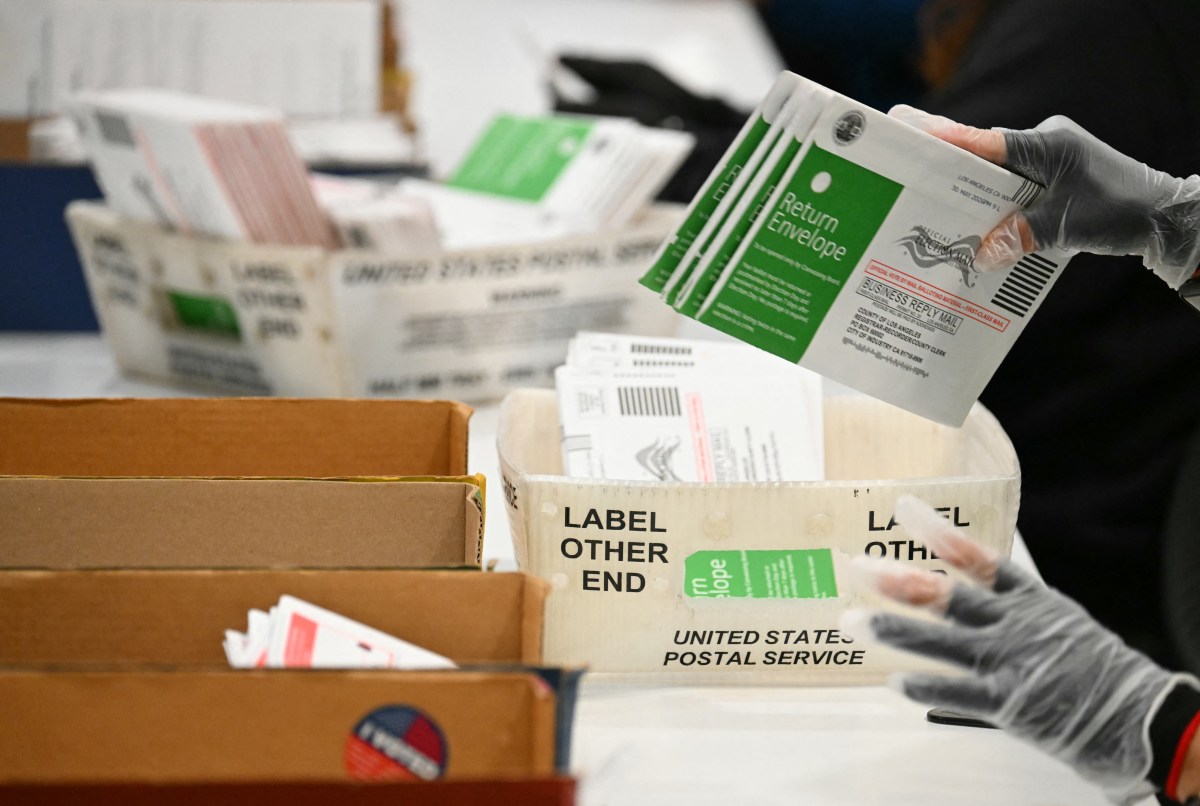
The March 2026 executive order told the Postal Service to limit ballot delivery. The rule, unveiled in late August, would have let USPS discard thousands or millions of legally cast ballots.
What the rule demanded
States had to hand their voter rolls to the Trump administration through an online portal USPS had not finished building, and adopt new envelope and bar code requirements.
Who loses their vote
Experts told the court the people most dependent on mail voting would be hit first: elderly voters, disabled voters, military voters, in red states and blue alike.
“This disenfranchisement risk is literal, not hyperbolic.”
The brief that argued both ways
The administration called the rule a set of modest envelope-design requirements, then warned a few pages later that any delay would strip citizens of the ability to vote by mail.
“there is a grave risk that States may not have taken the necessary steps to comply”
The court's own August mess
On August 24 the justices ruled states could not challenge the order yet because it wasn't hurting them. Justice Jackson called that a Kafkaesque nightmare that fed pre-election chaos.
“contributes to pre-election chaos instead of quashing it”
A whistleblower's warning
A postal worker told Sen. Blumenthal the new system was rushed and flawed. One example: if a single ballot in a batch of 10,000 failed to scan, all 10,000 would be rejected.
“secretive, rushed, chaotic, and fundamentally flawed”
Forty three years of scanning
USPS estimated its ballot scan could take up to a minute each. The 23 challenging states did the math: California's 23 million mail ballots would take roughly 43 years.
Republicans objected too
Top GOP election officials in Georgia, Kansas, Kentucky, New Hampshire, North Dakota, South Dakota, and Utah told the court nobody was equipped to pull this off. Ballots had already gone out in some states.
“neither election officials across the country nor USPS are equipped to successfully implement this Rule”
Judges from both parties
Obama appointee Indira Talwani blocked the order in June and nationwide in August. A Trump appointee, Carl Nichols, went further on Sunday and struck the whole USPS rule.
“The Constitution does not grant the President any specific powers over elections.”
Designed to fail
One in three Democrats voted by mail in 2024, against one in four Republicans. Trump was willing to burn his own voters' ballots as long as more Democrats lost theirs.
The DHS database is still live
The same executive order tells Homeland Security to build a national citizen database and state by state lists. That piece is on hold, but the administration has appealed to the Supreme Court.
The favors already granted
The six conservative justices gutted the Voting Rights Act, blessed mid-decade gerrymanders worth 10 GOP seats, let states cancel primaries, and handed party committees discounted TV ad rates.
The big picture
The scheme died for 2026, but three justices signaled they would allow it in a future election, and Trump has other tactics ready.