From NBC News · Scott Wong · · 3m
Can Congress regulate AI? Lawmakers aren't sure
Lawmakers openly doubt whether a Congress struggling with basic tech can handle artificial intelligence regulation.
In brief
Lawmakers openly doubt whether a Congress struggling with basic tech can handle artificial intelligence regulation. Congress lacks technical expertise and political will to regulate AI, despite bipartisan recognition that the industry needs oversight. Originally reported by NBC News.
Congress doubts its own AI skills
Lawmakers openly admit many members lack basic tech understanding. Senator Thom Tillis said some colleagues "can't spell" AI, while Senator Ruben Gallego joked they don't know how to get on the internet.
“A lot of them can't spell it. They just don't have the experience.”
The experience gap is real
Representative Ro Khanna from Silicon Valley says Congress lacks people with basic AI understanding. He compares it to making driving rules without ever being a passenger in a car.
“It's like talking about making the rules for driving the road. You don't have to be an auto mechanic, but it would be nice if you at least were a passenger in a car.”
Congress moves slowly on tech
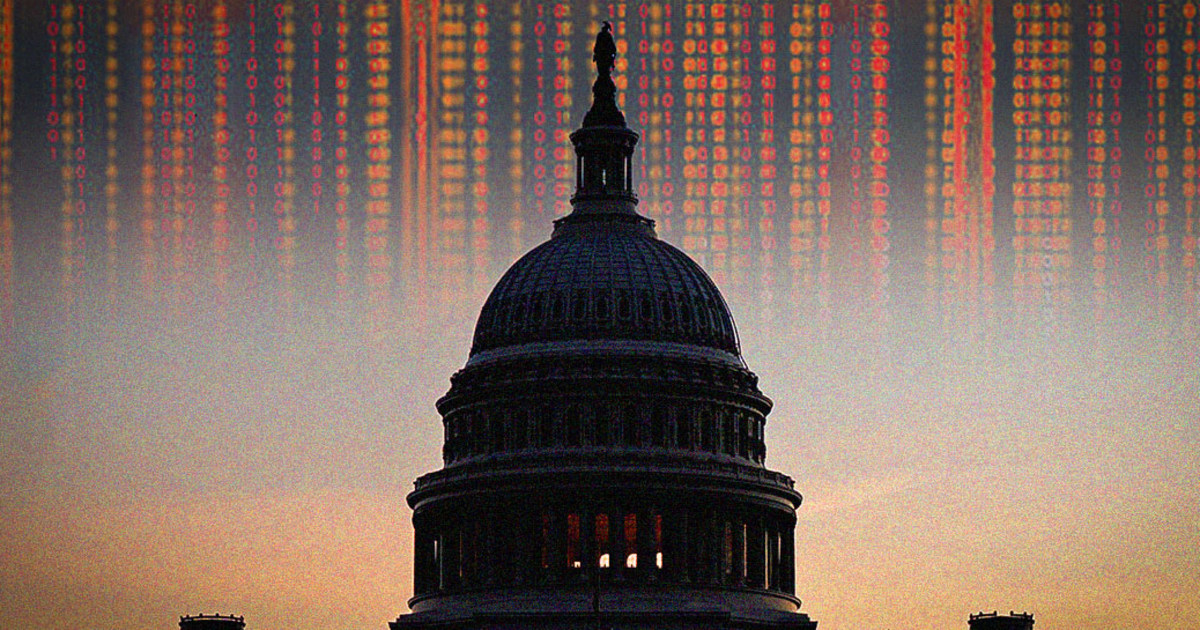
Capitol Hill has a track record of sluggish regulation. It took 40 years to address the internet and 20 years to start tackling social media, still without sweeping legislation.
Kids online bill remains stalled
New rules to protect children online are popular in theory, but House and Senate negotiators remain deadlocked on actual legislation.
Even astronauts find it hard
Senator Mark Kelly, a former Navy pilot and astronaut who supports AI regulation, said it's much easier to fly a fighter jet than to pass AI legislation.
Some lawmakers are optimistic
Representative Don Beyer, 76, is pursuing a master's degree in machine learning and argues Congress doesn't need computer scientists to regulate AI, just as the FDA doesn't require biologists.
“I think the parallel is we don't have to be biologists or chemists to set up the FDA, or lawyers or stockbrokers to set up the SEC.”
Political will is the real blocker
Beyer says Congress has the capacity to regulate AI but lacks political will. He's calling for Democratic leaders to create a select committee on artificial intelligence.
“I think we definitely have the capacity. What we need is a speaker who will let us put the bills on the floor.”
Bill Gates warns of AI risks
Microsoft co-founder Bill Gates said AI is powerful enough to cause catastrophic harm and that no one believes self-regulation by tech companies is sufficient.
“AI is certainly powerful enough to drive events that cause a billion deaths. No one thinks self-regulation is enough.”
Trump favors innovation over rules
President Trump and House Speaker Mike Johnson are hosting an AI summit focused on innovation and competition rather than reining in companies. Trump has called apocalyptic AI warnings a hoax.
“We're going to encourage it, not rein it in.”
House task force produced framework
In 2024, a bipartisan House task force held 24 hearings and produced a 273-page report with nearly 90 recommendations for AI legislation. Many are now being considered by committees.
Obernolte: hopeful but not confident
Representative Jay Obernolte, who chairs the AI task force and holds a master's degree in AI, said the process could move faster but believes members are now deeply educated on the issue.
“Confident is too strong, but hopeful.”
Crypto bill shows the timeline problem
Senator Bernie Moreno points out that the Senate failed to pass a landmark cryptocurrency bill after years of bipartisan work, suggesting AI regulation could take even longer.
Focus on liability instead
Senator Josh Hawley proposes holding tech companies legally liable for AI harms rather than trying to regulate every aspect of the technology.
“We should open the courthouse doors so that citizens who are harmed by AI, the companies should be liable for that.”
The big picture
Congress lacks technical expertise and political will to regulate AI, despite bipartisan recognition that the industry needs oversight.