From NPR · · 3m
Democrats near 270 electoral votes for popular vote compact
Five states about to flip Democratic could push the National Popular Vote Interstate Compact over the threshold needed to bypass the Electoral College, but legal and political obstacles remain.
In brief
Five states about to flip Democratic could push the National Popular Vote Interstate Compact over the threshold needed to bypass the Electoral College, but legal and political obstacles remain. Democratic control of five battleground states could give the National Popular Vote Interstate Compact enough electoral votes…
Quick answers
- What is the compact?
- The National Popular Vote Interstate Compact is an agreement among states to award their presidential electoral votes to the winner of the nationwide popular vote, not their own state's winner.
- What is the key takeaway from Democrats near 270 electoral votes for popular vote compact?
- Democratic control of five battleground states could give the National Popular Vote Interstate Compact enough electoral votes to take effect, though legal challenges and state hesitation may block it.
What is the compact?
The National Popular Vote Interstate Compact is an agreement among states to award their presidential electoral votes to the winner of the nationwide popular vote, not their own state's winner.
Democrats' midterm gains open a path
Next year, Democrats will fully control five states that could sign the compact: Arizona, Pennsylvania, Michigan, Nevada and Wisconsin. Together they hold sixty-one electoral votes.
The threshold to activate
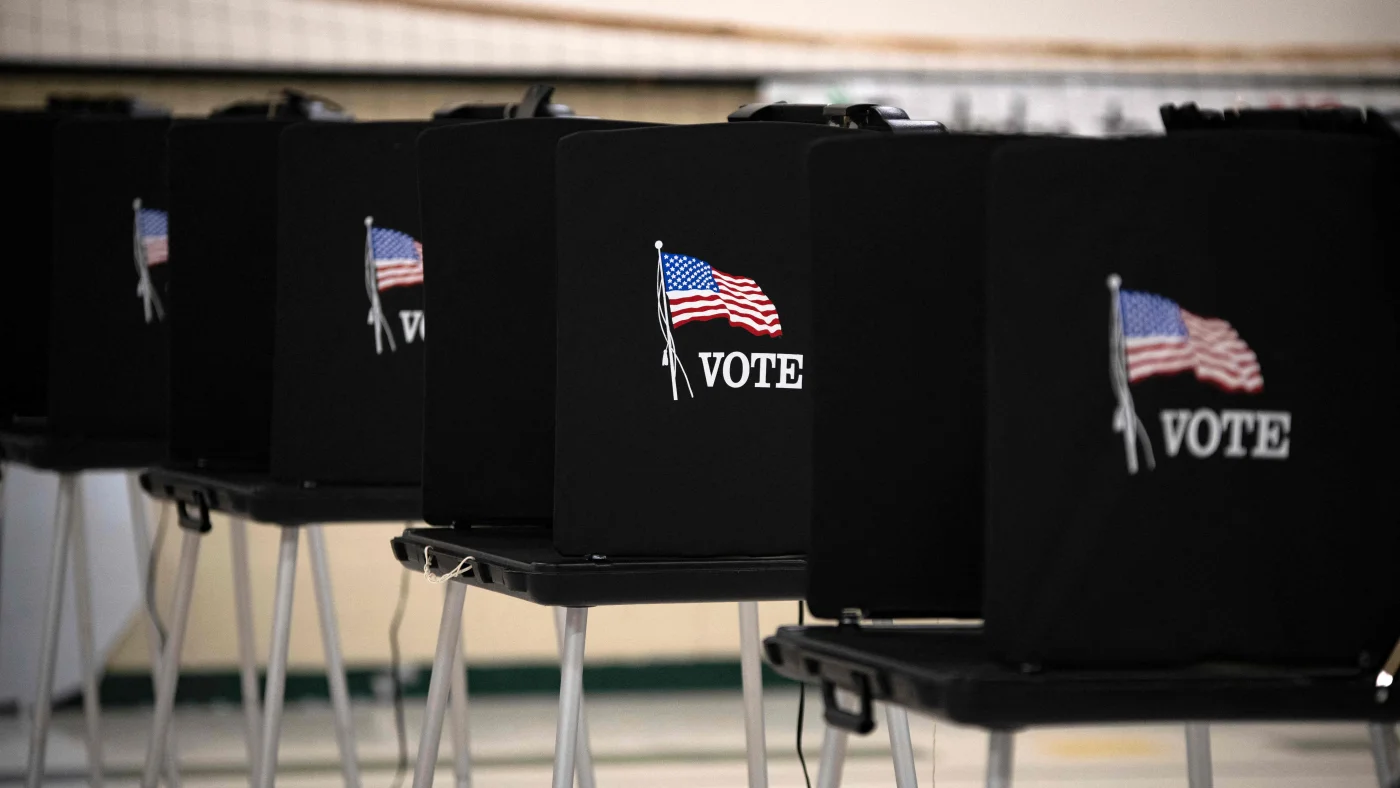
The compact needs two hundred seventy electoral votes to take effect. It currently has two hundred twenty-two. Combinations of at least four of the five states would push it over.
Eighteen states plus DC already in
Eighteen Democratic-led states and the District of Columbia have already joined the compact. No Republican-led states have signed on, and the party is largely not unified on the issue.
Some governors show openness
Governors and incoming governors in Pennsylvania and Nevada have said they are open to signing legislation to join the compact. Other governors have yet to publicly weigh in on the question.
Arizona governor's silence
Democratic Arizona Governor Katie Hobbs previously supported the measure but has not commented recently on whether the state should sign on. NPR reached out but did not receive a response.
The constitutional question
Some legal scholars say the compact could violate the compact clause in the Constitution, which requires states to get Congress's consent before entering agreements with other states.
Why the compact matters now
Patrick Rosenstiel, senior consultant to National Popular Vote, told NPR he is confident sixty-three percent of American voters can get what they want in the two thousand twenty-eight presidential election: a national popular vote.
“I've never been more confident that 63% of American voters can get what they want in the 2028 presidential election, which is a national popular vote for president.”
In short
Democratic control of five battleground states could give the National Popular Vote Interstate Compact enough electoral votes to take effect, though legal challenges and state hesitation may block it.
Read the TL;DR — this story on one card.