From NPR · · 2m
Russia's silence on lab worker's plague death raises alarm
A 28-year-old Russian lab technician died last week, sparking global concern about whether Moscow disclosed the death properly under international health law.
In brief
A 28-year-old Russian lab technician died last week, sparking global concern about whether Moscow disclosed the death properly under international health law. A Russian plague researcher died October second, but Russia did not notify the WHO as required by international law, prompting global leaders to demand…
A lab worker dies in Russia
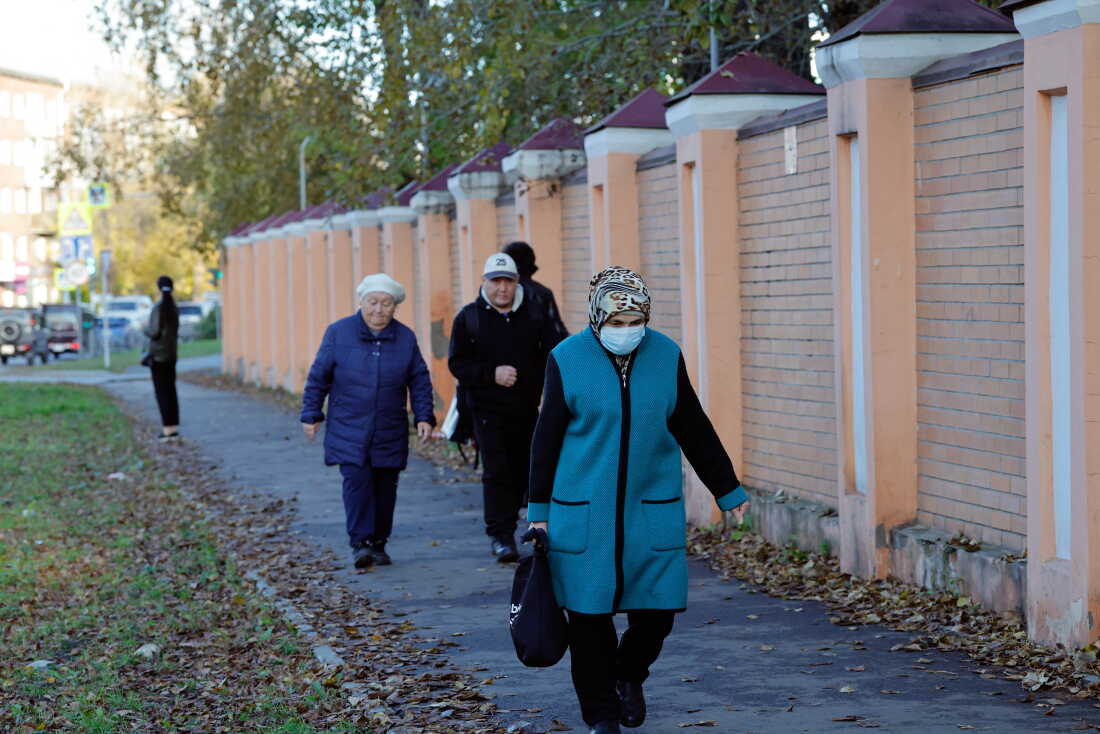
A twenty eight year old woman died October second at a Russian research institute that studies plague. Unverified rumors suggest she may have contracted the disease from a lab leak.
Global leaders demand answers
President Trump, the World Health Organization and other leaders are asking Russia for more information about the death. Russia insists this is not a health emergency.
International law requires disclosure
The International Health Regulations, or IHR, obligate countries including Russia to share health information that could have international implications. One hundred ninety seven countries have signed it.
The IHR traces back centuries
The law originated in the eighteen fifty s with cholera outbreaks in Europe. When WHO was founded in nineteen forty eight, these regulations were adopted as one of the organization's first moves.
Countries must notify within twenty four hours
One core obligation is that countries must notify WHO within twenty four hours of detecting a serious health event. Some events like smallpox should immediately trigger notification.
Russia did not follow the rules

Russia did not notify WHO about the woman's death. WHO learned about it through media reports and on October third went to Russia seeking verification and additional information.
Russia's response was delayed
It took Russia several days to respond. On October sixth, health officials told WHO there were no cases of plague and the woman had severe pneumonia of unknown origin. About two hundred contacts were quarantined.
WHO Director General calls for transparency
At a WHO press conference, Director General Tedros Adhanom Ghebreyesus said timely, complete and transparent information sharing under international regulations is essential to clarify conflicting reports.
“Timely, complete and transparent information sharing under the international regulations is essential to clarify conflicting reports and enable an accurate assessment of potential public health risks.”
No enforcement mechanism exists
There is no mechanism to make countries comply with international health law. Lawrence Gostin, who directs the WHO Center on Global Health Law, says this shows how unprepared the world is to control health threats.
“This case shows the good, the bad and the ugly of the IHR.”
Pressure may force Russia to comply
Alexandra Phelan, an associate professor at Johns Hopkins Bloomberg School of Public Health, says the coming days and weeks will show how much information Russia shares. Pressure from other countries may convince Russia to comply.
Here's the gist
A Russian plague researcher died October second, but Russia did not notify the WHO as required by international law, prompting global leaders to demand transparency.


