From NPR · · 1m 50s
SpaceX's Starship reaches orbit for first time
SpaceX launched Starship into orbit from Texas on Monday, deploying satellites and testing systems critical to NASA's moon plans.
In brief
SpaceX launched Starship into orbit from Texas on Monday, deploying satellites and testing systems critical to NASA's moon plans. SpaceX's Starship reached orbital speed for the first time on Flight 14 from Texas, deploying Starlink satellites and testing heat shield technology needed for spacecraft reusability…
Starship reaches orbit from Texas
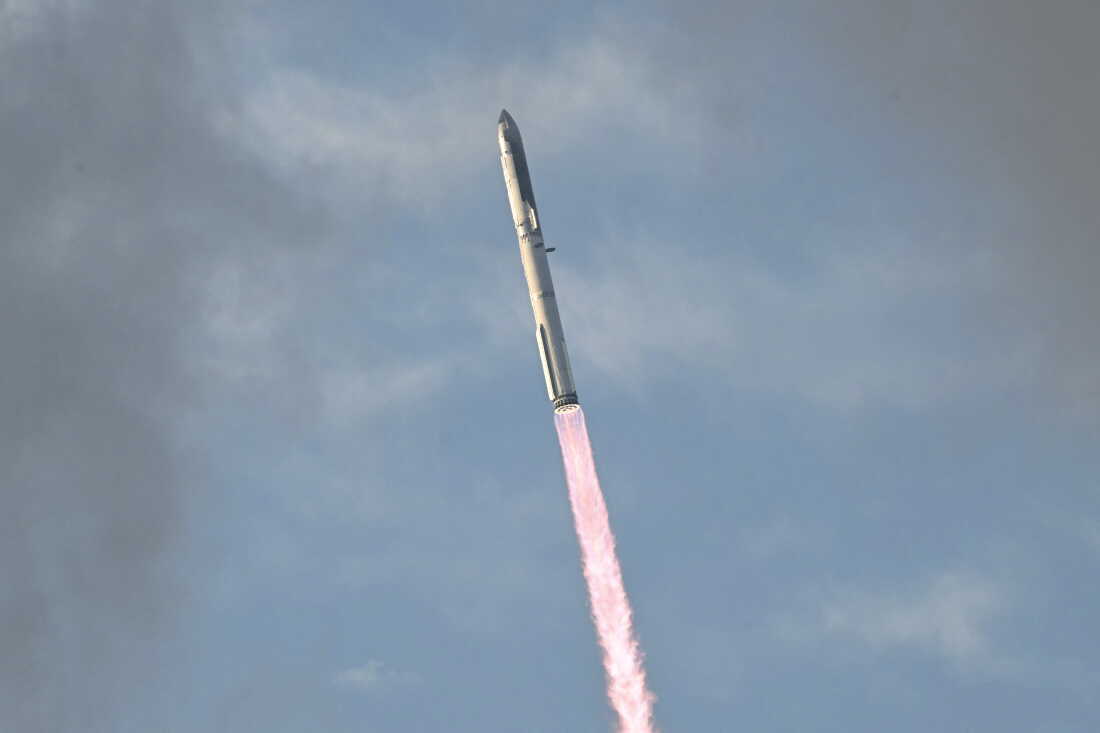
SpaceX launched its 171-foot-tall Starship spacecraft from Boca Chica Beach in Texas on Monday at seven forty-eight a.m. Central Time, sending it into orbit for the first time.
Engine failure during ascent
The Super Heavy booster ignited thirty-three rocket engines. Two-and-a-half minutes after launch, Starship separated from the booster. One of six engines on Starship failed during ascent.
Mission shortened due to caution
SpaceX had planned a ten-hour flight with six orbits at about one hundred seventy miles altitude. After the engine failure, mission managers cut the flight to three hours and decided to deorbit safely.
“Out of an abundance of caution given the engine issue experienced during ascent, the flight control team decided to limit the duration spent on orbit.”
Starship reaches orbital speeds
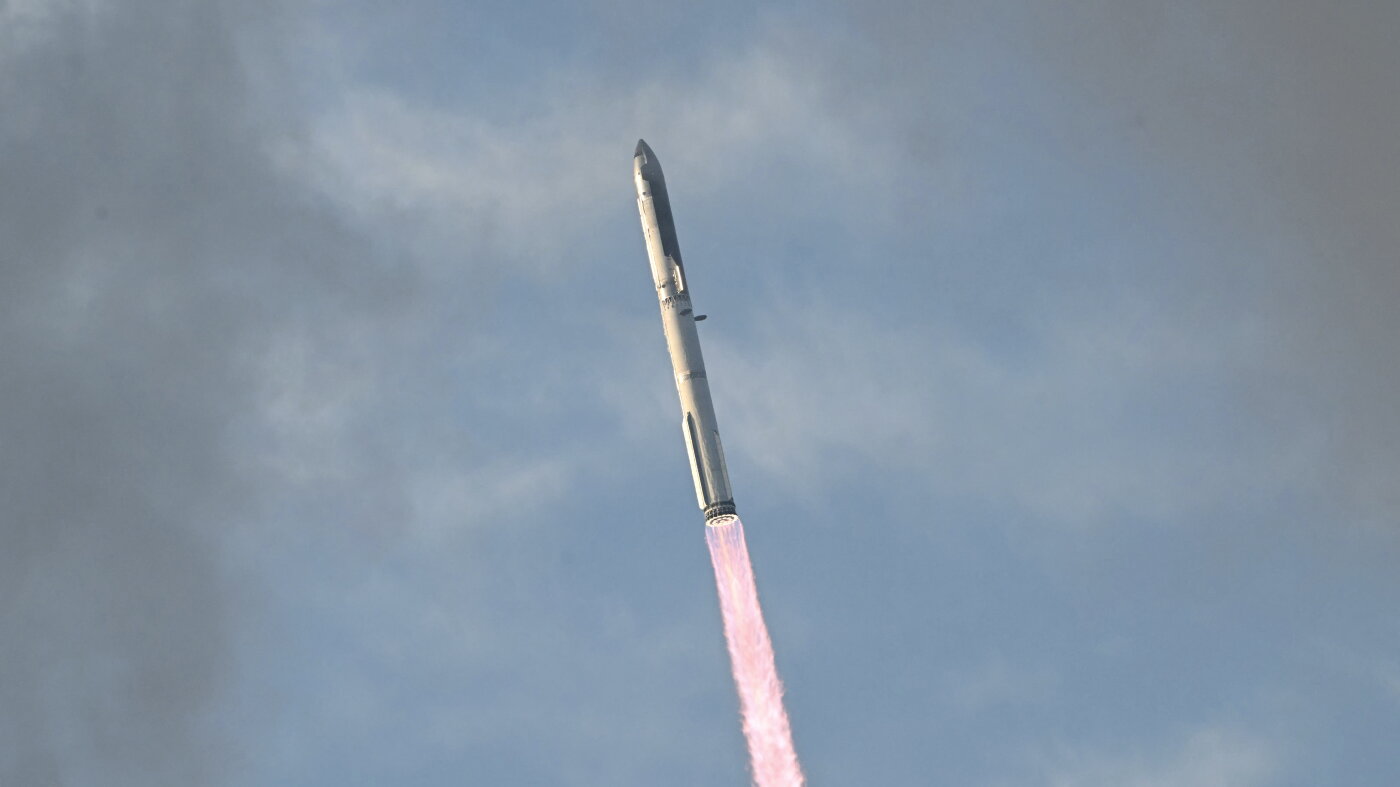
Starship 14 is the first time the vehicle reached orbital speeds of about seventeen thousand five hundred miles per hour. Previous Starship flights were suborbital.
Twenty-six Starlink satellites deployed
During its flight, SpaceX deployed twenty-six Starlink V three next-generation satellites into its constellation providing broadband access worldwide. Three satellites have cameras to capture heat shield data.
Starship critical to SpaceX growth
SpaceX told the FEC that any failure in Starship development would delay its growth strategy. Starship is the only spacecraft that can launch the larger V three Starlink satellites.
“Any failure or delay in the development of Starship at scale or in achieving the required launch cadence, reusability and capabilities thereafter would delay or limit our ability to execute our growth strategy.”
NASA's moon missions depend on Starship
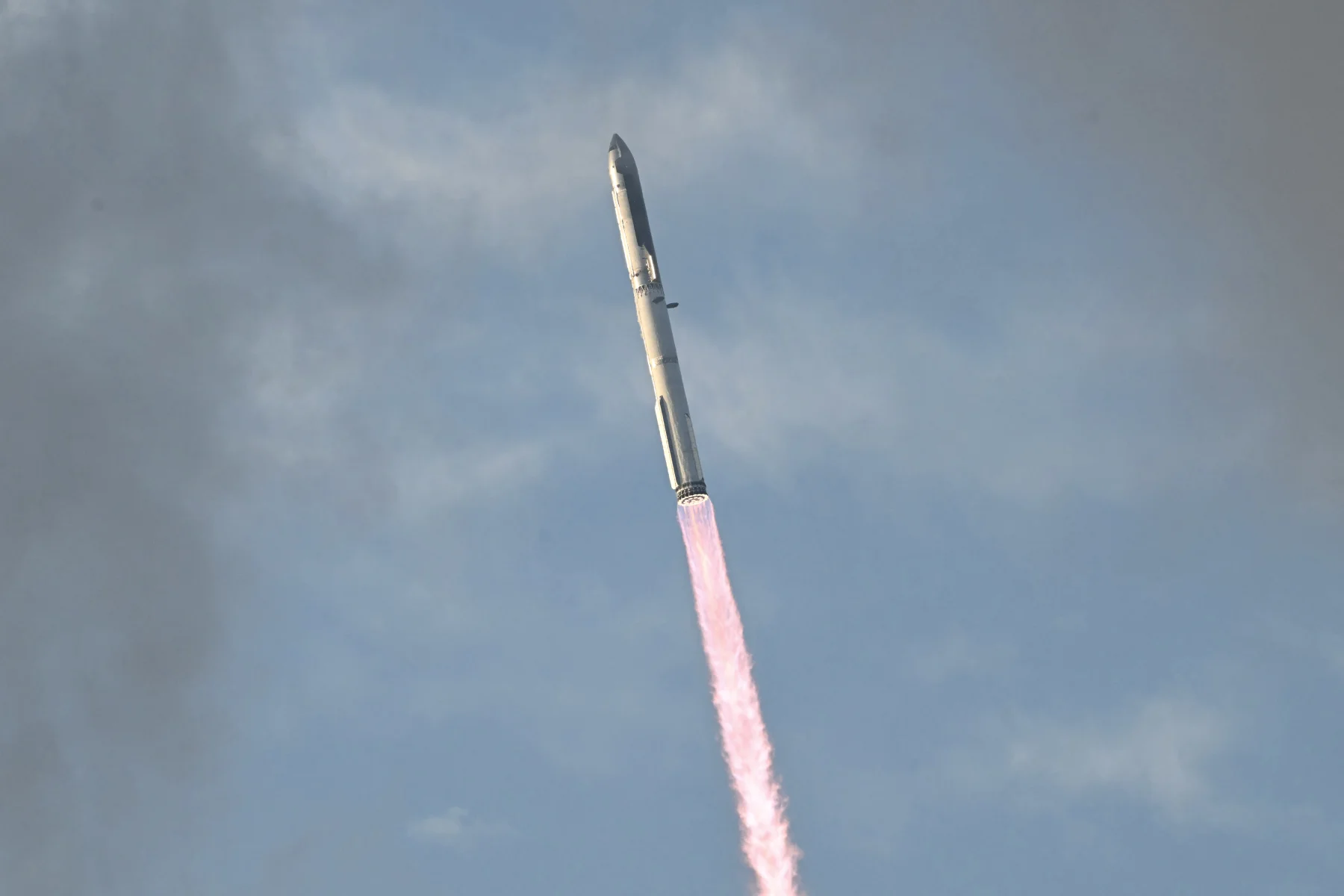
NASA tapped SpaceX to develop Starship as a human landing system for Artemis missions. NASA plans to test docking its Orion capsule to Starship during Artemis III, slated to launch late next year.
The key point
SpaceX's Starship reached orbital speed for the first time on Flight 14 from Texas, deploying Starlink satellites and testing heat shield technology needed for spacecraft reusability.


