From NPR · · 2m
The AI double whammy: bubble burst plus job losses
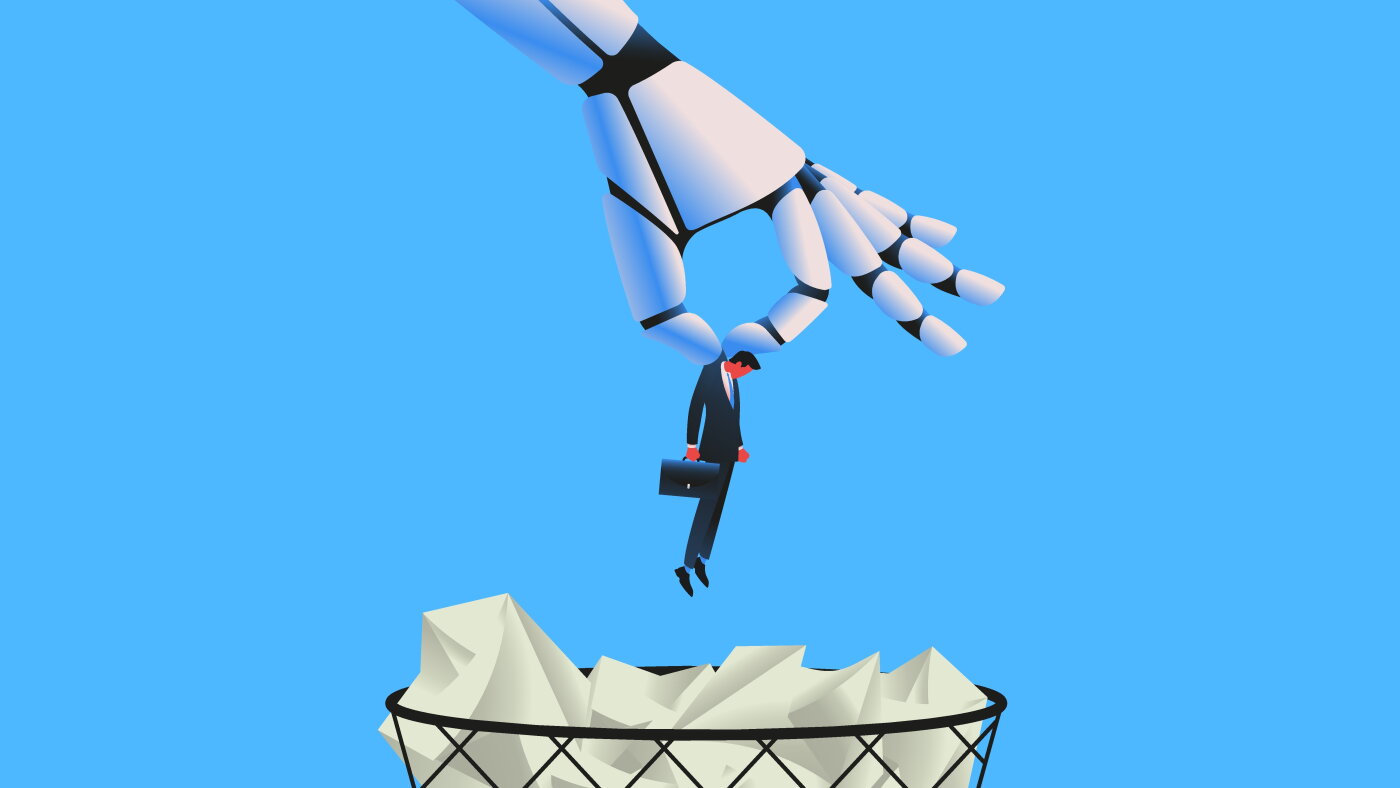
If an AI bubble bursts and triggers a recession, history suggests automation could accelerate and workers could lose jobs even as investors lose money.
In brief
If an AI bubble bursts and triggers a recession, history suggests automation could accelerate and workers could lose jobs even as investors lose money. An AI bubble burst could trigger a recession that accelerates worker replacement with automation, harming both investors and employees simultaneously. Originally…
The nightmare scenario
An AI bubble burst could trigger a recession that accelerates worker replacement with automation. Investors lose money and workers lose jobs simultaneously.
How bubbles form
Revolutionary technology excites investors, who bet heavily and borrow money to make bigger bets. Debt builds up. When reality sets in, asset prices fall but debts remain, triggering crashes.
Railroads and the Panic of 1873
The railroad bubble was revolutionary technology that still fueled a financial crash. Its collapse triggered the Panic of eighteen seventy-three, economic turmoil, populist uprising, and the first major immigration crackdown.
AI is propping up markets
An analysis from J.P. Morgan found that just forty-two AI-related companies accounted for around two-thirds of the S and P five hundred's stock price gains since early twenty twenty-four.
Massive borrowing for infrastructure
AI-related companies are borrowing hundreds of billions of dollars to finance data centers and energy infrastructure to power them. This debt could become a ticking time bomb.
The profit question
Technology analyst Benedict Evans warns that fierce competition between AI companies offering similarly capable models could drive down prices and leave little room for profit despite ungodly spending.
Automation happens in bursts

A study by economists Nir Jaimovich and Henry Siu found that jobs vulnerable to automation saw most decline around recessions. Between nineteen ninety and twenty seventeen, eighty-eight percent of decline occurred during recessions.
The unsettling irony
Fierce price competition could keep AI companies from delivering profits while making their technology cheaper for other businesses to use to replace workers. Investors lose money, workers lose jobs.
“fierce price competition could keep AI companies from delivering the profits investors expect, while making their technology cheaper for other businesses to use to replace workers”
Uncertainty remains
We still do not know whether AI will deliver profits to justify borrowing, whether a bust would trigger recession, or whether past automation patterns will repeat. A downturn could reduce AI investment.
Policy can protect workers
Unemployment insurance and other safety net policies can limit damage. Bill Gates and others propose taxing AI and robots to make employing humans more economical while funding government safety nets.
The essence
An AI bubble burst could trigger a recession that accelerates worker replacement with automation, harming both investors and employees simultaneously.