From Overreacted · · 3m
I used AI to prove a 50-year-old math conjecture
A programmer spent a month and billions of tokens getting frontier models to solve Conway's refinement conjecture in Lean.
In brief
A programmer spent a month and billions of tokens getting frontier models to solve Conway's refinement conjecture in Lean. AI can prove novel mathematics when combined with formal verification, but requires constant human steering to avoid drift into nonsense. Originally reported by Overreacted.
The absurd challenge
A self-described math noob decided to use AI to solve an open mathematical problem. The target: Conway's refinement conjecture, posed 50 years ago.
What surreal numbers are
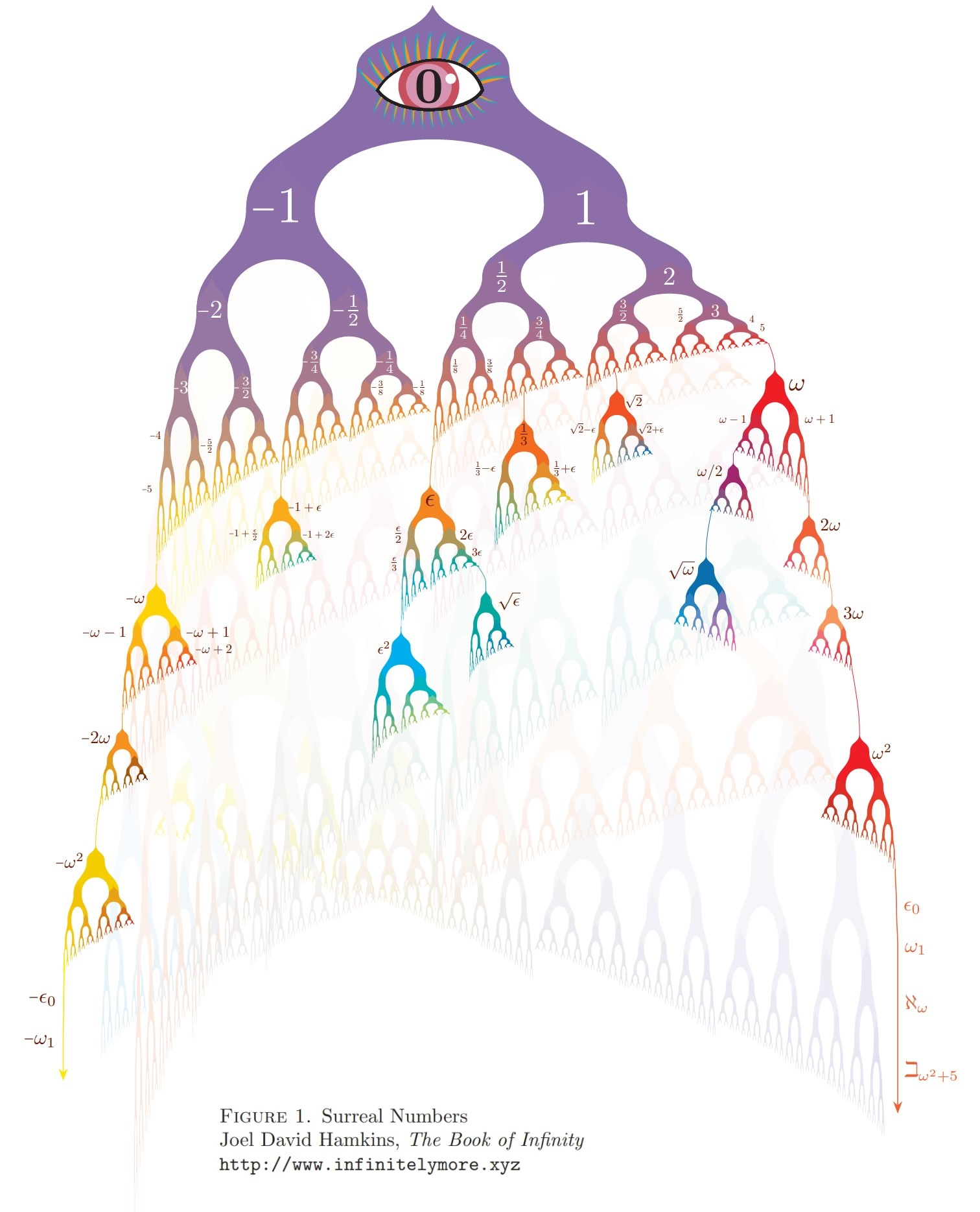
Surreal numbers contain all real numbers, all infinitely large ordinals like omega, and unholy combinations like 75 plus omega times 3 plus 1 over omega.
Born from a single rule
Surreals spawn from one rule: take all numbers so far, then birth a new number in every gap. Apply forever and you get every real, every ordinal, and more.
Conway's last standing conjecture
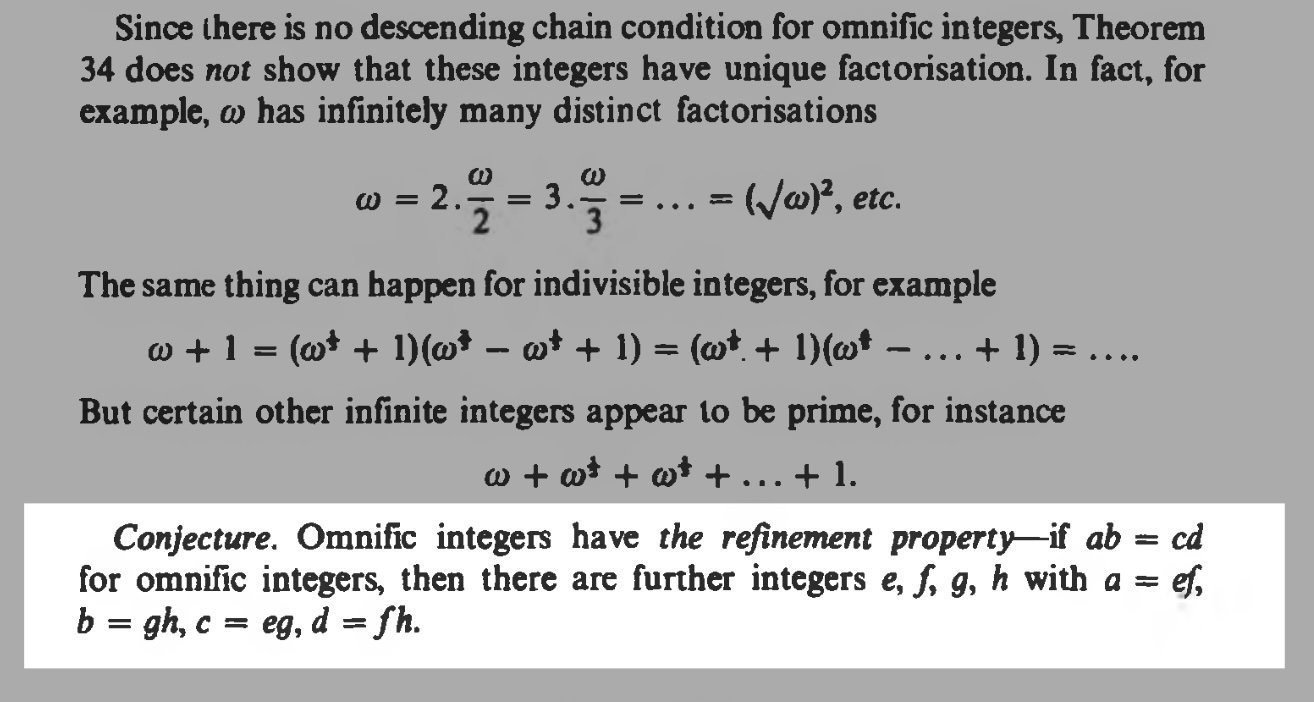
The conjecture claims omnific integers have a refinement property: if ab equals cd, there are integers e, f, g, h with a equals ef, b equals gh, c equals eg, d equals fh.
One-shotting failed spectacularly
Early attempts to just tell Claude to solve it produced impressive-sounding word salad with invented terminology and dramatic claims that couldn't be verified.
“The stage-1 obstruction of C* is not rigid. With designed resonance, arithmetic-progression offsets making the window equations honest Toeplitz systems”
Enter the skeptic
Switching to ChatGPT with a critical personality helped. It called out Claude's bullshit and produced smaller, more verifiable claims in plain language.
Building a laboratory
Multiple AI agents were assigned different roles: a PM driving toward the goal, math agents finding breakthroughs, a red agent finding flaws, and a Lean agent formalizing work.
The first dead end
The workflow produced a giant TeX document and a pile of Lean, but didn't close the conjecture. The stack grew to almost thirty papers, full of nonstandard terminology.
A circular proof
ChatGPT came close to declaring Conway solved, but a fresh session found the proof was circular. Honest verdict: we do not have a proof.
“i do want you to be honest btw. if you can't strictly salvage it then we need to stop and understand why”
Finding real ground
To verify the work, the focus shifted to finding mistakes in peer-reviewed papers. Mathematicians confirmed several typos and small flaws were real, building confidence.
Burning it all down
Starting from scratch, ChatGPT audited the pile of papers. Only 10 to 15 percent contained mathematics worth preserving. The rest was thrown away.
“The real failure is epistemic, the drafts manufacture a large private theorem literature, then cite it as established before its load-bearing results have been independently verified”
A novel result emerges
Buried in the papers was one coherent interesting result: the finite-degree part of the principal ring admits a direct proof that it's a polynomial ring.
Separating stable from risky
Two Lean agents worked separately: one certified peer-reviewed papers, the other worked on novel results. This prevented experimental work from tangling with accepted mathematics.
Making proofs legible
Converting Lean to readable math was exceedingly difficult. The model kept using strange terminology and hallucinated shortcuts, producing slop no matter how many reviews.
Stripping out the nonsense
All non-standard naming was stripped from Lean code and replaced with letters. A fresh context then chose new names based on a map of accepted terminology.
The final breakthrough
After asking if they were circling, ChatGPT proposed using Cantor-Bendixson rank to create a multiplicative filtration. The idea checked out and was formalized in Lean.
“are we circling?”
Conway's conjecture proved
Twelve hours after the final push, the theorem compiled. Conway's refinement conjecture, the original target, was kernel-checked for the first time.
“Unchanged Conway now compiles as the standalone proof certificate. This is the first point where the actual target, not an intermediate restriction, is kernel-checked”
The token bill
The project consumed around 40 billion tokens, of which 210 million were output. At current API pricing, this would cost roughly $40,000.
What it means
AI can prove novel mathematics when combined with formal verification, but requires constant human steering to avoid drift into nonsense.