From PhillyVoice · · 4m
Pennsylvania's levees are running out of time
Most of Pennsylvania's flood walls were built before 1970, and only 15% meet FEMA's current standard.
In brief
Most of Pennsylvania's flood walls were built before 1970, and only 15% meet FEMA's current standard. A levee is not a one-time build. It is a permanent maintenance bill, and the small towns holding that bill cannot afford it alone. Originally reported by PhillyVoice.
180 levees, 158,000 people
Pennsylvania has more than 180 levees running about 155 miles. The Army Corps says they shield roughly 158,000 residents and $26.2 billion in property.
Two trends pulling apart
The levees are getting older and the money to maintain them is drying up. Meanwhile the storms hitting them keep getting bigger.
Written by a levee researcher
Kaleigh Yost is a geotechnical engineer at Penn State who studies how levees behave under flooding and builds tools to assess aging ones.
What a levee actually is
An earthen embankment built parallel to a river, raising the effective height of the bank so a swollen river cannot spill over.
Designed for one flood size
Most are engineered against a specific flood, usually one with a 1% chance of happening in any given year. Bigger than that, and the design no longer applies.
They fail more ways than one
Water can flow over the top, but levees also fail from erosion, seepage through or under the embankment, and partial collapse before the water ever reaches the crest.
Pennsylvania is soaked in rivers
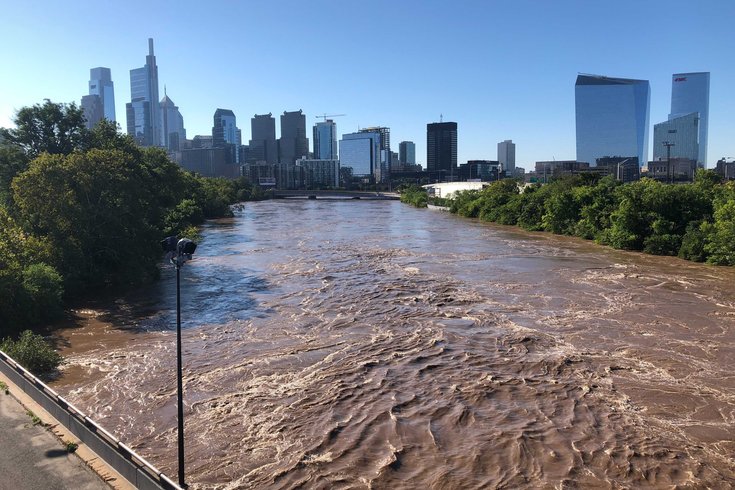
86,000 miles of rivers and streams surge under heavy rain and snowmelt. Philadelphia and Pittsburgh both sit flanked by water, and hurricane remnants reach inland.
5,000 floods, $1 billion paid
The state's 2023 hazard mitigation plan counted nearly 5,000 flood events since 1996. Federal flood insurance has paid over $1 billion in Pennsylvania claims in that span.
A New Deal inheritance
The Flood Control Act of 1936, prompted partly by that year's Pennsylvania floods, paid for most of these levees. They were built between 1950 and 1970.
Past their design life
That means they reflect engineering standards from six to eight decades ago, and they have outlived the typical 50-year design life.
The bill landed locally
After construction, the federal government handed upkeep to local sponsors. Over 90% of Pennsylvania's levees are now locally operated and maintained.
Small towns, big upkeep
Maintenance means cutting vegetation, fighting erosion, clearing debris, patching animal burrows, and servicing floodwalls, pumps and pipes. Rural towns with shrinking tax bases carry that.
“construction of a levee is not a one-time investment. It is an ongoing commitment”
Risk rising on three fronts
Flood risk combines hazard, exposure and vulnerability. Storms are worsening, land behind levees is being developed, and the structures themselves are decaying.
Heaviest storms up 60%
Rainfall in the Northeast's top 1% heaviest storms rose 60% between 1958 and 2021, per the Fifth National Climate Assessment.
Fail the map, pay the premium
When FEMA redraws floodplains, a levee that cannot prove it meets federal standards becomes "unaccredited." Homes behind it face higher insurance and building limits.
Only 15% are accredited
Roughly 15% of Pennsylvania's levees hold FEMA accreditation. Getting it means paying an engineer to certify the levee, then funding whatever upgrades they find.
No single funding stream
Congress reauthorized the National Levee Safety Program through 2028 but never fully funded it. Communities stitch projects together from state capital budgets, $500,000 mitigation grants and local fees.
The Luzerne County exception
A dedicated levee fee funds 16 miles of protection along the Susquehanna for 62,000 people and 18,000 buildings. Even so, the authority still chases grants for big work.
BRIC gone, then back
FEMA killed the BRIC grant program in April 2025, canceling $182.5 million awarded to Pennsylvania, including Duryea levee repairs. A court reinstated it in March 2026, but the money has not moved.
The takeaway
A levee is not a one-time build. It is a permanent maintenance bill, and the small towns holding that bill cannot afford it alone.





