From PhillyVoice · · 3m
The fish named after Ernest Hemingway
A Philadelphia museum honored the famous author for helping scientists discover new species during his fishing expeditions in Cuba.
In brief
A Philadelphia museum honored the famous author for helping scientists discover new species during his fishing expeditions in Cuba. Hemingway's passion for big-game fishing in the 1930s led him to collaborate with scientists and contribute specimens that advanced marine biology, earning him a fish species named in his…
A fish named for Hemingway
The Academy of Natural Sciences in Philadelphia has a spinycheek scorpionfish in its collection that was named Neomerinthe hemingwayi in 1935 to honor author Ernest Hemingway.
Hemingway's fishing obsession
In the 1930s, between writing novels, Hemingway devoted himself to big-game fishing for marlin, swordfish and tuna aboard his boat Pilar in Cuba.
Scientists reach out first
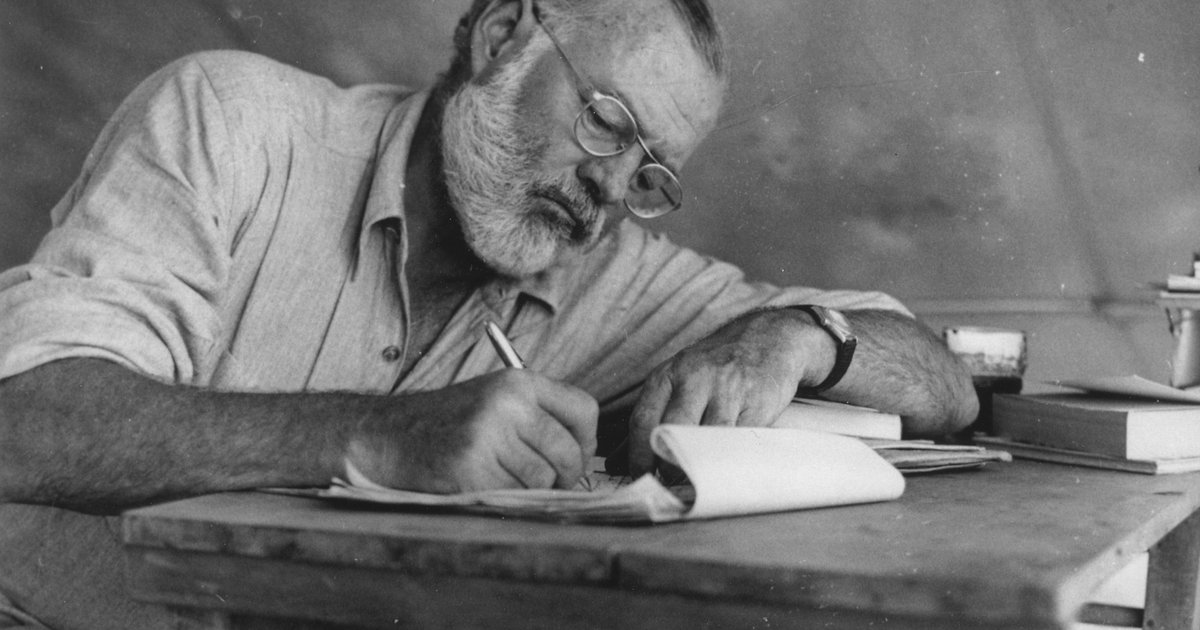
The Academy of Natural Sciences' president Charles Cadwalader wrote to Hemingway in early 1934 asking about the large fish he was catching, hoping to obtain specimens for study.
Hemingway volunteers eagerly
Hemingway replied enthusiastically, promising to collect specimens of marlin, sailfish, wahoo, dolphin and mako shark from Cuban waters that summer.
“I plan to fish the North Cuban Coast again this summer and with decent luck should be able to get you typical specimens of the white, Striped and black Marlin, the Cuban sailfish, wahoo and the big dolphin as well as the mako shark.”
Three men explore Cuban waters
Hemingway took ichthyologist Henry Fowler and Cadwalader on daily fishing expeditions from July 24 through August 15, 1934, aboard his boat Pilar.
Mailing fish north
Though the expeditions weren't very productive, Hemingway sent photos, measurements and specimens to Fowler after the men returned home, including an albacore tuna still in the academy's collection.
Creative shipping methods
Hemingway enlisted friends and ferry boat captains to ice, box and transport fish specimens from Key West to Philadelphia, including parasite samples from inside fish bellies.
Editor warns about naturalism
Hemingway's editor Maxwell Perkins worried the author was spending too much time on natural science and not enough on writing, warning him not to become too much of a naturalist.
“for God's sake don't get to be too much of a naturalist or you won't have time to write.”
Fishing shaped his greatest work
Hemingway's mid-1930s fishing expeditions influenced his masterpiece The Old Man and the Sea, published in 1952, as well as earlier stories he wrote for Esquire magazine.
The fish he didn't catch
Hemingway didn't personally catch the spinycheek scorpionfish named after him. It was caught about 70 miles southeast of Cape May by botanist Otway H. Brown.
A small, ugly fish
The spinycheek scorpionfish maxes out at about 15 inches long, making it a tenacious but unglamorous specimen that Hemingway would never have pursued as game fish.
Hemingway honored by the gesture
When Hemingway learned of the fish named in his honor in July 1935, he wrote that he was very honored and pleased by Fowler's acknowledgement of his efforts.
Museum's uncertain future
The 91-year-old specimen is now one of many with an uncertain future as the Academy of Natural Sciences prepares to close its museum, prompting city lawmakers and residents to fight for its survival.
The essence
Hemingway's passion for big-game fishing in the 1930s led him to collaborate with scientists and contribute specimens that advanced marine biology, earning him a fish species named in his honor.