From Premium Times Nigeria · Nike Adebowale-Tambe · · 3m
Maternal deaths drop 60% in Nigerian health facilities
Nigerian health facilities supported by government fund report 60% drop in maternal deaths since 2024.
In brief
Nigerian health facilities supported by government fund report 60% drop in maternal deaths since 2024. Nigerian health facilities supported by the Basic Health Care Provision Fund saw maternal case fatality rates fall by 60% from 80.5 in 2024 to 31.9 in September 2026. Originally reported by Premium Times Nigeria.
Government reports maternal death drop
The Nigerian government reported a 60 per cent reduction in maternal case fatality rates in health facilities supported by the Basic Health Care Provision Fund between 2024 and September 2026.
Rate falls from 80.5 to 31.9
The maternal case fatality rate declined from 80.5 in 2024 to 31.9 in September 2026, exceeding the government's initial target of reducing facility-based maternal deaths by 30 per cent.
National Coordinator presents findings
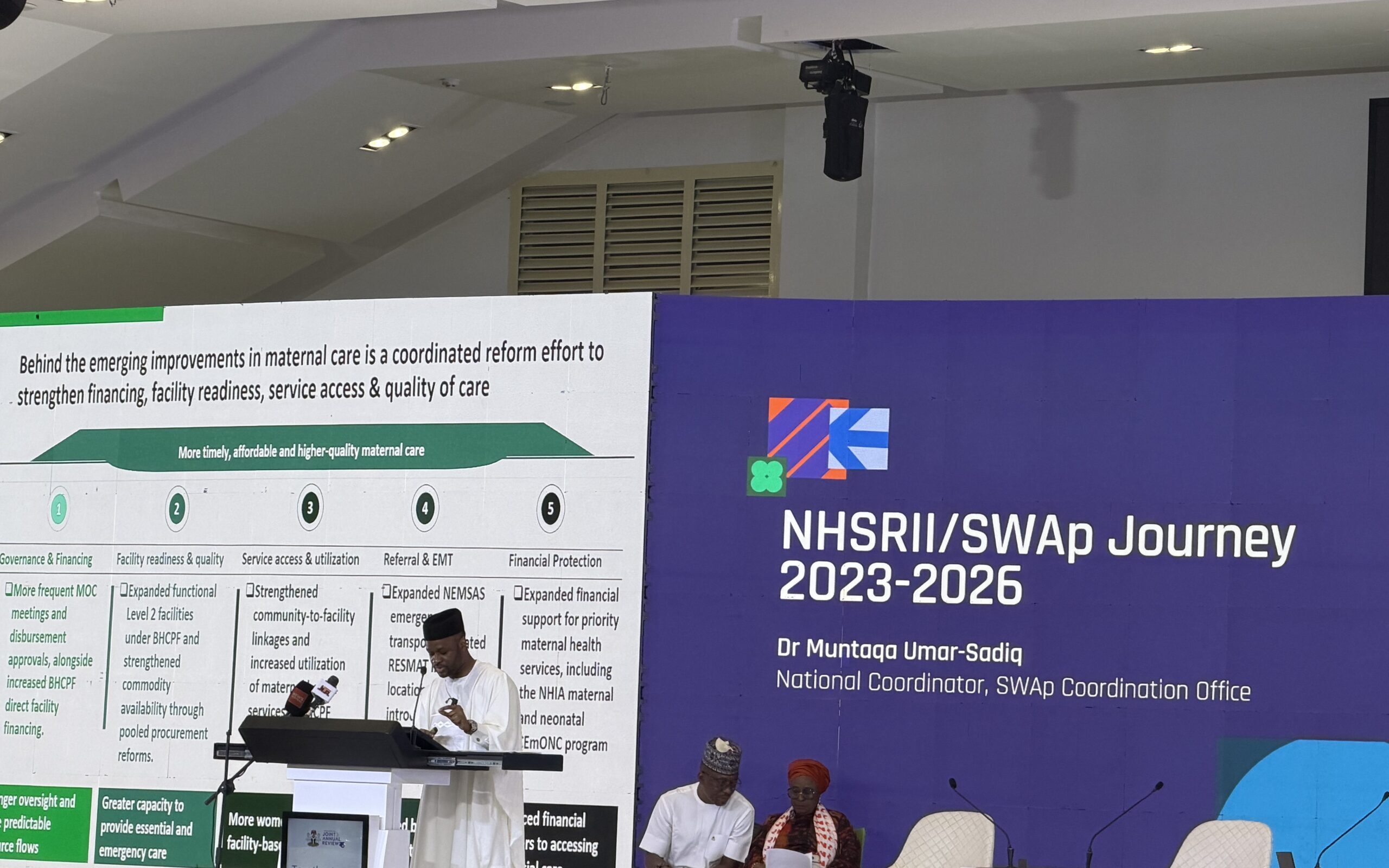
Muntaqa Umar-Sadiq, National Coordinator of the Sector-Wide Approach (SWAp) Coordination Office, disclosed the improvement during the 2026 Nigeria Health Sector-Wide Joint Annual Review in Abuja.
Reforms drive improvements
The improvement followed coordinated reforms aimed at strengthening healthcare financing, improving service quality and expanding maternal healthcare access.
Validation process confirms results
The findings were drawn from routine health information and facility reports covering 8,309 BHCPF-supported facilities through three rounds of telephone surveys and physical assessments.
Facilities outside program report higher rates
Facilities outside the BHCPF program continued to report substantially higher maternal case fatality ratios.
Government target for maternal deaths
The government committed in 2023 to reducing facility-based maternal deaths by 30 per cent as part of broader efforts to improve maternal and newborn health outcomes.
Reforms address healthcare challenges
The reforms were designed to address challenges including inadequate financing, weak accountability, poor facility readiness and limited access to essential services.
Healthcare improvements in 2026
The government recorded improvements in 12 of 13 indicators covering family planning, maternal health and child health through the 2026 Mini-Demographic and Health Survey.
Skilled birth attendance progress
Progress in skilled birth attendance was 11 times faster during the reform period from 2023 to 2026 than in the preceding five years.
Postnatal checks improve
Improvements in postnatal checks were seven times faster, while progress in institutional deliveries was three times faster.
Interventions boost access
The gains were attributed to interventions strengthening links between communities and health facilities, improving medical supplies and expanding emergency medical transportation.
Maternal deaths still reported
3,273 maternal deaths were reported in health facilities in 2026, compared with approximately 5,000 in 2024.
Health data challenges remain
Shortages of skilled health workers, gaps in Comprehensive Emergency Obstetric and Newborn Care, inadequate community health worker deployment and concerns about health data quality persist.
Next phase of reforms
The next phase of reforms will prioritize deploying and retaining skilled healthcare workers, particularly in emergency obstetric and newborn care facilities.
Sustained collaboration needed
Sustained collaboration between federal and state governments, development partners, traditional institutions, civil society and the private sector is essential to maintain progress.
What matters most
Nigerian health facilities supported by the Basic Health Care Provision Fund saw maternal case fatality rates fall by 60% from 80.5 in 2024 to 31.9 in September 2026.