From Pymnts · PYMNTS · · 1m 20s
Banks Rethink Identity Checks as AI Fakes Voices and Faces
Banks face new identity fraud risks as AI creates realistic voices and faces.
In brief
Banks face new identity fraud risks as AI creates realistic voices and faces. Banks must shift from single authentication checks to continuous risk-based verification to combat AI-generated identity fraud. Originally reported by Pymnts.
AI Fraud Shifts Payment Security
Banks face new identity fraud risks as AI creates realistic voices and faces.
“The next generation of payment fraud doesn’t seem very suspicious. In fact, it already sounds like a familiar customer, types at a perfectly ordinary pace and navigates a banking application without triggering a single behavioral warning.”
2026 Fraud Report Highlights Shift
Unauthorized-party schemes accounted for 71% of fraud incidents and dollar losses in 2025, compared with 48% the previous year.
“PYMNTS Intelligence research found that unauthorized-party schemes accounted for 71% of fraud incidents and dollar losses in 2025, compared with 48% the previous year.”
Traditional Checks Erode
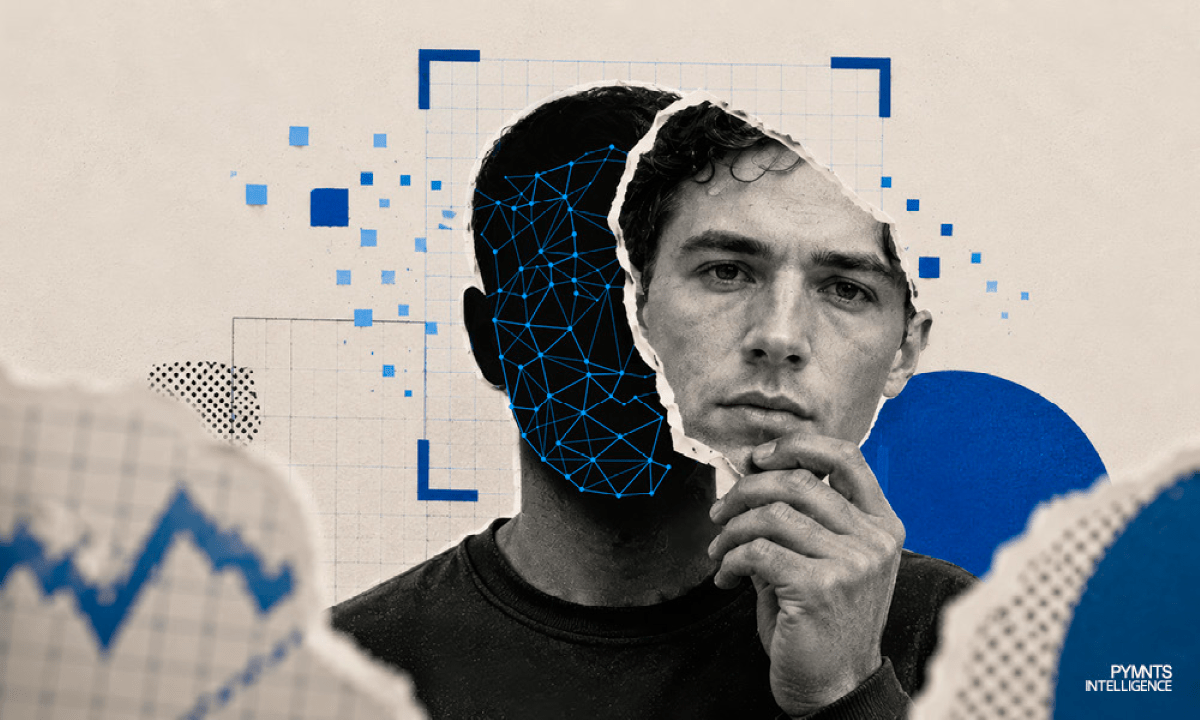
Voice recognition verifies familiar speech patterns, selfies and video checks establish apparent physical presence, while behavioral biometrics examine typing cadence, session duration and navigation patterns.
“Traditional authentication rests partly on a distinction between human and machine behavior. Voice recognition verifies familiar speech patterns, selfies and video checks establish apparent physical presence, while behavioral biometrics examine typing cadence, session duration and navigation patterns.”
AI Undermines Biomarkers
Voice authentication is already particularly vulnerable to synthetic impersonation. Visual verification faces similar challenges as AI-generated imagery becomes more convincing.
“But artificial intelligence is eroding the certainty of biomarkers. Voice authentication is already particularly vulnerable to synthetic impersonation.”
Continuous Verification Needed
Institutions can evaluate a broader history of interactions, transaction patterns and contextual signals, turning trust into something that is cumulative rather than binary.
“One emerging response is to replace reliance on individual authentication events with continuous, risk-based verification. Rather than determining whether someone is genuine based on a single selfie, voice sample or login, institutions can evaluate a broader history of interactions, transaction patterns and contextual signals.”
Tokenization for Fraud Prevention
Issuers can provision tokens with defined spending limits, merchant restrictions and permitted uses to reduce fraud risks.
“One answer is to give tokenization a broader role in fraud prevention. Instead of exposing unrestricted payment credentials, issuers can provision tokens with defined spending limits, merchant restrictions and permitted uses.”
Future of Payment Security
The future of payment security will depend less on whether an interaction appears human and more on whether the action behind it can be independently trusted and controlled.
“For issuers, that separation may prove more consequential than developing another biometric check. As machines become better at imitating people, the future of payment security will depend less on whether an interaction appears human and more on whether the action behind it can be independently trusted and controlled.”
The essence
Banks must shift from single authentication checks to continuous risk-based verification to combat AI-generated identity fraud.



