From Pymnts · PYMNTS · · 1m 30s
Why Building AI Agents Isn't the Hardest Part of Agentic Commerce
Agentic commerce's real challenge isn't AI agents but infrastructure trust.
In brief
Agentic commerce's real challenge isn't AI agents but infrastructure trust. Mastercard's Sabrina Tharani says agentic commerce will start with low-value purchases where trust in systems matters more than AI autonomy. Originally reported by Pymnts.
Agentic Commerce's Real Constraint
The biggest agentic constraint today is whether systems can determine what an agent is allowed to do, who is responsible when something goes wrong, and how transactions move safely across merchants, banks, and payment networks.
“We don’t see this so much as a new channel, as much as a new interface for interacting and engaging with commerce.”
Mastercard's View on Agentic Transactions
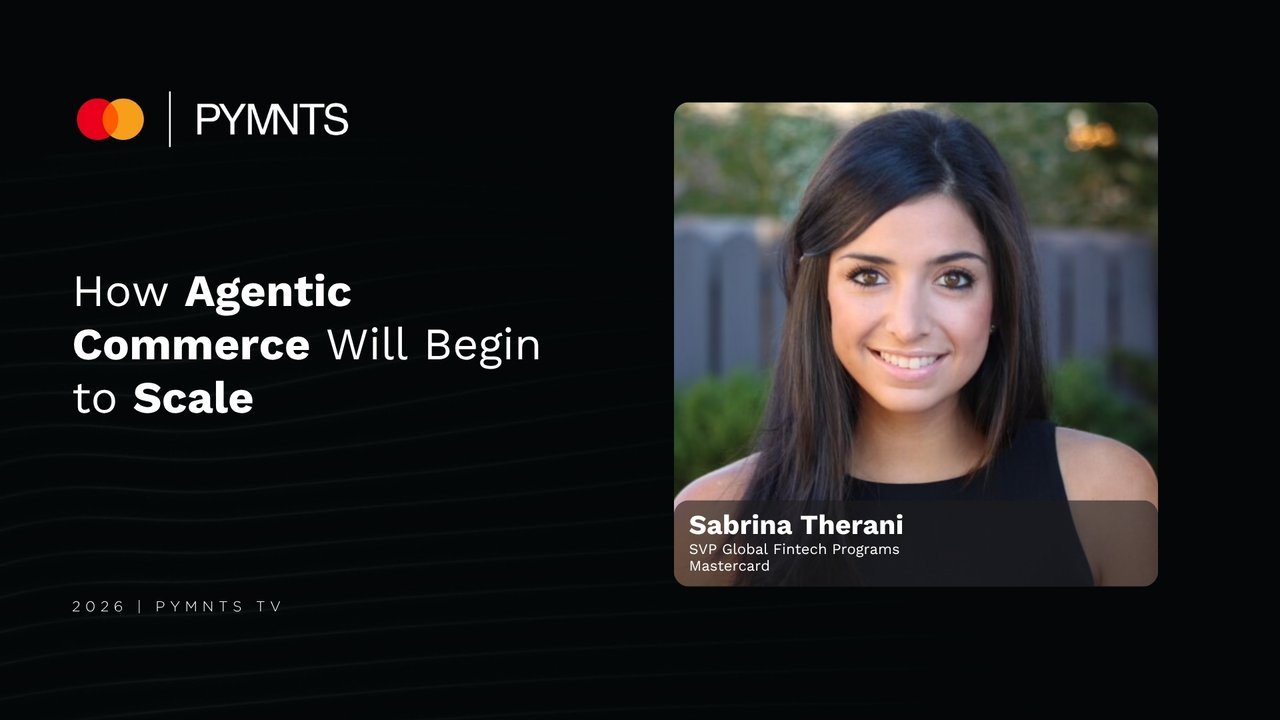
Sabrina Tharani, senior vice president, Global Fintech Programs at Mastercard, says agentic commerce will start with low-value but high-frequency purchases where consumers prioritize speed over everything else.
“The first real mainstream adoption of agentic transactions is going to be low-value but high-frequency purchases, where consumers are prioritizing speed and convenience over everything else.”
Where Agentic Commerce Begins

Consumers will delegate browsing, recommendations, price comparison, and learning about new spaces to AI agents first, but purchasing authority remains a higher bar.
“For me, I’m very happy to hand over the reins as it relates to browsing and recommendations, price comparison, and learning about new spaces that agents recommend to me.”
Infrastructure Over AI
Agentic commerce requires infrastructure to handle trust, identity, payments, merchant enablement, and post-purchase resolution before AI can reliably complete transactions at scale.
“It’s not just about the agent itself. It’s about the infrastructure that underpins what these economies are going to look like.”
Why Infrastructure Matters More
Merchants need to recognize agents, financial institutions need to know agent permissions, payment systems must authenticate credentials and enforce limits, and consumers need recourse if autonomous decisions go wrong.
“Those are not primarily AI challenges. They are commerce infrastructure challenges.”
The Agentic Experience
The entire transaction can happen without forcing consumers to move between interfaces, including resolving problems if an autonomous decision produces the wrong result.
“I’ve discovered, I’ve ranked, I’ve compared. Now I can pay and I can get it delivered and then I can, if there’s a problem, I know how to resolve that.”
What Comes Next
Mastercard will evaluate startups based on founding teams, funding, technology, and global expansion potential to scale agentic commerce infrastructure.
“Tharani said the company evaluates founding teams, funding, technology and global expansion potential, including whether a startup operating in one market could scale into others through Mastercard’s ecosystem.”
The key point
Mastercard's Sabrina Tharani says agentic commerce will start with low-value purchases where trust in systems matters more than AI autonomy.




