From ScienceAlert · Ivan Farkas · · 1m 20s
Physicists Find Rare Particle Decay After 42 Years
LHCb experiment detects one-in-10-billion particle decay, hinting at new physics beyond Standard Model.
In brief
LHCb experiment detects one-in-10-billion particle decay, hinting at new physics beyond Standard Model. Physicists found evidence of a beauty quark decay happening once in ten billion events, offering clues to dark matter and the universe's early moments. Originally reported by ScienceAlert.
42 Years of Particle Search
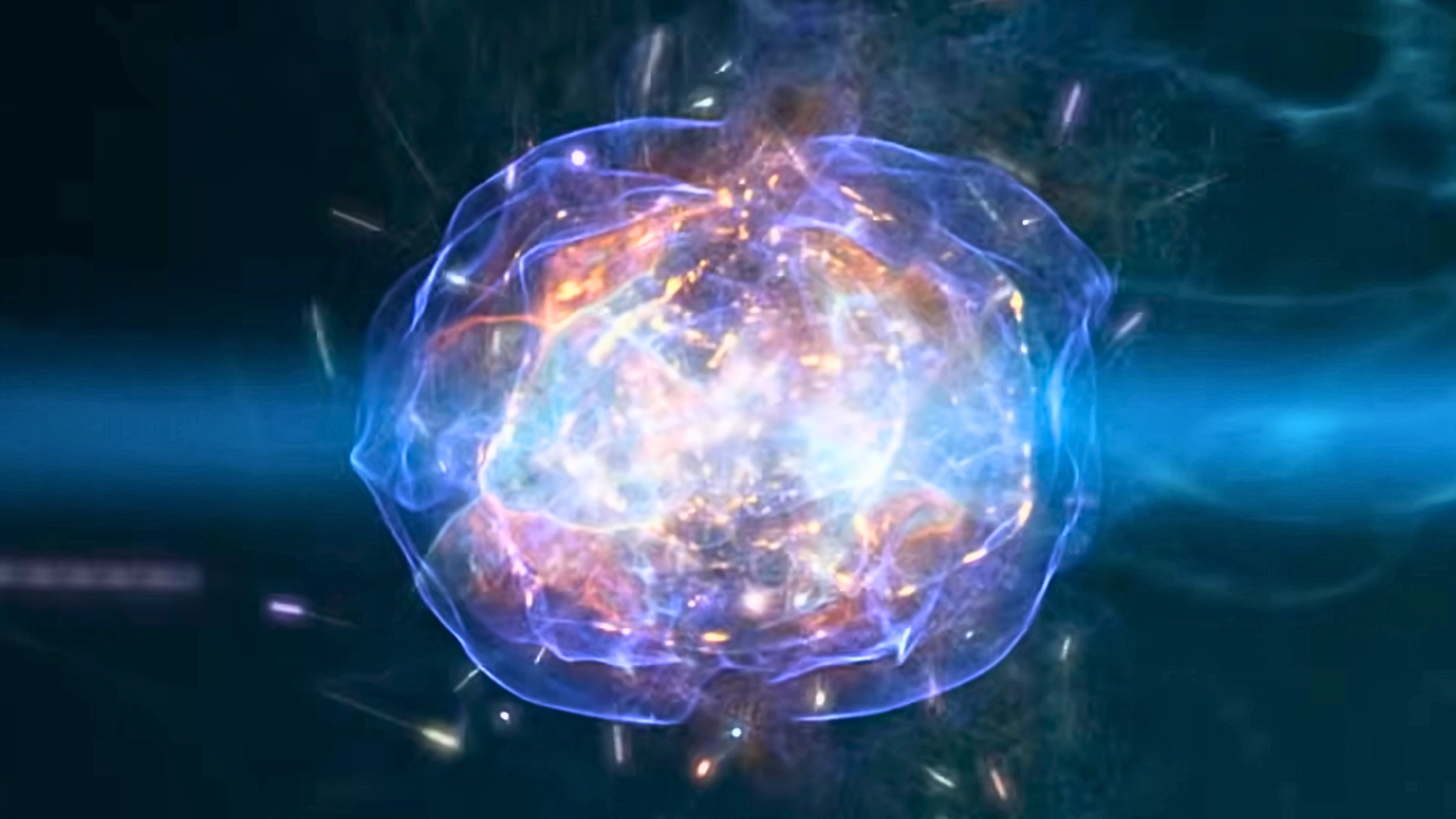
Physicists found evidence of a particle decay happening once in ten billion events after 42 years of searching.
“After more than 40 years of effort, scientists have effectively fastened a knocker on the door of the zeptoverse, offering experimental evidence of an exceedingly elusive, unstable type of particle decay.”
LHCb Experiment Detects Decay
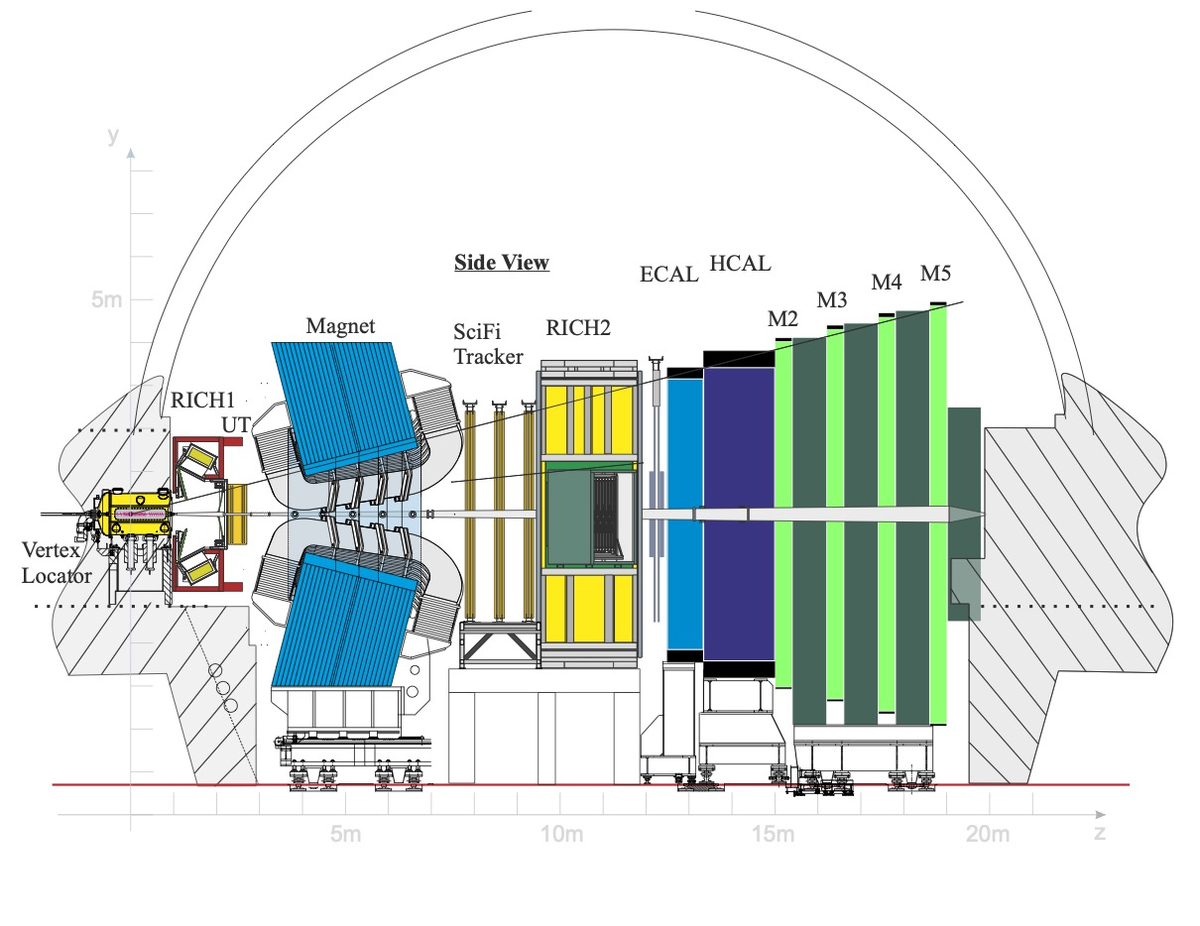
The LHCb experiment at CERN observed a beauty quark decay into a muon and anti-muon once in ten billion events.
“It's thought to occur only once in ten billion events involving the death of a certain "beauty" particle”
Particle Decay Process
Beauty quarks combine with down antiquarks to form mesons that decay in one and a half trillionths of a second.
“These mesons are incredibly fleeting, decaying in one and a half trillionths of a second”
Significance of Find
The discovery shows a 3.2 sigma significance level, meaning it's unlikely to be a fluke but requires more data for 5 sigma confirmation.
“Claiming evidence for a phenomenon like this requires a significance level of three standard deviations, or "3 sigma"”
Standard Model Implications
The results align with the Standard Model but constrain new physics at energy scales beyond the LHC's reach.
“All results are consistent with [Standard Model] expectations and constrain new physics contributions at energy scales beyond those accessible through direct production at the LHC.”
Future Research
Upgrades in the 2030s will boost LHC collisions by an order of magnitude to confirm the decay.
“Attaining the 'gold standard' 5-sigma significance value will require further research to confirm this decay.”
Scientific Significance
This discovery may explain dark matter and the universe's matter-antimatter asymmetry from the Big Bang.
“This has been the case in the past discoveries of the charm quark and the top quark, the latter of which is the heaviest of the quarks, about as massive as an entire gold atom.”
What matters most
Physicists found evidence of a beauty quark decay happening once in ten billion events, offering clues to dark matter and the universe's early moments.