From Slate Magazine · Nikolas Bowie, Daphna Renan · · 3m
How the Supreme Court put the president above the law
John Roberts is following a playbook from the 1850s that shields presidents from Congress, and it's threatening democracy.
In brief
John Roberts is following a playbook from the 1850s that shields presidents from Congress, and it's threatening democracy. The Supreme Court's power to override federal statutes has created an imperial presidency that Congress must rein in by making the court accountable to enacted law. Originally reported by Slate…
The court shields Trump from law
The Supreme Court has insulated the president from criminal laws on corruption and election interference. It lets him disregard congressional votes and fire independent watchdogs.
Two very different judicial powers
The court enforces federal statutes, a constitutional duty. But it also claims a troubling second power: the ability to dissolve any law Congress enacts whenever five justices disagree.
Andrew Johnson defied Reconstruction laws
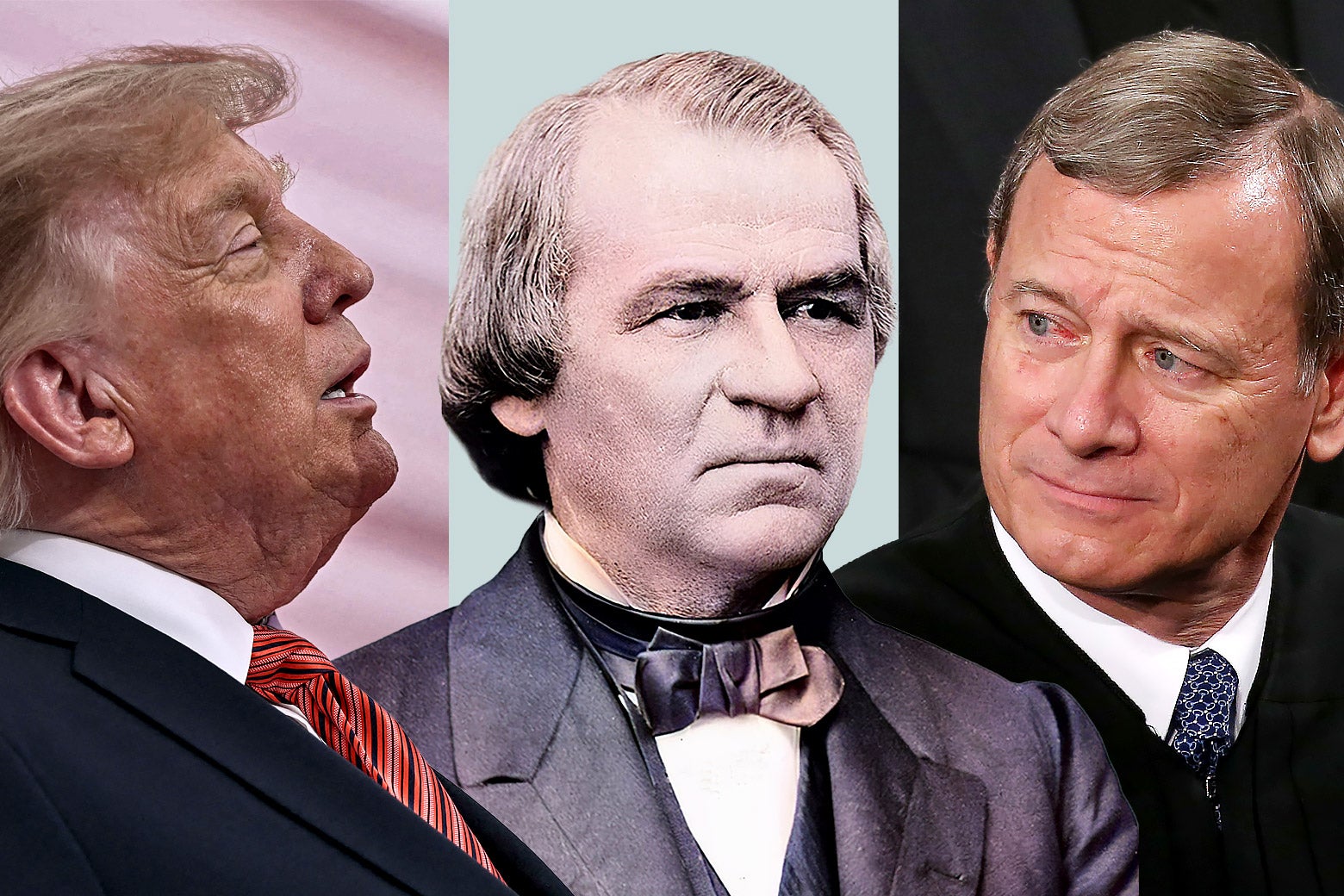
After the Civil War, President Andrew Johnson tried to sabotage Congress's multiracial democracy. Congress passed laws to bind him, including protections for officials carrying out Reconstruction.
Johnson's impeachment defense was radical
Johnson's lawyers argued he could ignore federal statutes to let the Supreme Court decide their constitutionality. Congress was horrified at this claim of a presidential second veto.
“A Constitution designed to free the people from monarchy would not have handed to the president this 'more than kingly prerogative.'”
Johnson lost but won the long game
Johnson survived impeachment by one vote and was restrained by Congress. But his opponents later recast him as a martyr and pushed for a court powerful enough to protect presidents from Congress.
Taft vindicated Johnson in 1926
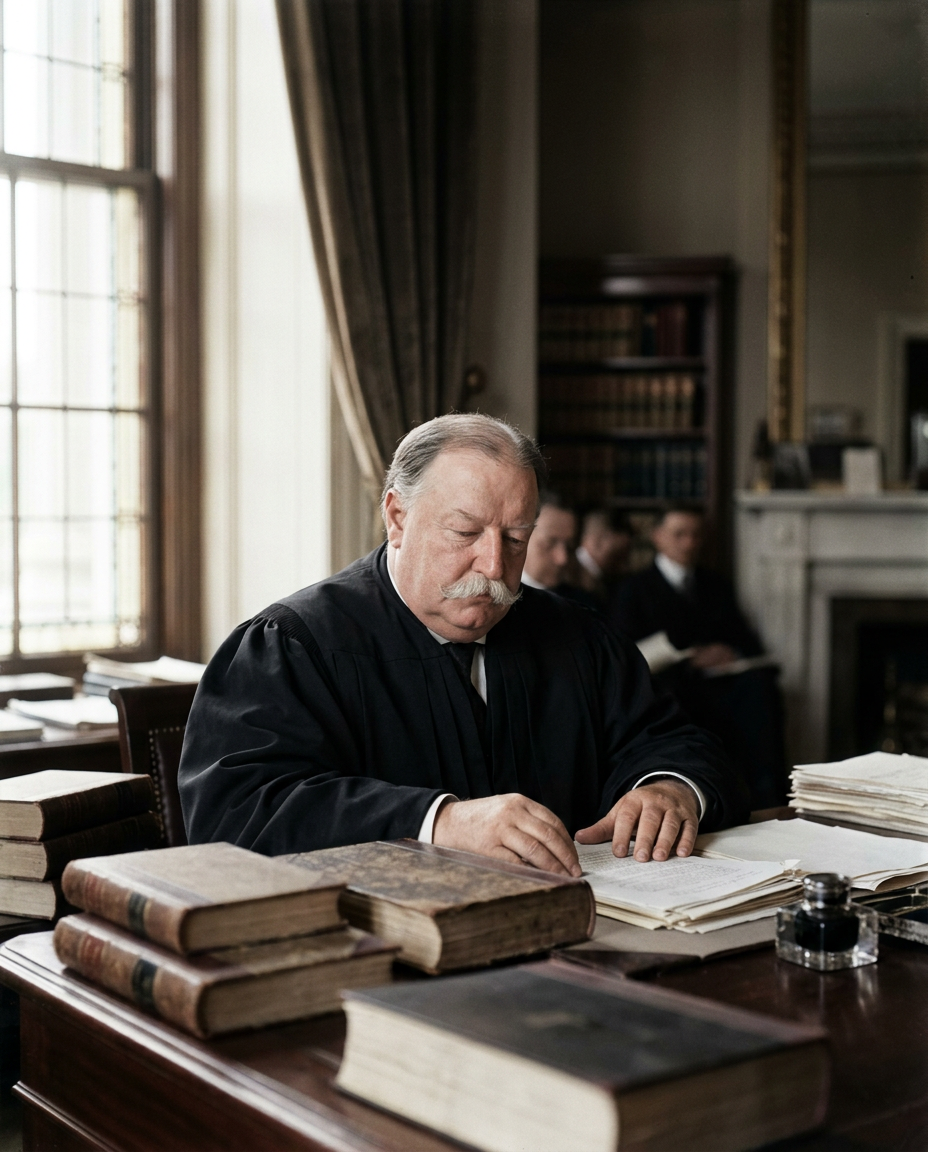
Chief Justice William Howard Taft said studying the injustice done to Andrew Johnson left him humiliated. He then struck down Reconstruction-era limits on presidential power in Myers v. United States.
Roberts admires Taft's approach
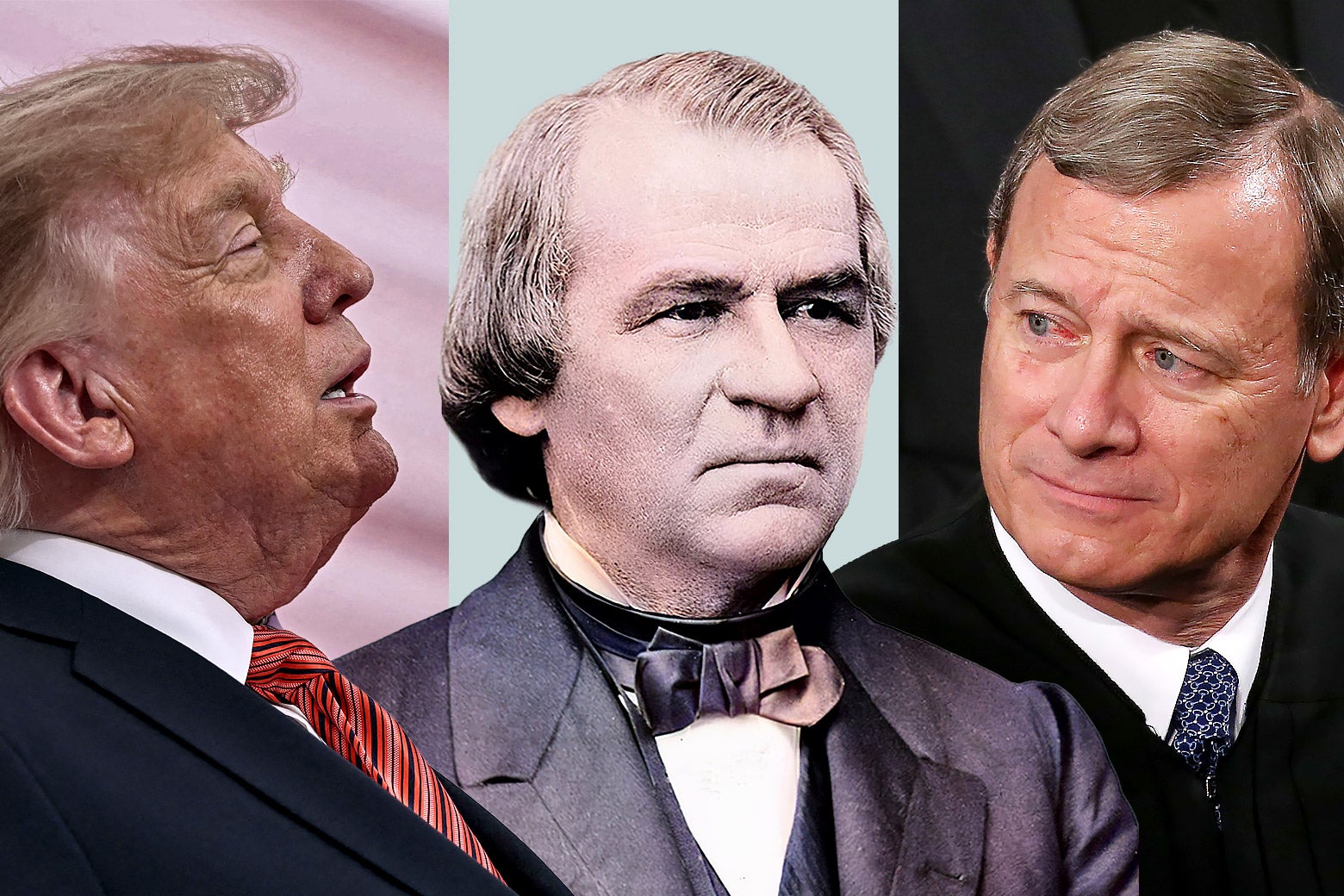
John Roberts wrote admiringly that Taft's leadership protected the president from Congress and helped fend off congressional efforts to rein in the court.
Trump v. Slaughter purges civil servants
The court invoked Myers to destroy century-old protections that kept public servants from being replaced with loyalists. It follows a pattern of placing presidents beyond enacted law.
Trump v. United States grants immunity
The court exempted the president from most federal criminal law. Statutes prohibiting corruption, obstruction, and election interference now bind everyone except the country's most powerful officer.
The court blocks some Trump actions

The court struck down illegal tariffs and refused to let the Postal Service disrupt mail-in voting. Lower courts have blocked unlawful National Guard deployments and ICE raids.
But only when enforcing statutes
Every ruling restraining Trump enforces a federal statute Congress wrote. When the court defies statutes because five justices disagree, it loosens vital checks on presidential power.
“A court that defies federal law enables presidents to do the same.”
Congress must hold justices accountable
To save democracy, Congress must replace judicial supremacy with a court accountable to federal law. The choice is between a president above the law and one beholden to it.
What to remember
The Supreme Court's power to override federal statutes has created an imperial presidency that Congress must rein in by making the court accountable to enacted law.