From Slate Magazine · Laura Miller · · 3m
John Green's Hollywood Scathing
After a decade away, the YA author returns with his first adult novel, a sharp critique of fame and the movie business.
In brief
After a decade away, the YA author returns with his first adult novel, a sharp critique of fame and the movie business. Green's new novel uses his insider knowledge of Hollywood to expose how the entertainment industry exploits even the most private moments of its stars. Originally reported by Slate Magazine.
Green returns after 10 years
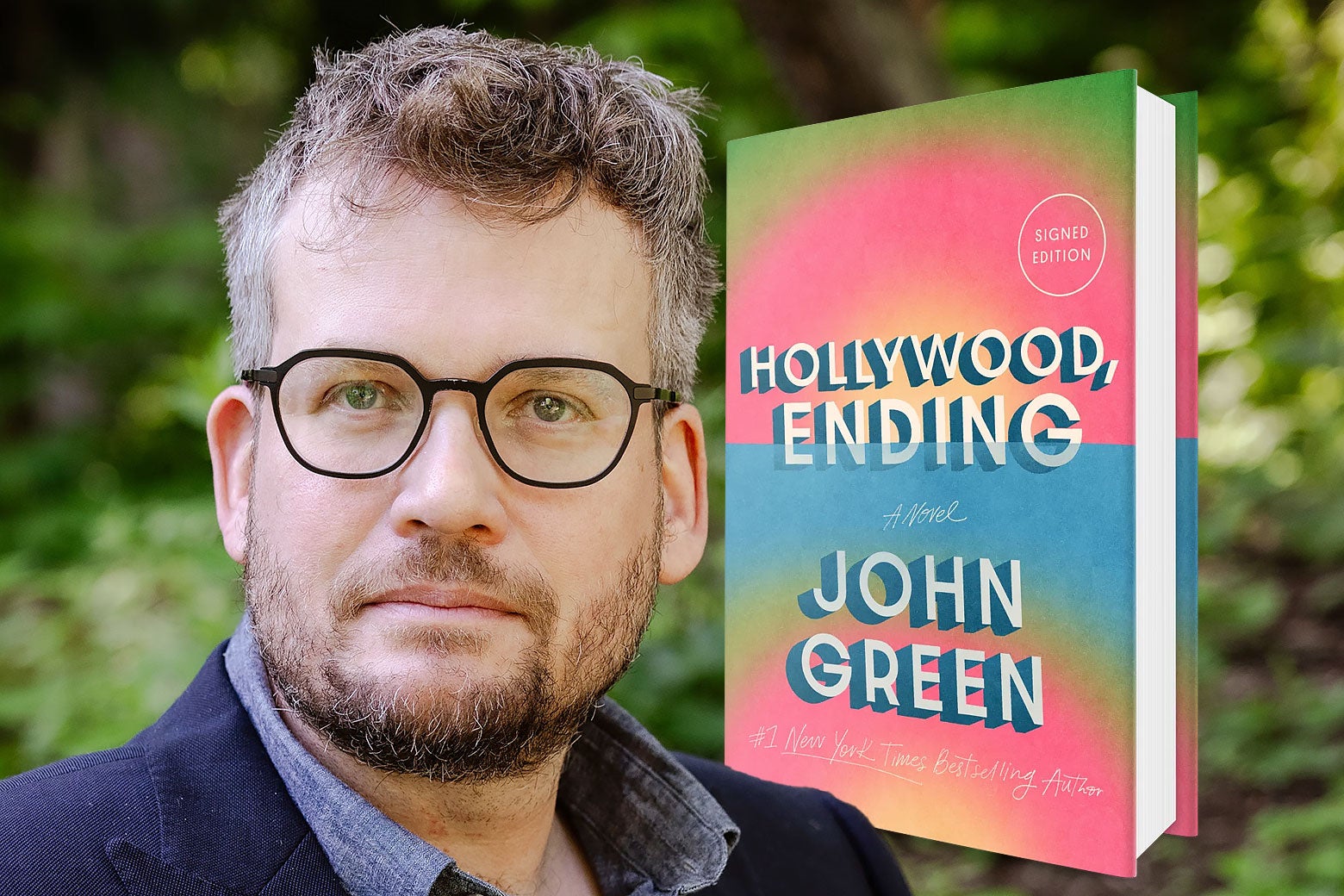
John Green's first novel in a decade, Hollywood Ending, marks his debut as an adult fiction writer. It carries the warmth of his beloved YA books but with more swearing and sex.
Why his YA was never just for kids
Green's young adult novels tackled terminal illness and mental health with deceptive lightness. His characters faced real darkness, making readers wonder why anyone thought these books were only for teenagers.
Two actors, one impossible connection
The novel follows Juniper Castillo and Kai Laramie, young movie stars on the verge of stardom. Their struggle to connect authentically becomes complicated when everyone around them wants them to become a couple.
The real subject: authenticity amid artifice
If The Fault in Our Stars explored loving in the face of death, Hollywood Ending examines the near impossibility of being genuine in an environment founded entirely on fakeness.
Green writes from inside the machine
Unlike most novels about fame, Hollywood Ending feels situated inside the experience rather than speculating from outside. Green has seen Hollywood firsthand through his book adaptations.
Their big break: a Warhol biopic
Juniper and Kai land secondary roles in Andy Warhol Never Gets Old, a small-budget biopic with Matthew Malone as the lead. The film has little commercial appeal but their performances could make it a hit.
“a movie with a five-word title about a dead artist”
Juniper: ambition over everything
Juniper, a former child star, buries herself in career research and produces detailed notes on improving every scene. She's up for a blockbuster fantasy lead but believes true love cannot coexist with true ambition.
“true love cannot coexist with true ambition”
Kai: vulnerability hiding damage
Kai appears emotionally open, crying easily and declaring love quickly. But this masks a deeply damaged core rooted in childhood trauma that emerges gradually throughout the novel.
The promotional junket nightmare
Green vividly captures the synthetic texture of movie promotion: being coached to say nothing important, deflecting questions, and manicuring social media. Kai navigates this bizarre Wonderland with naive wonder.
“No, of course not. Juniper is married to the sea.”
Hollywood speaks its brutal truth
Behind closed doors, industry professionals are hilariously frank and profane. Green captures their cynicism about money, talent, and what actually makes a star, drawing from his own Hollywood experiences.
“it'll get money norovirus and shit money while it pukes money”
When privacy becomes exploitation
When Kai's private trauma becomes public, the studio and media exploit it. His publicist explains they'll claim he was public about his abuse, giving them permission to discuss it, even though he never chose to share it.
“They will say You've been very public about your abuse”
Green's scathing portrait of fame
Hollywood Ending offers Green's harshest critique yet of celebrity culture and movie business venality. Yet beneath the savagery lies his enduring concern: how to remain decent in a ruthless, impersonal world.
What to remember
Green's new novel uses his insider knowledge of Hollywood to expose how the entertainment industry exploits even the most private moments of its stars.