From Slate Magazine · Saul Cornell · · 1m 40s
Supreme Court Misquote on AR-15 Ban
Supreme Court case for legalizing AR-15s nationally rests on misquoted historical phrase.
In brief
Supreme Court case for legalizing AR-15s nationally rests on misquoted historical phrase. Supreme Court's AR-15 ban test relies on a misquoted phrase from Blackstone that never used 'and' instead of 'or'. Originally reported by Slate Magazine.
The Supreme Court Case
The Supreme Court case for legalizing AR-15s nationally rests on a misquote of Blackstone's historical phrase.
Scalia's 2008 Ruling
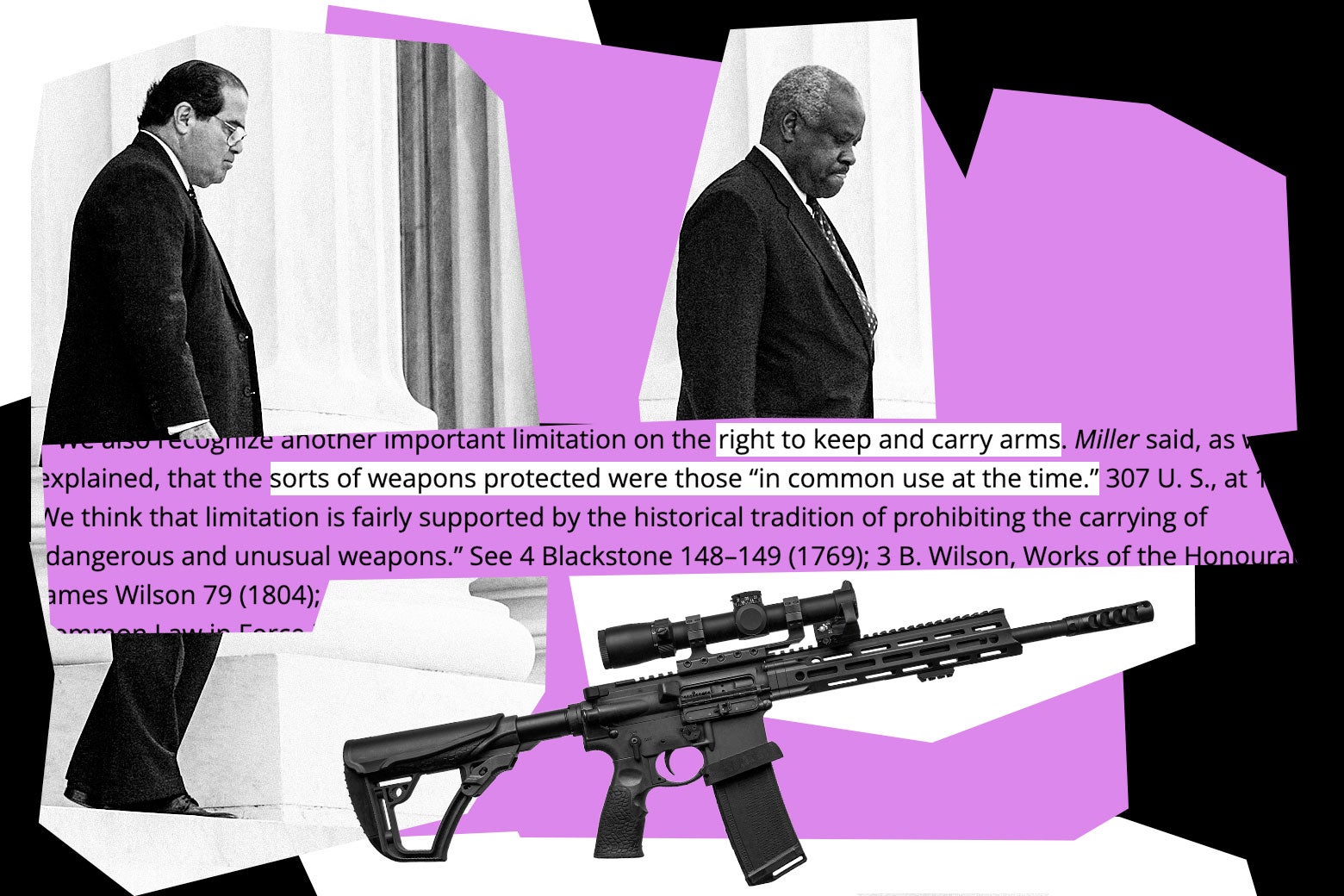
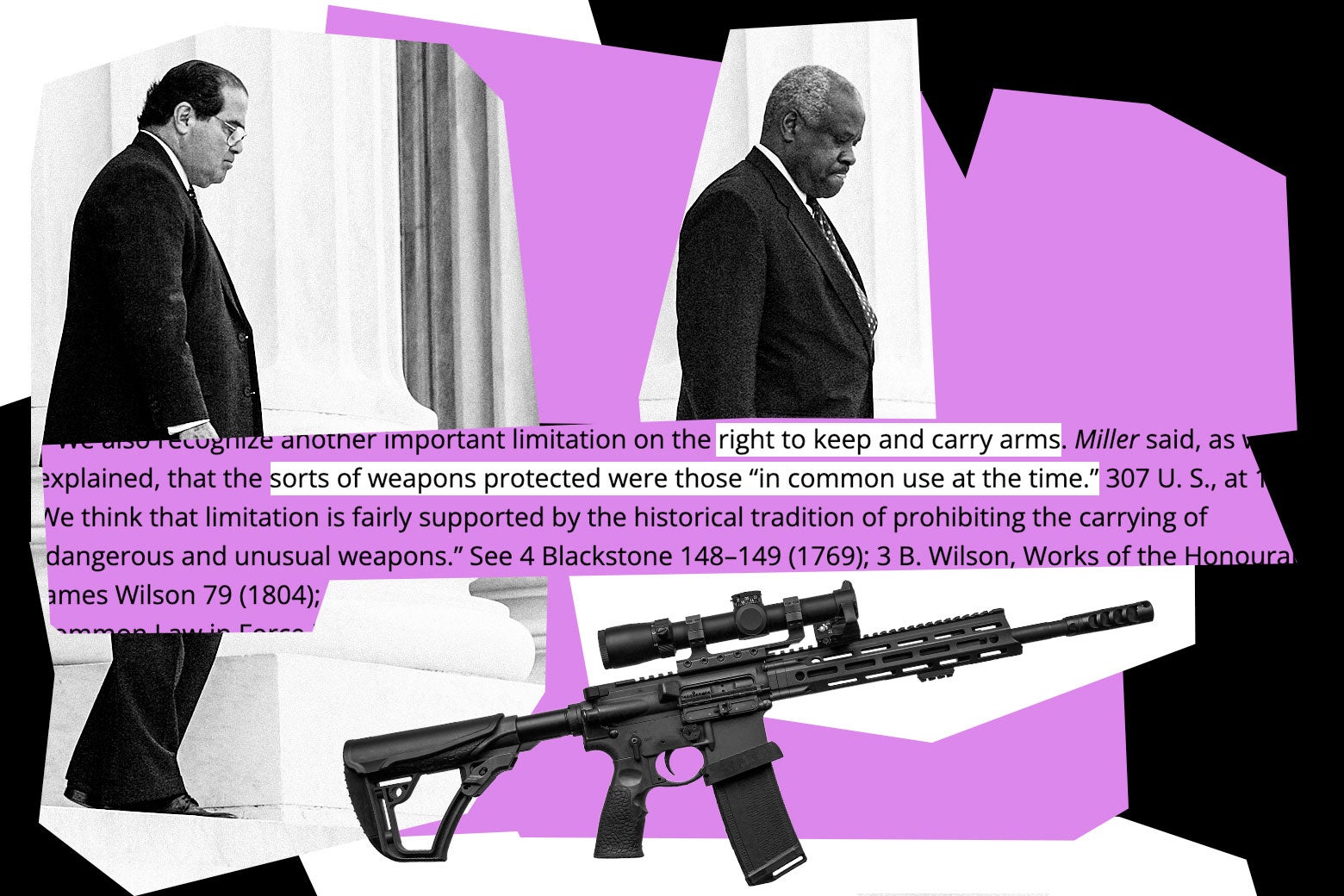
In District of Columbia v. Heller, Justice Antonin Scalia cited Blackstone's phrase 'dangerous or unusual' for gun restrictions.
“dangerous or unusual”
Gun Rights Test
Gun rights advocates turned the phrase into a two-part test: weapons banned only if both dangerous and unusual.
The Misquote Problem
Blackstone never wrote 'dangerous and unusual'; he described weapons as 'dangerous or unusual'.
“dangerous or unusual”
Legal Citation Issue
The Supreme Court's citation style requires direct quotes without 'See' prefixes for sources.
Heller Case Confusion
Heller cited both 'dangerous or unusual' and 'dangerous and unusual' phrases from different sources.
“dangerous or unusual”
Bash's Argument
John Bash argued that the phrase covers both dangerous and unusual weapons through formal logic.
Historical Context
Founding-era lawyers used 'dangerous or unusual' and 'dangerous and unusual' interchangeably for weapons.
Current Legal Test
In Caetano v. Massachusetts, Justice Samuel Alito and Clarence Thomas declared the conjunctive test for AR-15s.
“this is a conjunctive test: A weapon may not be banned unless it is both dangerous and unusual”
AR-15 Ban Challenge
The Supreme Court is now deciding whether counties and states may ban AR-15-platform rifles.
Constitutional Implications
The court's interpretation risks substituting judicial judgment for elected officials' decisions on gun laws.
Originalism Clash
Textualists like Scalia oppose this interpretation, but the court's gun rulings show a shift toward living constitutionalism.
The main idea
Supreme Court's AR-15 ban test relies on a misquoted phrase from Blackstone that never used 'and' instead of 'or'.
Read the TL;DR — this story on one card.