From Space · · 3m
Night Sky November 2026 Highlights
Celestial events for November 2026: moon, planets, and star clusters visible in the night sky.
In brief
Celestial events for November 2026: moon, planets, and star clusters visible in the night sky. November 2026 offers night sky viewing opportunities including the moon near the Beehive Cluster, Mars and Jupiter conjunctions, and the Andromeda Galaxy. Originally reported by Space.
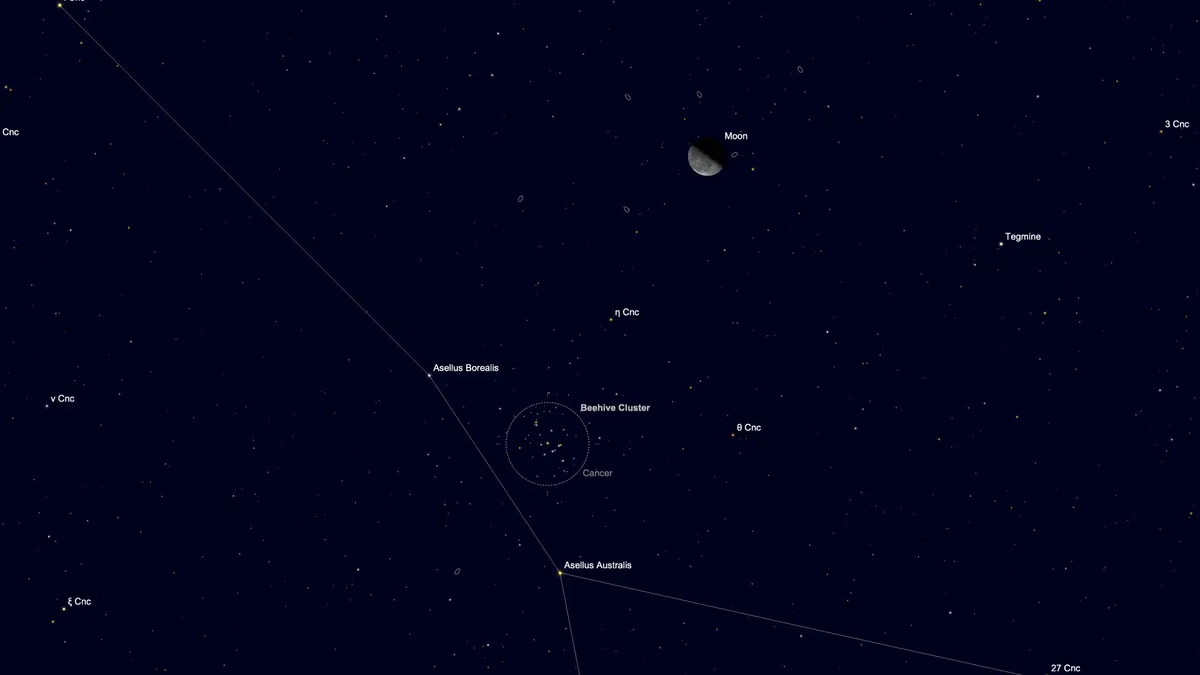
Nov. 1: Moon near Beehive Cluster
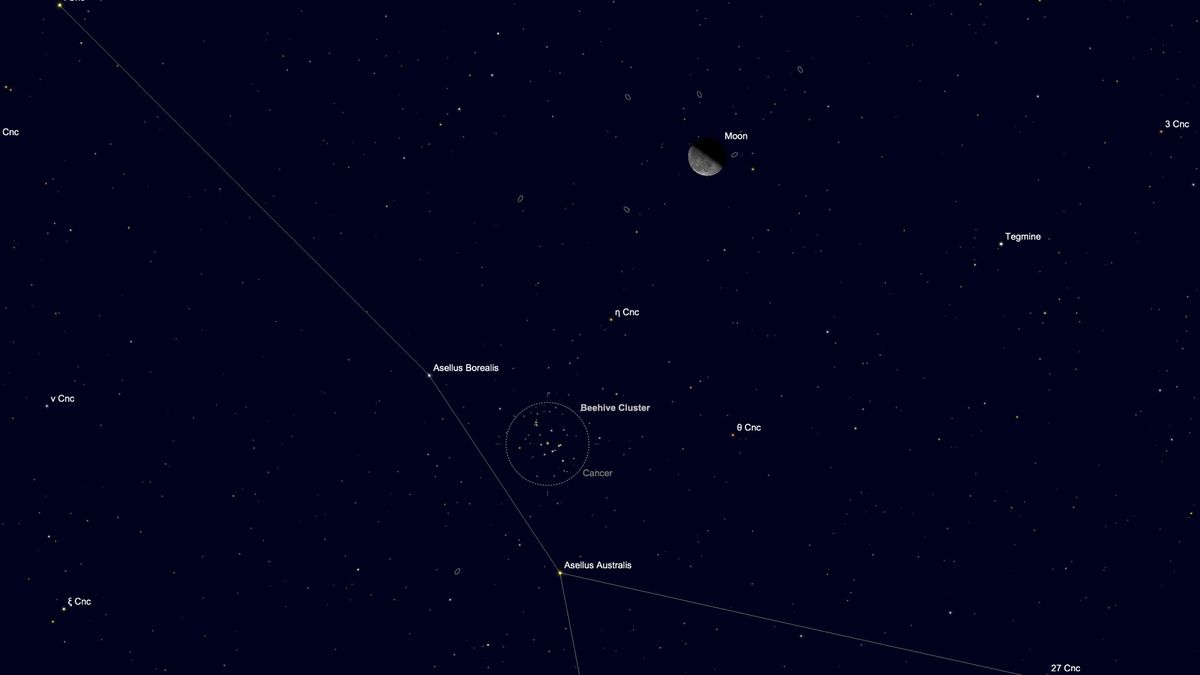
The moon passes near the Beehive Cluster (M44) in the predawn hours of Nov. 1, 2026.
“The moon passes near the Beehive Cluster (M44) in the constellation Cancer in the predawn hours of Nov. 1, 2026”
Nov. 2: Mars near Moon
Mars shines close to the waning crescent moon in the predawn sky on Nov. 2, 2026.
“Mars shines close to the waning crescent moon in the predawn sky on Nov. 2, 2026”
Nov. 3: Regulus and Jupiter near Moon
The moon passes close to Regulus, the brightest star in Leo, while brilliant Jupiter and reddish Mars shine nearby in the early morning sky on Nov. 3, 2026.
“The moon passes close to Regulus the brightest star in Leo while brilliant Jupiter and reddish Mars shine nearby in the early morning sky on Nov. 3 2026”
Nov. 4: Andromeda Galaxy
The Andromeda Galaxy (M31) is well placed for evening viewing in November.
“The Andromeda Galaxy (M31) is well placed for evening viewing in November”
Nov. 5: Southern Taurid Meteor Shower
The Southern Taurid meteor shower reaches its approximate peak around Nov. 5, 2026.
“The Southern Taurid meteor shower reaches its approximate peak around Nov. 5, 2026”
Nov. 6: Comet 161P/Hartley-IRAS
Comet 161P/Hartley-IRAS can be found near the constellation Sagitta in the evening sky on Nov. 6, 2026.
“Comet 161P/Hartley-IRAS can be found near the constellation Sagitta in the evening sky on Nov. 6, 2026”
Nov. 7: Venus, Spica and Moon
Brilliant Venus, the thin crescent moon and the bright star Spica form a striking grouping in the predawn sky on Nov. 7, 2026.
“Brilliant Venus the thin crescent moon and the bright star Spica form a striking grouping in the predawn sky on Nov. 7, 2026”
Nov. 8: Pegasus Globular Cluster
The globular star cluster M15 lies in the constellation Pegasus, near the star Enif.
“The globular star cluster M15 lies in the constellation Pegasus near the star Enif”
Nov. 9: Northern Taurid Meteors
The new moon on Nov. 9, 2026, provides dark skies for spotting Northern Taurid meteors ahead of the shower's peak around Nov. 12.
“The new moon on Nov. 9, 2026, provides dark skies for spotting Northern Taurid meteors ahead of the shower's peak around Nov. 12”
Nov. 10: Jupiter's Great Red Spot
Jupiter's Great Red Spot is visible in the predawn sky on Nov. 10, 2026.
“Jupiter's Great Red Spot is visible in the predawn sky on Nov. 10, 2026”
Nov. 11: Comet 10P/Tempel 2
Comet 10P/Tempel 2 sits low over the evening horizon in the Northern Hemisphere as it fades past its August perihelion.
“Comet 10P/Tempel 2 sits low over the evening horizon in the Northern Hemisphere as it fades past its August perihelion”
Nov. 12: Pleiades
The Pleiades (M45), also known as the Seven Sisters, is one of the most recognizable star clusters in the night sky.
“The Pleiades (M45) also known as the Seven Sisters is one of the most recognizable star clusters in the night sky”
Nov. 13: Kemble's Cascade
Kemble's Cascade is a striking chain of stars in the constellation Camelopardalis that appears to tumble across the sky.
“Kemble's Cascade is a striking chain of stars in the constellation Camelopardalis that appears to tumble across the sky”
Nov. 14: Double Cluster in Perseus
The Double Cluster in Perseus consists of two neighboring open star clusters, NGC 869 and NGC 884.
“The Double Cluster in Perseus consists of two neighboring open star clusters NGC 869 and NGC 884”
Nov. 15: Mars and Jupiter Conjunction
Reddish Mars and brilliant Jupiter appear close together in the constellation Leo in the predawn sky on Nov. 15, 2026.
“Reddish Mars and brilliant Jupiter appear close together in the constellation Leo in the predawn sky on Nov. 15, 2026”
Nov. 16: Orion Nebula
The Orion Nebula (M42) is a vast stellar nursery located in Orion's Sword, just below the constellation's famous three-star belt.
“The Orion Nebula (M42) is a vast stellar nursery located in Orion's Sword just below the constellation's famous three-star belt”
Nov. 17: Double Star Eta Cassiopeiae
Eta Cassiopeiae, also known as Achird, is a beautiful double-star system in the constellation Cassiopeia.
“Eta Cassiopeiae also known as Achird is a beautiful double-star system in the constellation Cassiopeia”
Nov. 18: Leonid Meteors Peak
The Leonid meteor shower peaks around Nov. 17-18, 2026, as Earth passes through debris left behind by comet 55P/Tempel-Tuttle.
“The Leonid meteor shower peaks around Nov. 17-18, 2026, as Earth passes through debris left behind by comet 55P/Tempel-Tuttle”
Nov. 19: Venus near Spica
Dazzling Venus shines close to Spica, the brightest star in Virgo, in the predawn sky on Nov. 19, 2026.
“Dazzling Venus shines close to Spica the brightest star in Virgo in the predawn sky on Nov. 19, 2026”
Nov. 20: Owl Cluster
The Owl Cluster (NGC 457), also known as the E.T. Cluster, is an open star cluster in Cassiopeia.
“The Owl Cluster (NGC 457) also known as the E.T. Cluster is an open star cluster in Cassiopeia”
The bottom line
November 2026 offers night sky viewing opportunities including the moon near the Beehive Cluster, Mars and Jupiter conjunctions, and the Andromeda Galaxy.