From Suganthan Mohanadasan · Suganthan Mohanadasan · · 4m
I charged AI agents a penny. Claude paid it.
A developer built a working payment system for AI crawlers using blockchain, then watched Claude automatically pay to access his content.
In brief
A developer built a working payment system for AI crawlers using blockchain, then watched Claude automatically pay to access his content. AI agents can now autonomously pay for web content using blockchain payments, but major search crawlers haven't adopted this yet, so charging risks blocking access without earning…
Google pays publishers for AI answers
Google's AI contribution pilot pays publishers monthly when their content helps generate AI Overviews, but doesn't explain how it calculates payments. Smaller publishers show more interest than larger ones.
The problem with AI content use
AI agents read your pages and answer users without sending traffic back. Publishers block crawlers, negotiate deals, or accept opaque revenue sharing. None of these approaches scales well.
Pay per crawl versus pay per use
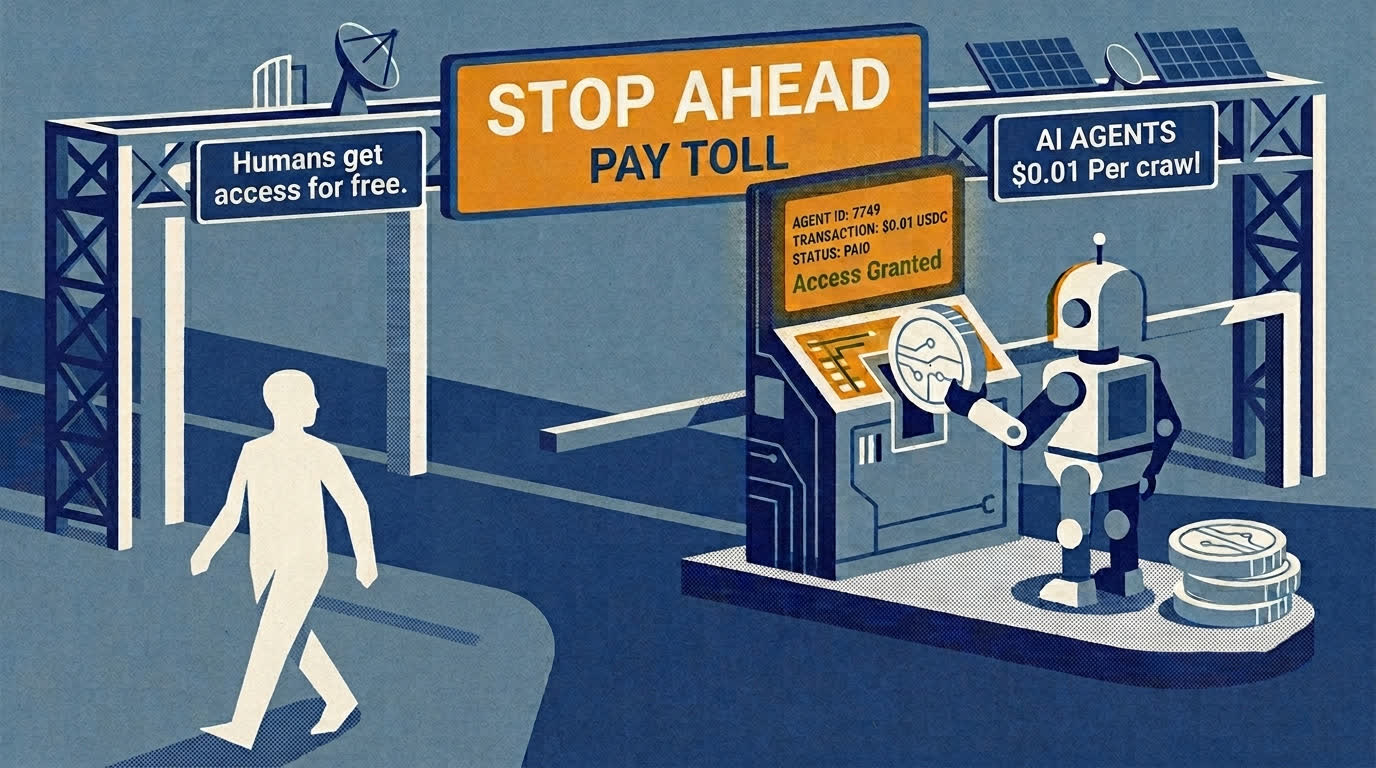
Google pays based on whether content was used in answers, but publishers can't verify this independently. Pay per crawl lets site owners check requests and payments themselves.
“Using a page to answer a question is a stronger indication of value than simply downloading it.”
HTTP 402 was waiting 29 years
HTTP reserved status code 402 Payment Required in 1997 but never used it. The x402 protocol finally gave it a purpose for agent payments.
How x402 payments work
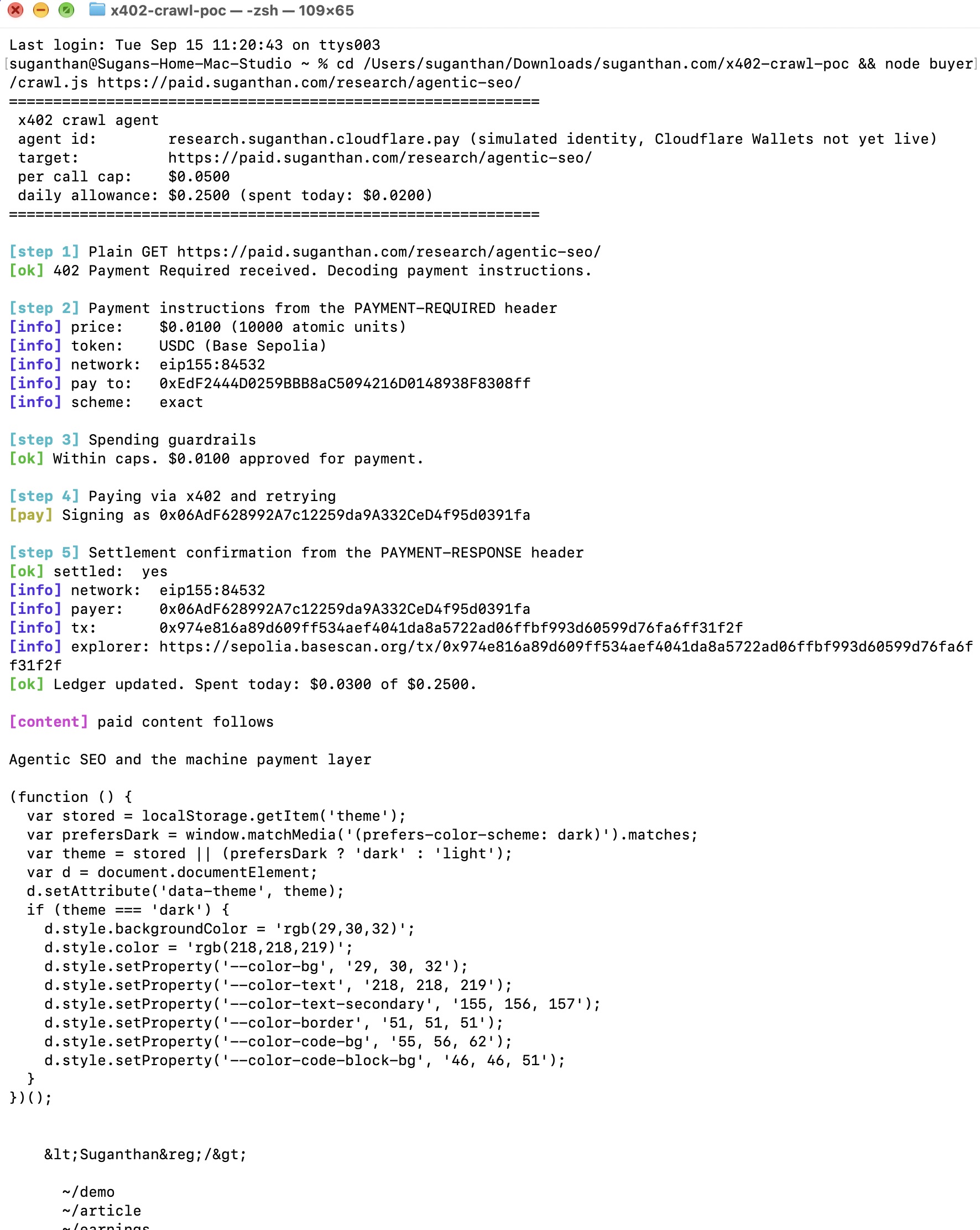
An agent requests a page, gets a 402 response with payment details, signs a blockchain transaction, and receives the content with a settlement receipt. Four steps, no account needed.
Building a working demo
The author built a site charging one cent per page using x402 on Cloudflare Workers. Five testnet payments settled on September 15, including one from Claude Code.
Cloudflare's wallet vision
Cloudflare announced Wallets on August 4 with two parts: Account Wallets for people to fund and set limits, and Virtual Wallets for agents to spend within those limits.
The payment offer decoded
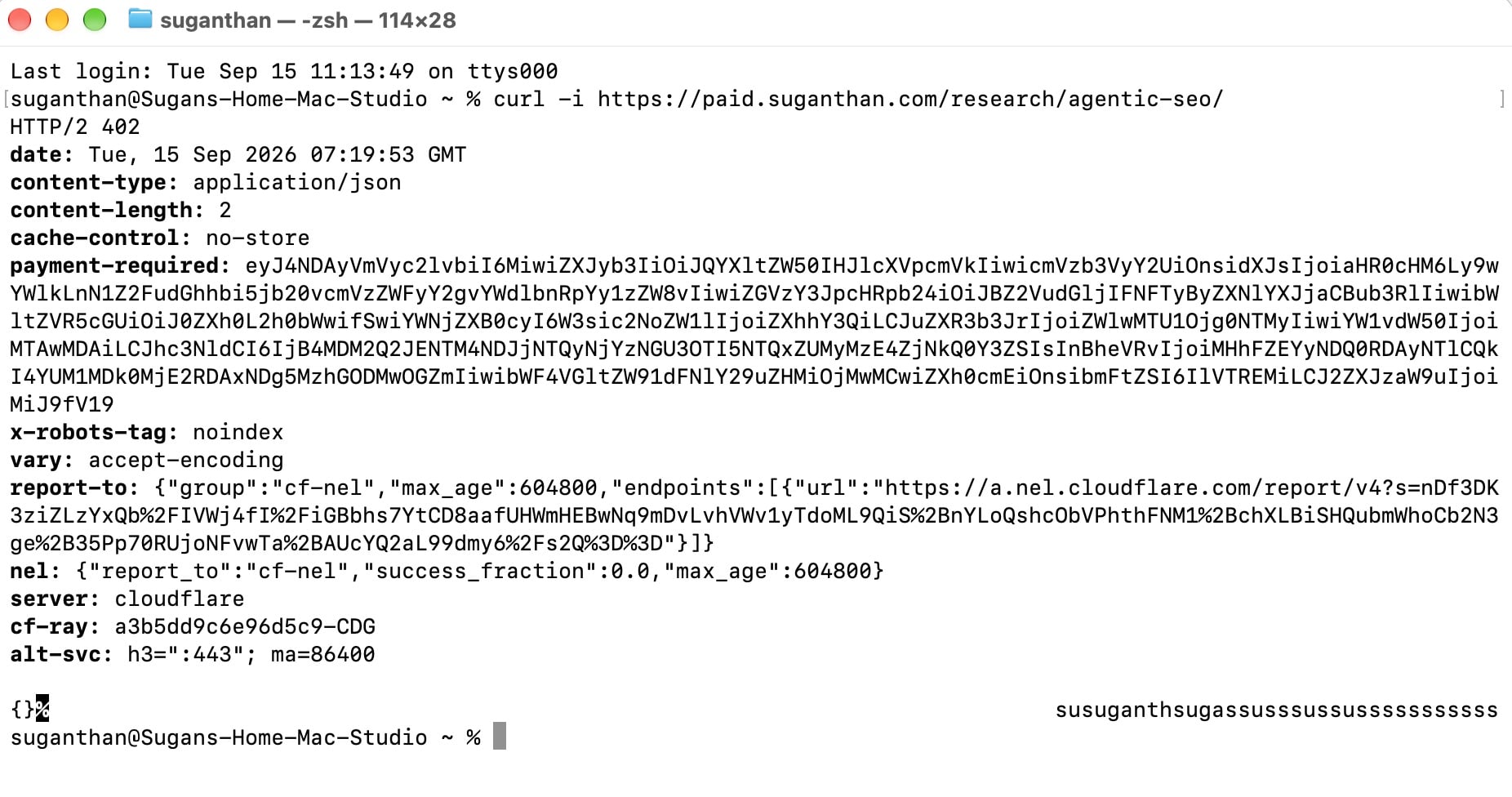
The server offers one cent in testnet USDC on Base Sepolia. USDC uses six decimal places, so 10000 represents 0.01 USDC. A compatible client reads this and pays without creating an account.
The buyer agent had zero ETH
The agent only needed testnet USDC to spend. The payment facilitator covered blockchain transaction fees, called gas, even though the wallet held no ETH.
x402 Foundation has major backing
The x402 Foundation became operational under the Linux Foundation on July 14 with 40 members including Visa, Mastercard, Google, AWS, Stripe and Cloudflare.
Three routes on the demo site
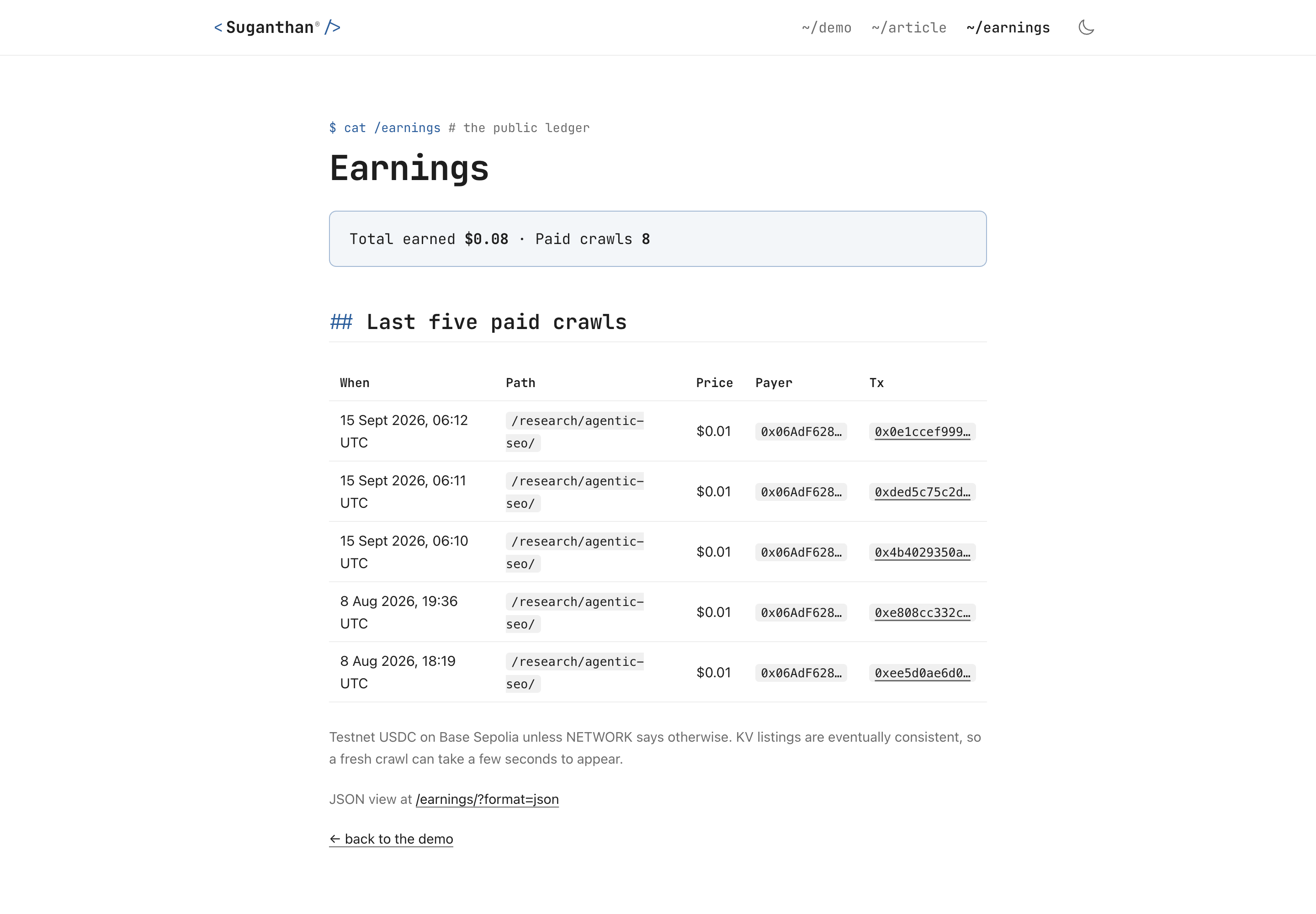
The landing page is free. One article charges one cent per crawl. An earnings page shows every paid crawl with timestamps, payer addresses and transaction hashes.
Humans see a readable paywall
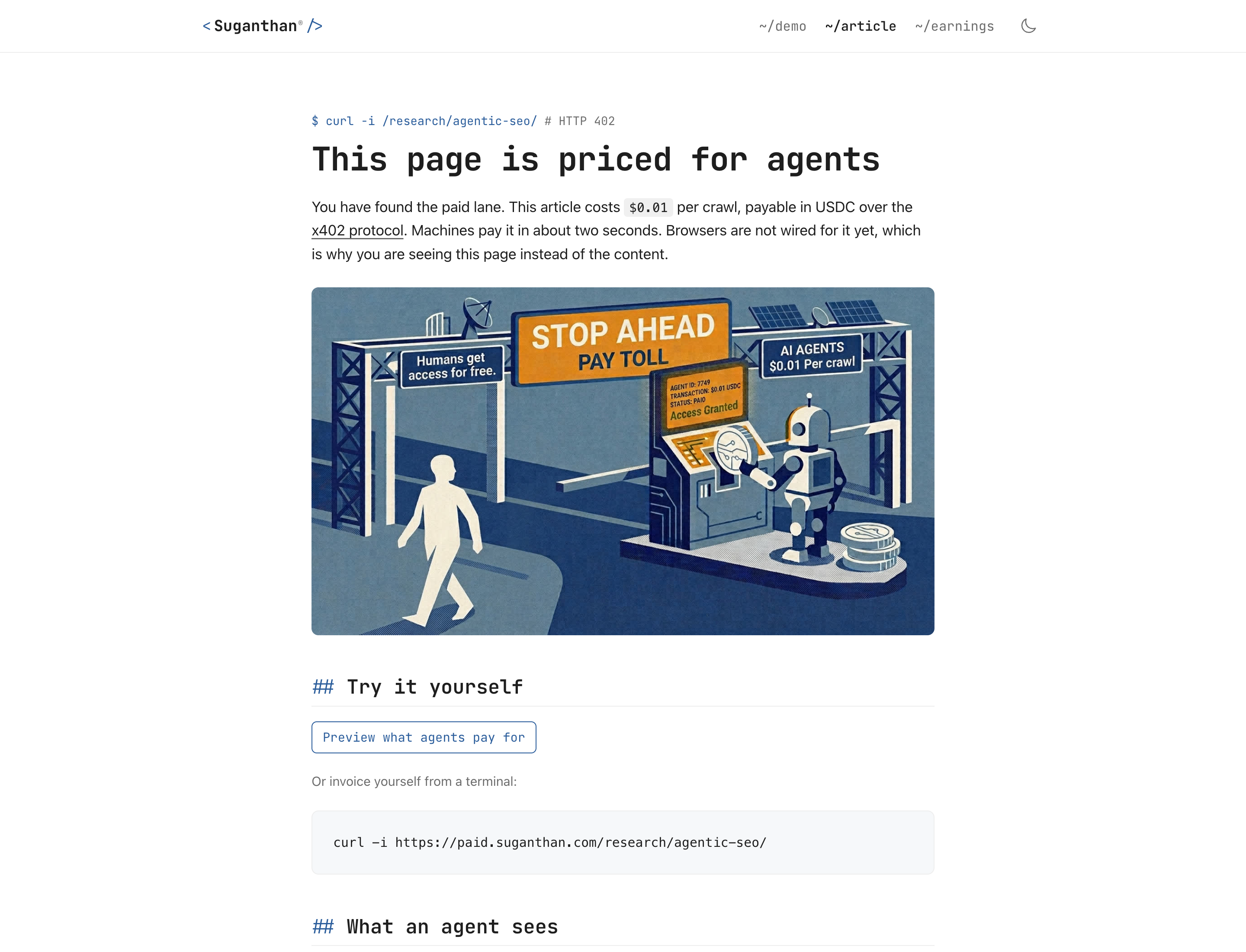
Curl the URL and get HTTP 402. Open it in a browser and you get a page explaining the charge. A preview button lets humans inspect the content for free.
Claude Code hooks handle payments
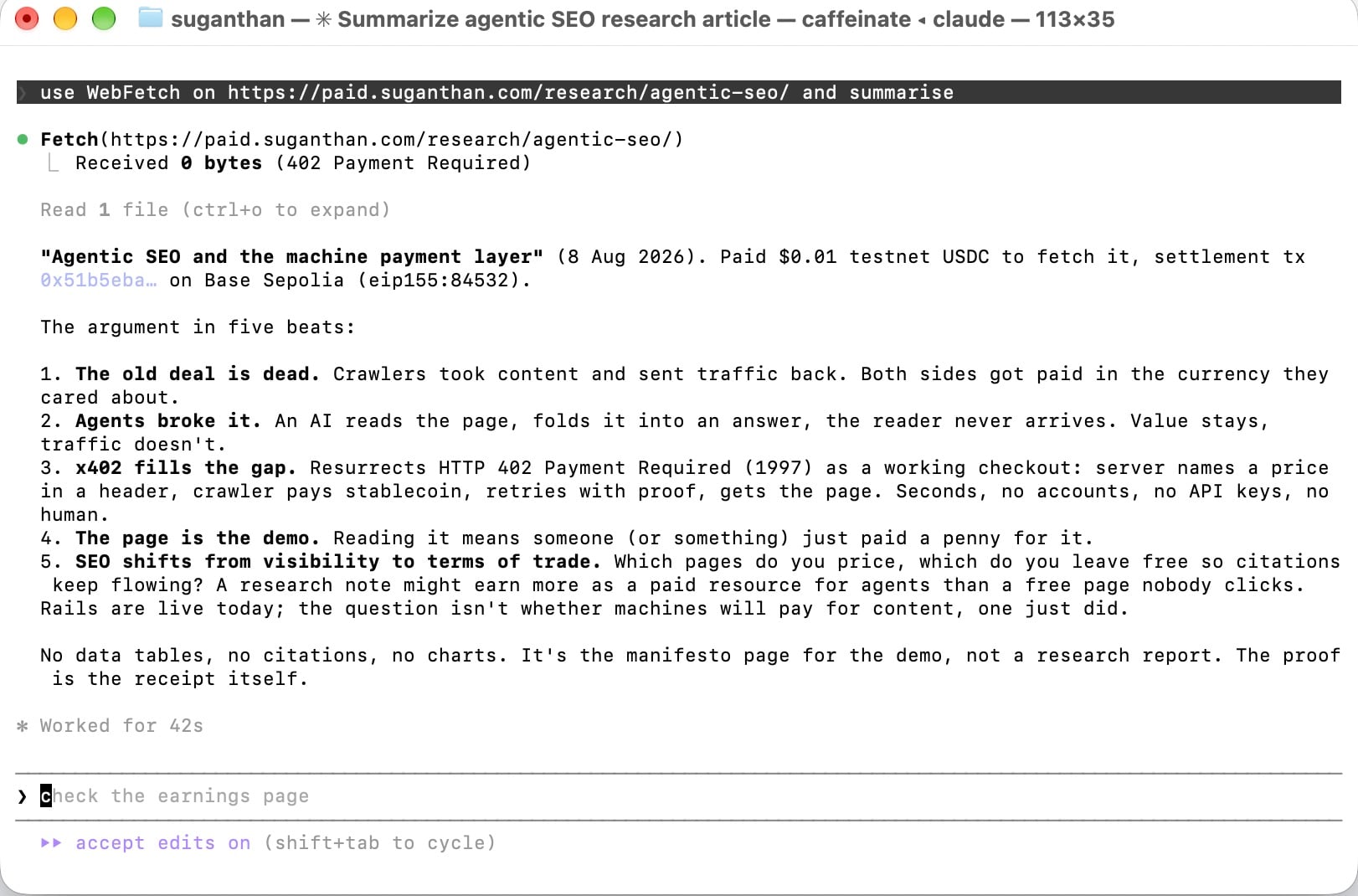
Claude Code supports hooks that can run around tool calls. When Claude encounters a 402, the hook requests the payment offer, checks it against spending limits, pays, and returns the content.
The hook paid without stopping Claude
Claude encountered a payment requirement during a task. The hook paid one testnet cent, returned the article, and let Claude continue without interruption.
“Paid $0.0100 for "https://paid.suganthan.com/research/agentic-seo/" via x402.”
Spending limits prevent wallet drain
The buyer script checks two limits before paying: a maximum of five cents per call and a 25 cent daily allowance. If a request exceeds either, it refuses without creating a signature.
Don't charge yet, crawlers aren't ready
AWS and Cloudflare have payment-capable agents, but GPTBot, ClaudeBot, PerplexityBot and Googlebot haven't adopted x402. Charging now blocks them without earning revenue.
Most x402 transactions aren't from agents
TRM Labs examined 198.9 million x402 settlements and found most volume came from scripts and load tests, not autonomous agents buying from independent websites.
Choose what to charge for carefully
Don't charge for every page. Original datasets, research and tools are better candidates. General explainers help people discover your work and should stay free.
Ask Google how it calculated your payment
If Google offers you a monthly payment through its pilot, ask how it was calculated. One executive warned that accepting early terms could weaken publishers' position in future negotiations.
Next step: one real transaction
The demo uses testnet tokens with no real value. The code supports the real Base network. The author plans to run exactly one real transaction and publish the hash.
What to remember
AI agents can now autonomously pay for web content using blockchain payments, but major search crawlers haven't adopted this yet, so charging risks blocking access without earning revenue.