From TIME · Jeffrey Kluger · · 3m
NASA's Artemis III will be far more complex than Apollo 9
NASA plans an intricate orbital test of two competing lunar landers in summer 2027 before attempting a crewed moon landing in 2028, racing against China.
In brief
NASA plans an intricate orbital test of two competing lunar landers in summer 2027 before attempting a crewed moon landing in 2028, racing against China. NASA will conduct a complex orbital test of two lunar landers in summer 2027 to prepare for a crewed moon landing in 2028, competing with China in a new space race…
Apollo 9 set the template
Fifty-seven years ago, NASA tested a crewed lunar lander in low-Earth orbit.A Saturn 5 rocket lifted off from Kennedy Space Center in Florida carrying three astronauts, an Apollo spacecraft, and a lunar module.
Artemis III will be vastly more complicated
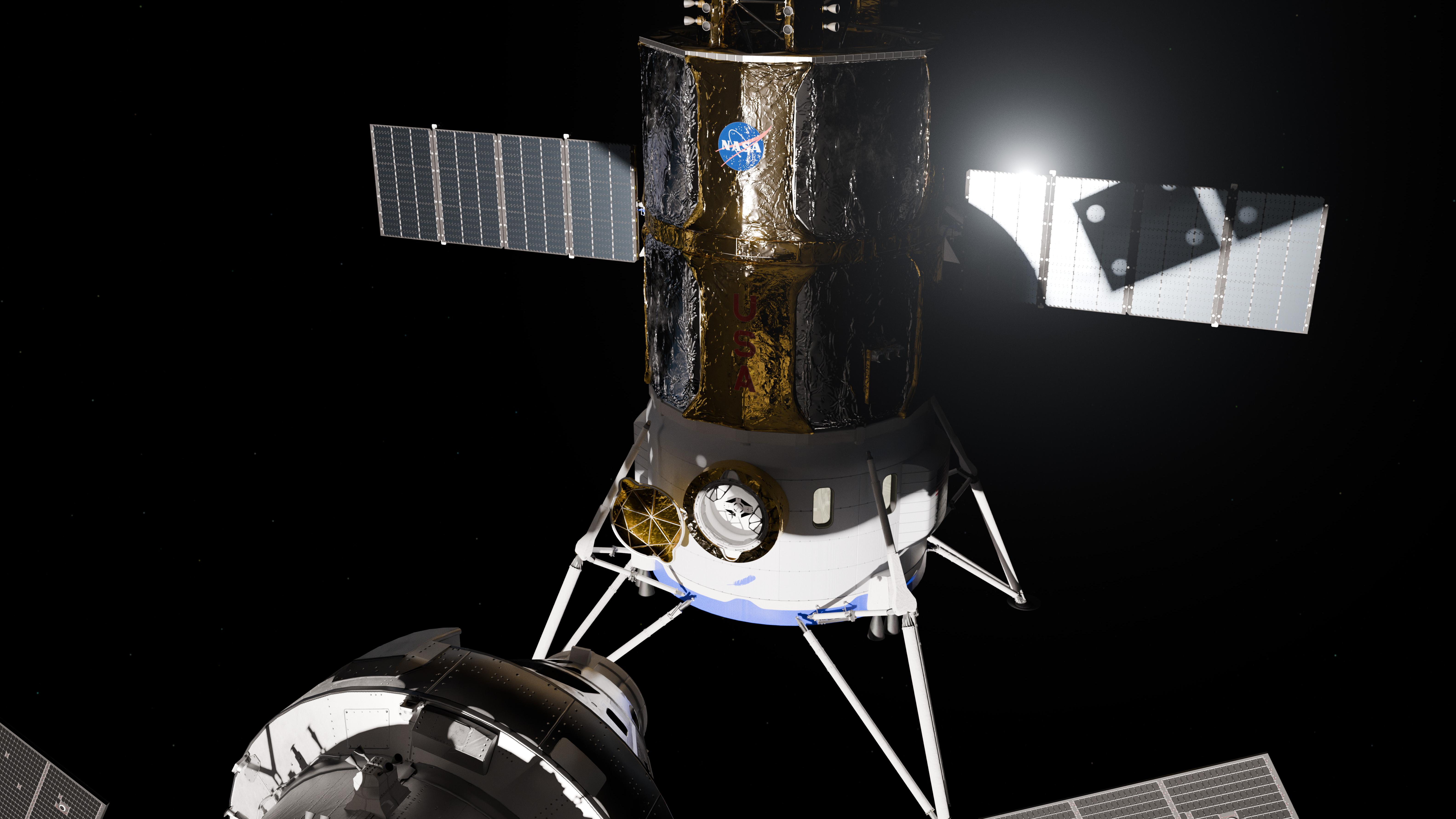
NASA's planned Artemis III mission in summer 2027 will involve multiple uncrewed rocket launches and spacecraft rendezvous in orbit before the crew returns home.
Blue Origin launches the first lander
An uncrewed Blue Origin New Glenn rocket will launch from Kennedy Space Center carrying the company's Blue Moon lander into orbit.
The crew tests the Blue Moon
The Artemis III astronauts will rendezvous with the Blue Moon, dock with it and enter it. They will check out its systems before returning to the Orion spacecraft for further testing.
SpaceX launches its Starship lander
SpaceX will launch an uncrewed Starship rocket carrying its own Starship lander. The astronauts will rendezvous and dock with that ship but will not enter it since it will not yet be equipped with a…
NASA's confidence despite complexity
On October twenty-third, NASA Administrator Jared Isaacman, Associate Administrator Amit Kshatriya and Artemis Program Manager Jeremy Parsons held a two-hour press conference at Kennedy Space Center detailing plans for Artemis III and IV, conceding that…
Why two spacecraft are necessary
A single spacecraft capable of landing on the moon, blasting back off and reentering Earth's atmosphere would be too heavy for lunar landing and liftoff.
SpaceX's Starship design raised concerns
In 2021, NASA awarded SpaceX a contract to build a crewed lunar spacecraft using its Starship lander, a silo-like cylinder measuring one hundred sixty-five feet tall.
NASA adds a second contractor
In 2023, NASA issued a second contract to Blue Origin, which promised to build a lander more in keeping with the low-slung Apollo lunar module.
Blue Origin rebounds from disaster
Blue Origin's New Glenn rocket launched three times from January 2025 to April 2026, before a massive explosion on the launch pad during a test of its first stage engines occurred in May 2026.
NASA praises Blue Origin's progress
Artemis Program Manager Jeremy Parsons said at the October twenty-third press conference that Blue Origin's New Glenn team has amazed the world with their progress for return to flight after the incident in May, with…
“Blue Origin's New Glenn team has amazed the world with their progress for return to flight after the incident in May.”
Blue Moon gets a fuller test
SpaceX will fly only a boilerplate Starship lander equipped with a docking port to test whether the Orion and Starship can meet and link up in orbit.
The race against China continues
NASA Administrator Jared Isaacman acknowledged that decades of uncertainty since the Apollo program, with priorities shifting between Skylab, the shuttle and the International Space Station, have set the agency back in its competition with China.
“Here we are today, very much in a new space race, and despite decades of accumulated knowledge and extraordinary advancements in technology, this race will be much closer than it ever needed to be.”
The bottom line
NASA will conduct a complex orbital test of two lunar landers in summer 2027 to prepare for a crewed moon landing in 2028, competing with China in a new space race.