From TIME · Yasheng Huang · · 4m
The China Shock meets AI productivity crisis
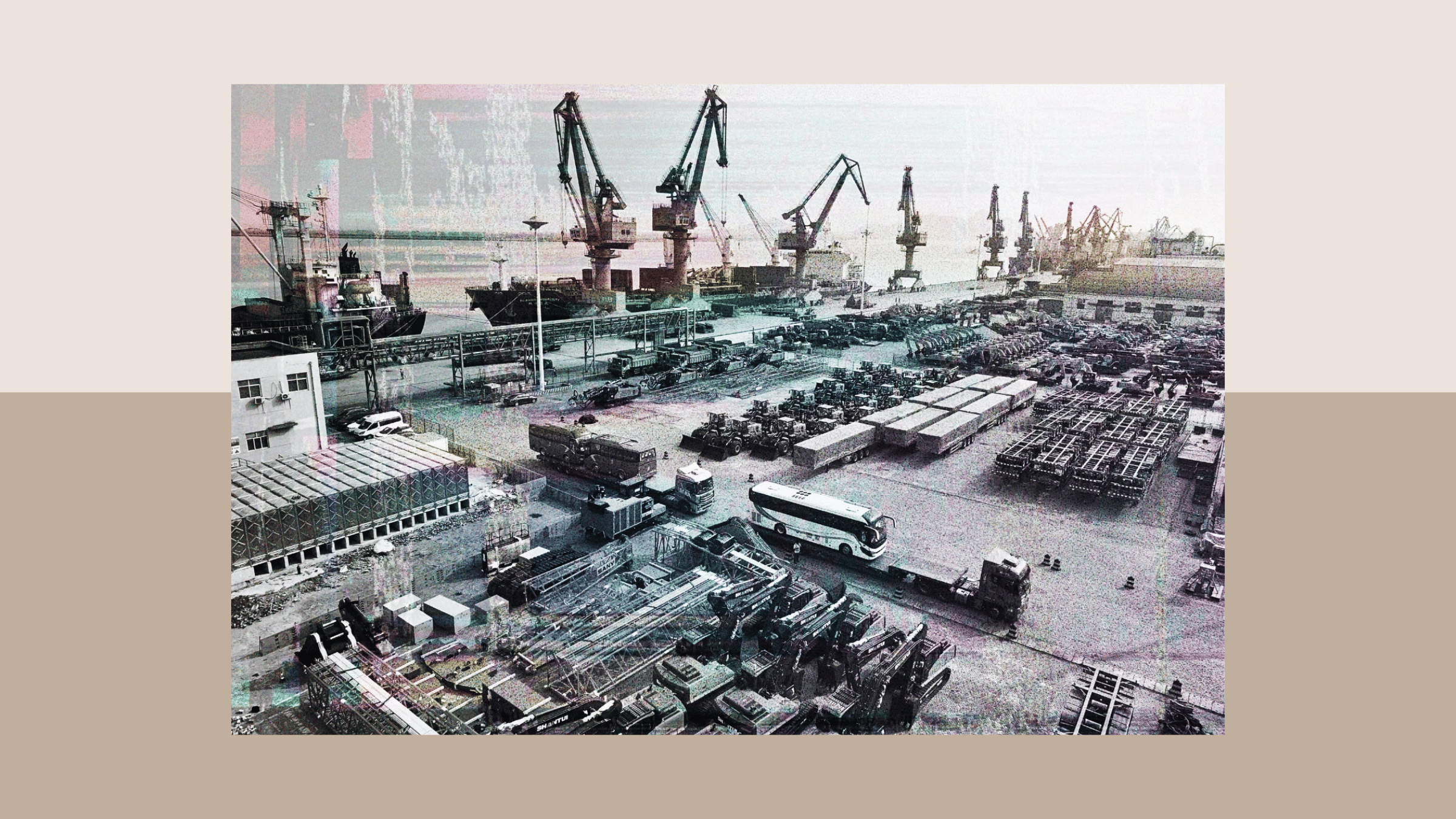
As China floods global markets with cheap goods, AI threatens to worsen the imbalance between production and demand that already destabilises the world economy.
In brief
As China floods global markets with cheap goods, AI threatens to worsen the imbalance between production and demand that already destabilises the world economy. China's export dominance and AI-driven productivity growth could combine to create an unprecedented economic crisis, with production vastly outpacing global…
Americans vote to slow AI expansion
Forty local ballot measures in ten states promise to tighten restrictions on data-center construction, with overwhelming public support.
Public anxiety about AI is rising
A two thousand twenty-six survey by Pew Research Center found that about fifty-two percent of Americans were more concerned than excited about the growing use of AI in daily life, up from thirty-seven percent in…
Concerns span safety, jobs and surveillance
Americans worry about the safety of increasingly powerful AI systems, job displacement, surveillance and privacy loss, misinformation and deep fakes, and the concentration of wealth in a handful of companies that own frontier AI models.
Geopolitical anxiety enters public debate
The possibility that Jensen Huang, who resigned as chief executive of Nvidia on Thursday, may have been compromised in a potential espionage scandal has brought anxiety about AI's role in US-China competition into the broader…
US and China are AI superpowers
America leads in computing power, thanks largely to Nvidia's advanced chips. China is catching up fast in AI models. The economic and geopolitical implications of this competition are enormous.
The China Shock explained
Economists David H.Autor, David Dorn, and Gordon H.Hanson coined the term China Shock to describe the impact of the massive increase in Chinese exports to the US in the early two thousands.
Two shocks could reinforce each other
The world may soon experience the convergence of two enormous economic shocks: the China Shock and the AI Productivity Shock.
AI productivity without job creation
The fear is that AI will enable companies to dramatically increase output without employing more people or raising the income of ordinary citizens. The China Shock has a similar effect: production grows faster than consumption.
Supply requires demand to work
The iron law of economics still holds: supply requires demand, and an economy can absorb a large increase in output only if enough people have the income to buy what it produces.
China's manufacturing vastly exceeds demand
China makes more than eighty percent of the world's solar panels, and its factories can turn out roughly twice as many modules in a year as the entire planet installs.
Chinese youth unemployment hits record
The unemployment rate among urban Chinese aged sixteen to twenty-four climbed to a record eighteen point nine percent in August two thousand twenty-five, according to official statistics.The real figure is likely to be much higher.
China's consumption lags far behind output
China has roughly thirty-five percent of the world's manufacturing capacity but accounts for about just eleven percent of global consumption.
Cheap exports harm developing nations
Economists Shoumitro Chatterjee and Arvind Subramanian argue that the real casualties of a new China Shock will be low-and middle-income countries, where hundreds of millions of people still depend on manufacturing for jobs and upward…
China's workers matter more than consumers
The cumulative result of China's policy choices has made Chinese citizens more important to the economy as workers than as consumers, as they produce more than they consume.
Rural pensions remain below poverty line
Chinese households pay roughly a third of the country's healthcare costs out of their own pockets.
AI and robotics will compound imbalances
The full effects of AI and robotic technology on employment and incomes of Chinese citizens have yet to be fully registered.
Policymakers must act now together
For China, the wise course is to focus on the income side of its economy, beginning with reducing inequities between rural and urban citizens.
What it means
China's export dominance and AI-driven productivity growth could combine to create an unprecedented economic crisis, with production vastly outpacing global demand and income.
Read the TL;DR — this story on one card.