From The Conversation · Andrew C. Manning · · 2m
Oceans and forests absorb half our carbon emissions
Oceans and forests have absorbed half our carbon emissions for decades, but can they keep up?
In brief
Oceans and forests have absorbed half our carbon emissions for decades, but can they keep up? Oceans and forests absorbed 35% and 13% of fossil fuel emissions since 1990, but their capacity to slow climate change may decline as oceans warm. Originally reported by The Conversation.
Carbon sinks absorb human emissions

Oceans and land have absorbed billions of tons of carbon dioxide emissions from burning fossil fuels over two centuries.
Oceans absorb 35% of emissions since 1990
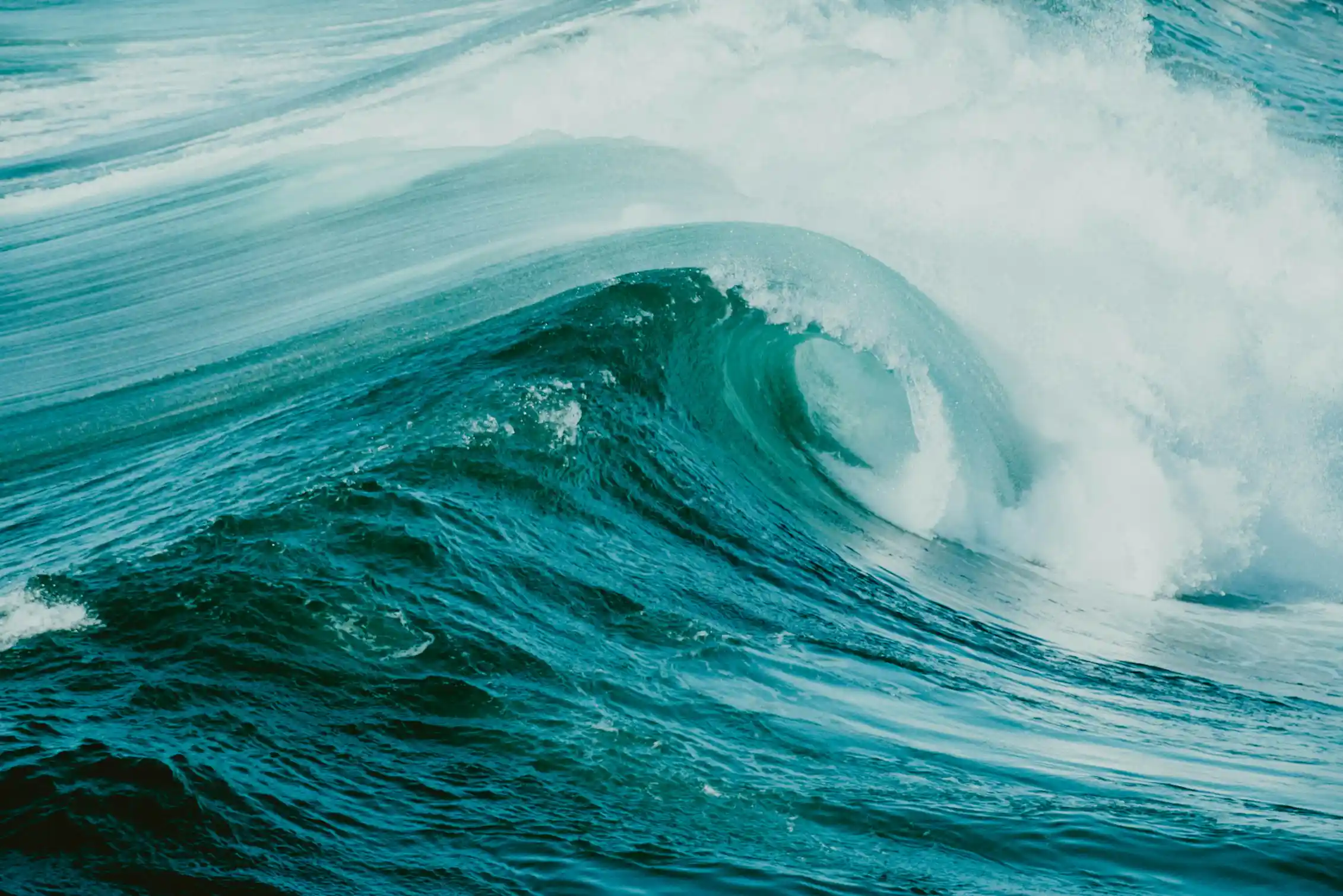
The world’s oceans have absorbed 35% of carbon dioxide emissions from fossil fuels since 1990, according to new research.
Forests absorb 13% of emissions
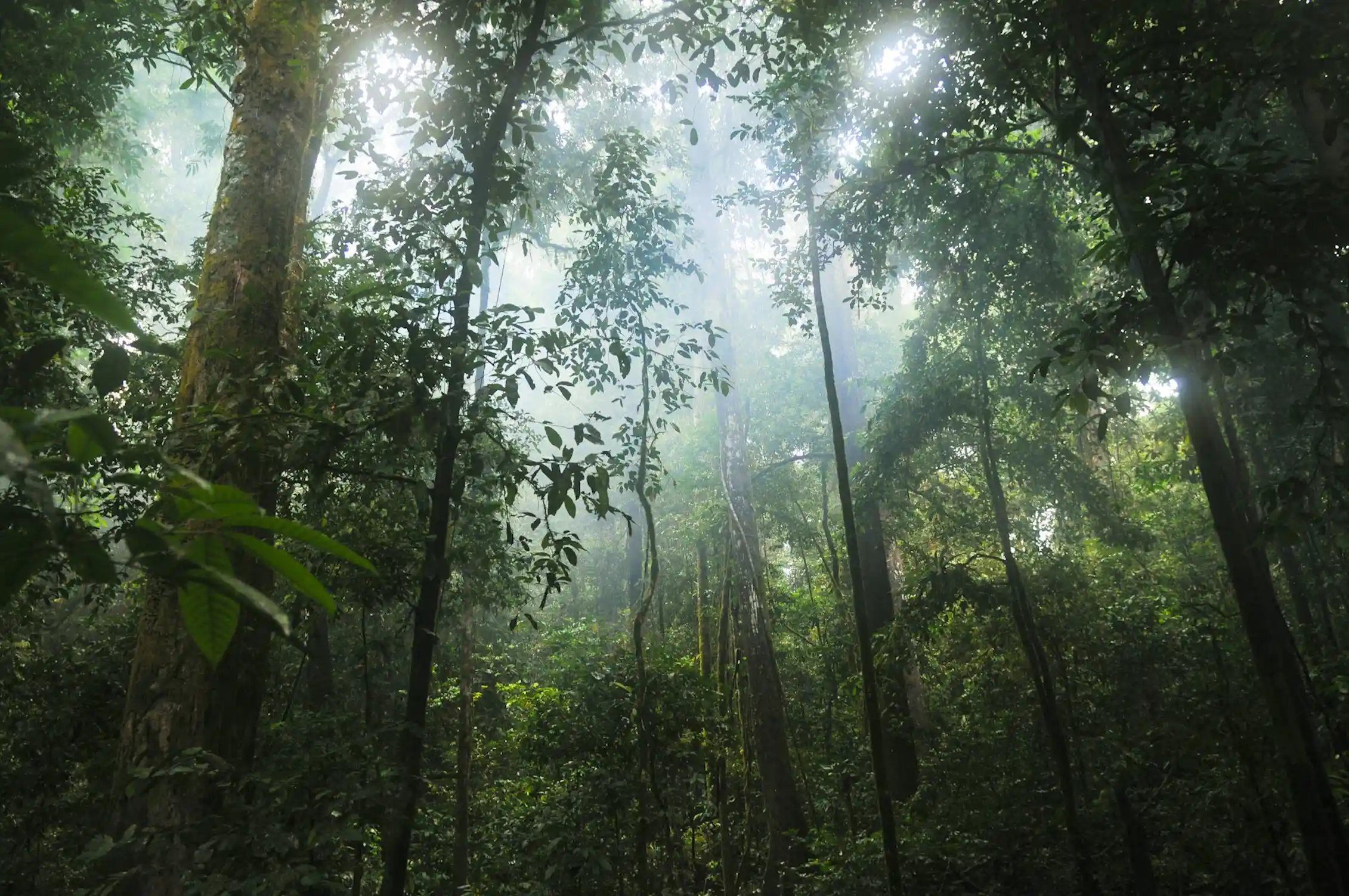
Forests and other plants have absorbed another 13% of carbon dioxide emissions from fossil fuels since 1990.
Carbon sinks slow climate change
These natural carbon sinks have slowed climate change by absorbing carbon dioxide emissions from human activities.
Oceans' absorption rate may slow
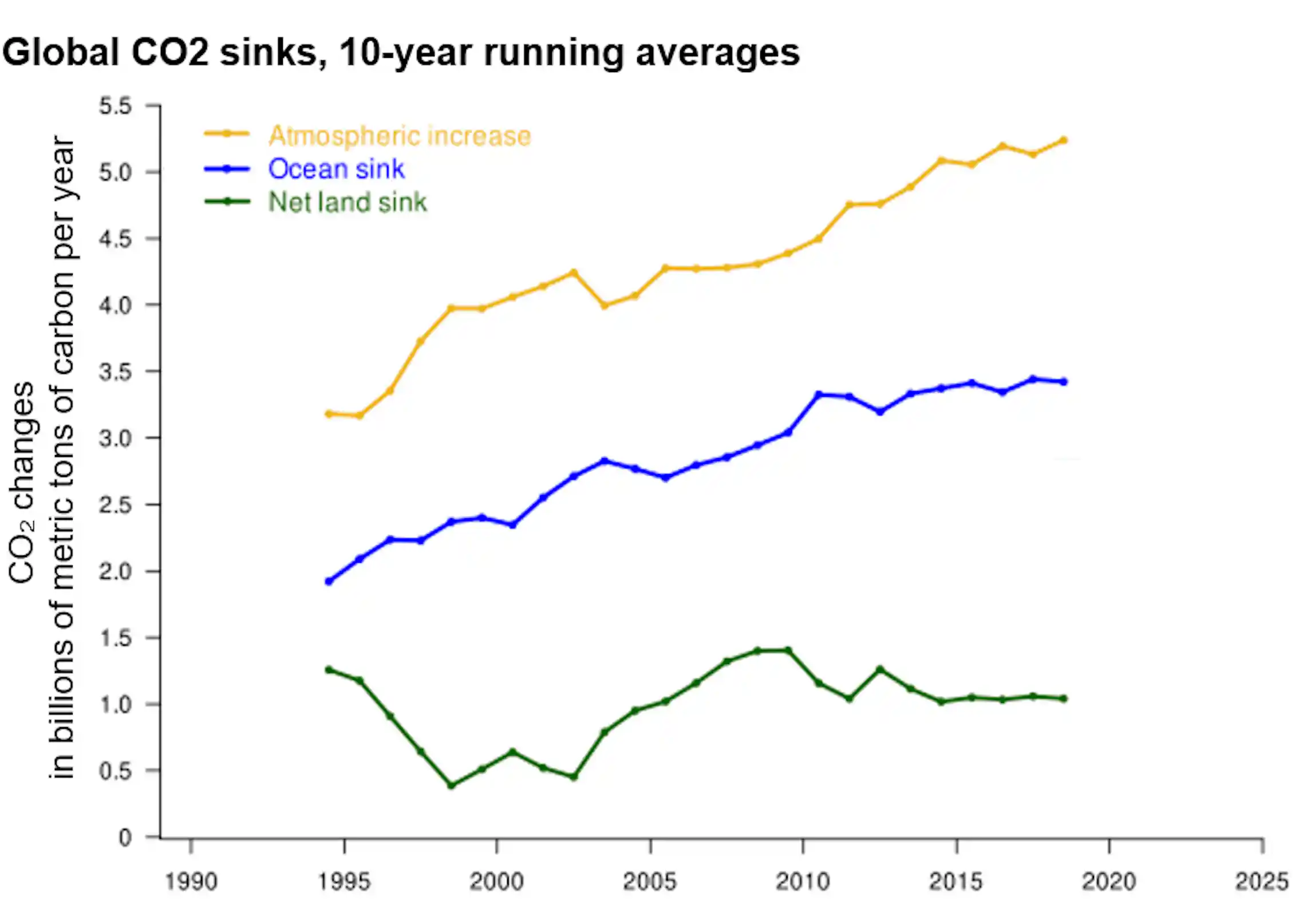
New research suggests the ocean’s increasing absorption of carbon dioxide may begin to slow in the coming decades.
Land sink shows no growth
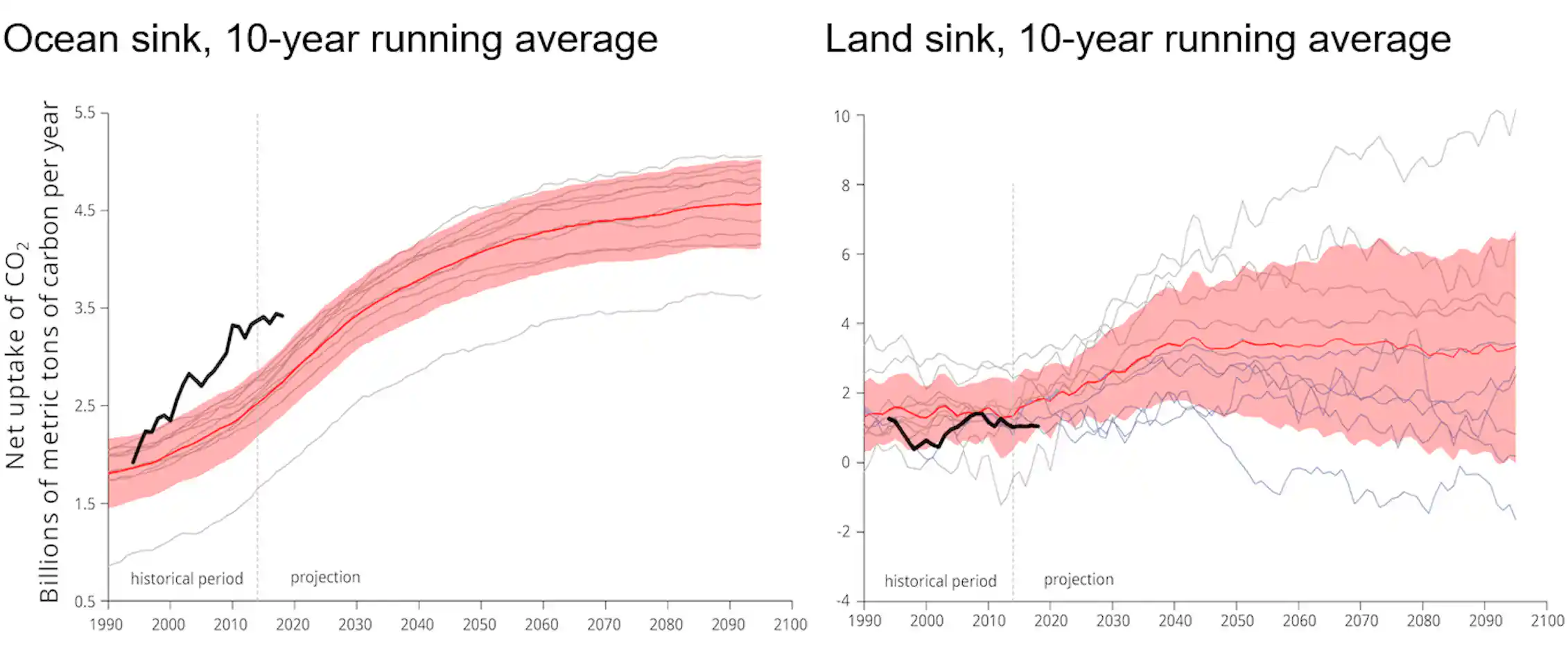
The land carbon sink has not been expanding, which was a surprising finding for researchers.
Measuring carbon sinks is difficult

Measuring how much carbon oceans and forests absorb is devilishly difficult and prohibitively expensive due to varying conditions.
Oxygen method measures sinks

Scientists used high-precision atmospheric oxygen measurements to quantify how oceans and forests absorb carbon dioxide.
Oceans absorb more than models predict
The ocean carbon sink has absorbed more carbon dioxide than most computer models predicted over the past three decades.
Warmer oceans hold less carbon
Warmer waters cannot hold as much carbon dioxide or mix effectively with deeper ocean layers to lock carbon away.
Carbon models need improvement
Computer models for carbon sinks vary widely and do not match real-world observations as they should.
Scientists need better tools
Combining atmospheric oxygen measurements, ocean studies, computer models and satellites will improve understanding of carbon sinks.
The short version
Oceans and forests absorbed 35% and 13% of fossil fuel emissions since 1990, but their capacity to slow climate change may decline as oceans warm.