From The Conversation · Wayne Unger · · 2m
Trump bans three news outlets from White House
A constitutional law professor explains why the Fifth Amendment, not just the First, protects journalists from arbitrary credential revocation.
In brief
A constitutional law professor explains why the Fifth Amendment, not just the First, protects journalists from arbitrary credential revocation. Presidents can't ban journalists without due process. The Fifth Amendment requires notice, reasons, and a chance to respond before revoking press credentials. Originally…
Trump revokes credentials for three outlets
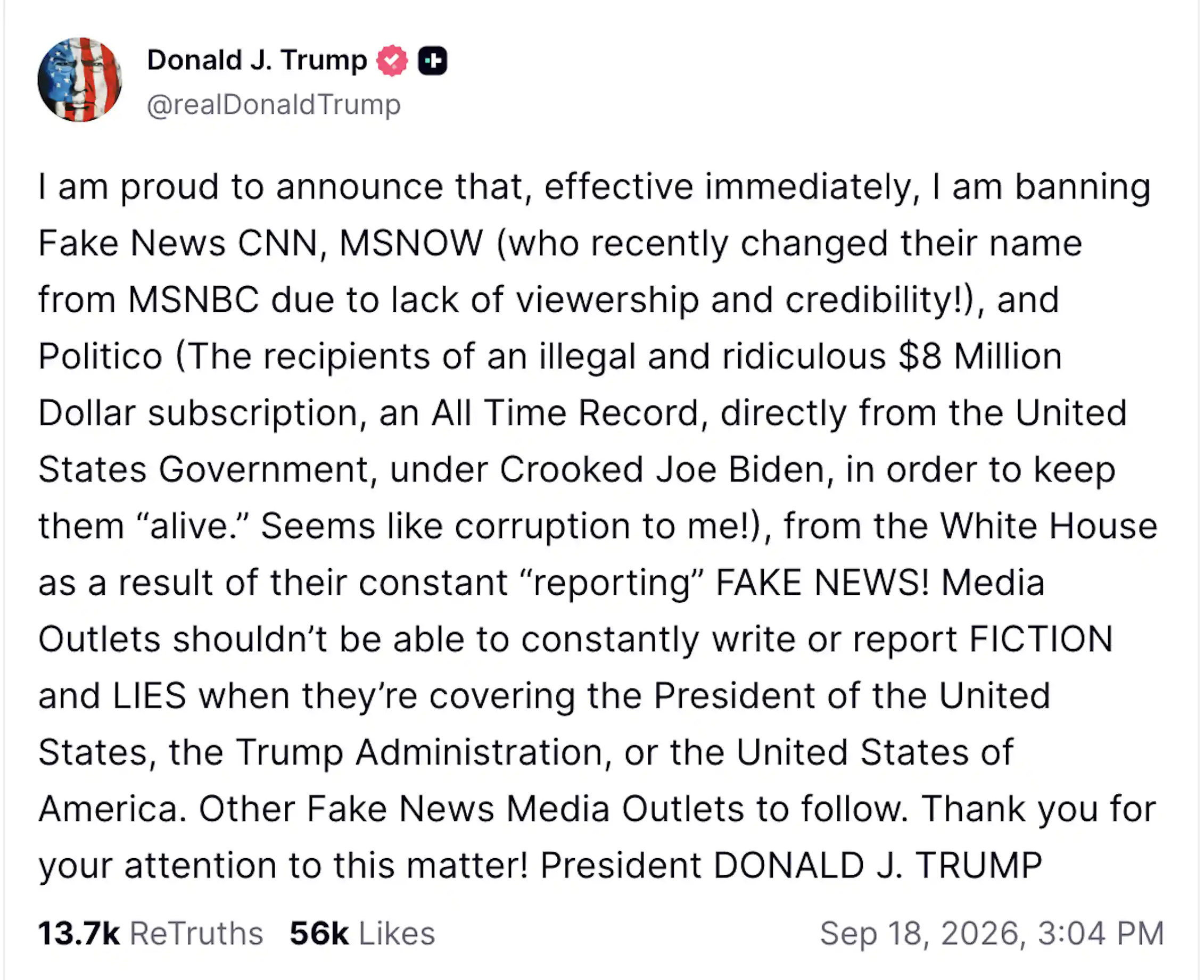
On September 19, 2026, President Trump denied White House access to CNN, MS NOW, and Politico journalists, claiming they report fake news and lies.
“Media Outlets shouldn't be able to constantly write or report FICTION and LIES when they're covering the President.”
This echoes Trump's first term tactics
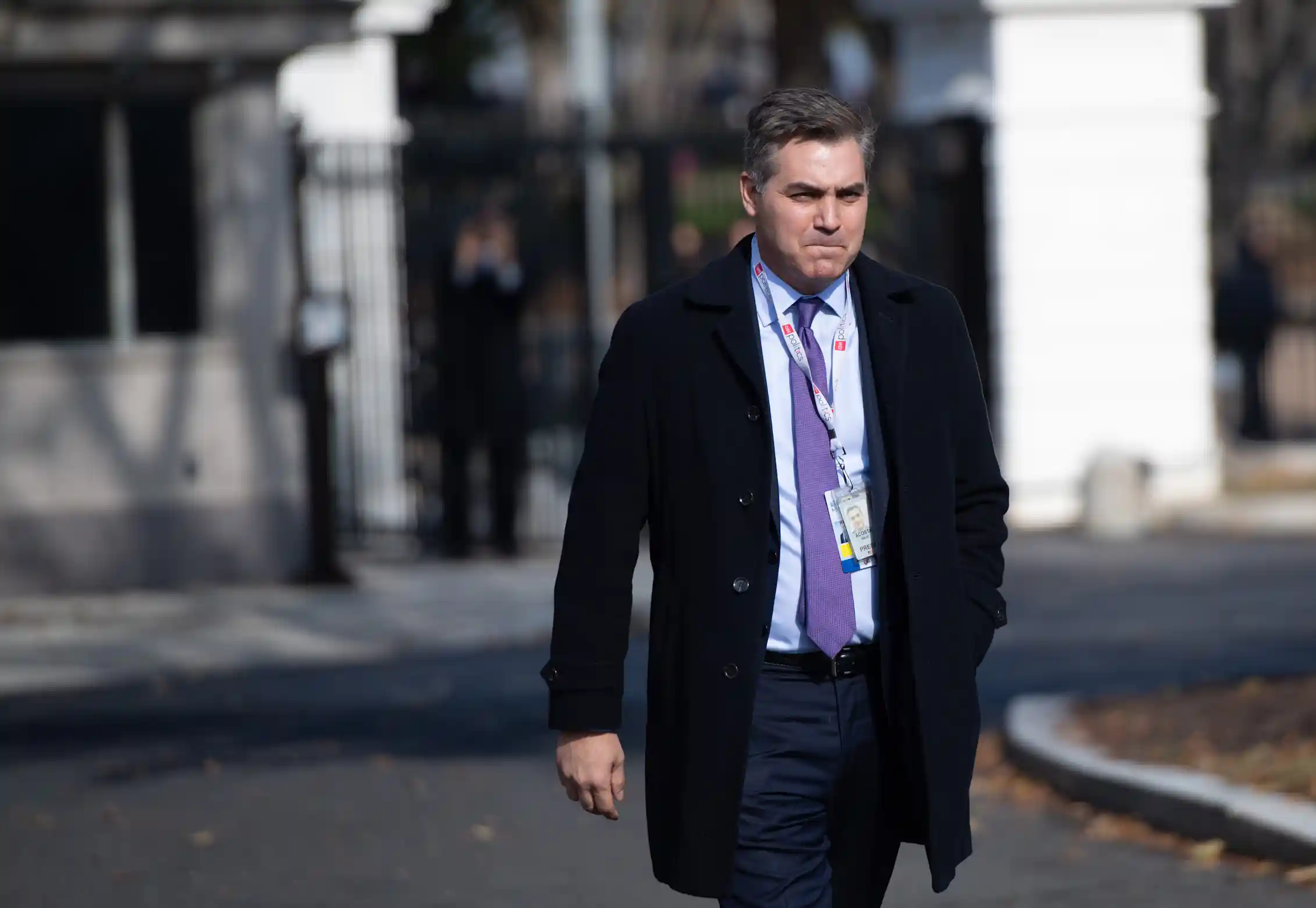
During his first presidency, Trump tried to ban CNN's Jim Acosta after a contentious news conference. A federal court quickly reinstated Acosta's credentials.
First Amendment alone may not be enough
While commentators cite the First Amendment, the 2018 Acosta case was actually decided on Fifth Amendment due process grounds, not press freedom protections.
No Supreme Court right to White House access
While courts protect press access to criminal trials, there's no Supreme Court precedent guaranteeing journalists a constitutional right to enter the White House.
The Sherrill case set the standard
In 1977, a court ruled the Secret Service must provide written notice and specific reasons before denying a press pass, plus a chance for the journalist to respond.
“notice of the factual bases for denial, an opportunity for (them) to respond to these, and a final written statement of the reasons for denial”
Due process requires notice and response
The Fifth Amendment protects against arbitrary government action. Before taking away someone's liberty or property, the government must give notice and let them respond.
Trump provided neither notice nor opportunity
Trump announced the ban on social media without written reasons or giving the outlets a chance to respond to his accusations of fake news.
The outlets are leading with Fifth Amendment
CNN, MS NOW, and Politico filed suit on September 21, 2026, claiming Trump violated their Fifth Amendment right to due process, not just their First Amendment rights.
Same judge may rule quickly again
The Trump-appointed judge who reinstated Acosta's credentials in 2018 has been assigned to this case. A temporary reinstatement of press passes is likely.
What it means
Presidents can't ban journalists without due process. The Fifth Amendment requires notice, reasons, and a chance to respond before revoking press credentials.