From The Royal Astronomical Society · Florin Simion @Yonescat · · 2m
Did the young Sun eat a planet?
A new model says the Sun may still carry the chemical scars of a super-Earth it swallowed billions of years ago.
In brief
A new model says the Sun may still carry the chemical scars of a super-Earth it swallowed billions of years ago. Several long-standing puzzles about the Sun's interior and its missing lithium fit together if the young Sun ate a super-Earth of 5 to 10 Earth masses. Originally reported by The Royal Astronomical Society.
The Sun may have eaten a planet
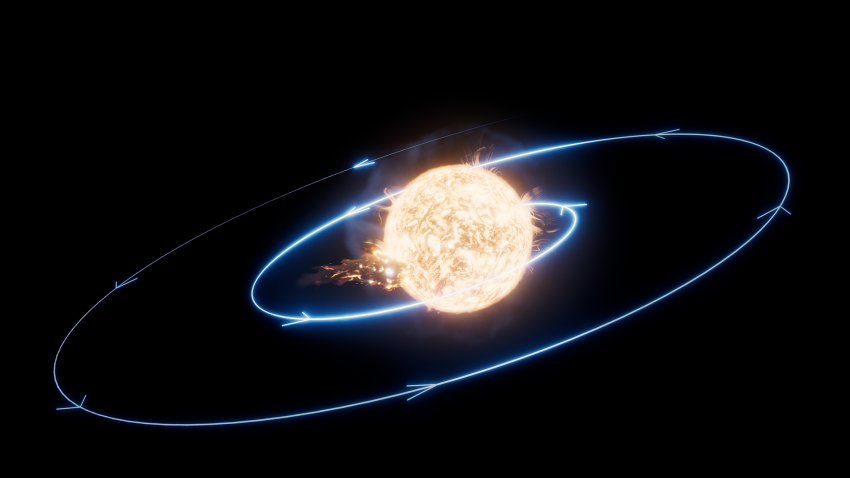
Astronomers have long suspected the young Sun swallowed a super-Earth. New work in Monthly Notices of the Royal Astronomical Society asks whether our star still carries the evidence.
A lasting chemical imprint
Professor Mutlu Yildiz of Ege University modelled what happens when a planet several times Earth's mass falls into a young star. The material does not simply vanish into the mix.
“A planet several times more massive than Earth may have fallen into the young Sun and left a lasting chemical imprint deep inside it.”
Two puzzles that won't go away
Standard solar models struggle to match helioseismic data on sound speed just below the convection zone and on how deep that zone runs. Separately, the Sun's surface is oddly short of lithium.
One cause, several symptoms
Yildiz wondered if those separate failures share a root in the Sun's early chemical history, rather than each needing its own fix.
“We were interested whether these problems might have a common origin in the early chemical history of the Sun.”
Why planet material is different
Young stars sit inside protoplanetary discs, and material flows both ways. Planets are built from stuff chemically unlike the disc gas, so swallowing one changes the recipe.
Running the numbers in MESA
The team used the MESA stellar-evolution code, tested different accretion histories, and checked rival explanations involving the equation of state, opacity, and turbulent and convective mixing.
Five to ten Earth masses
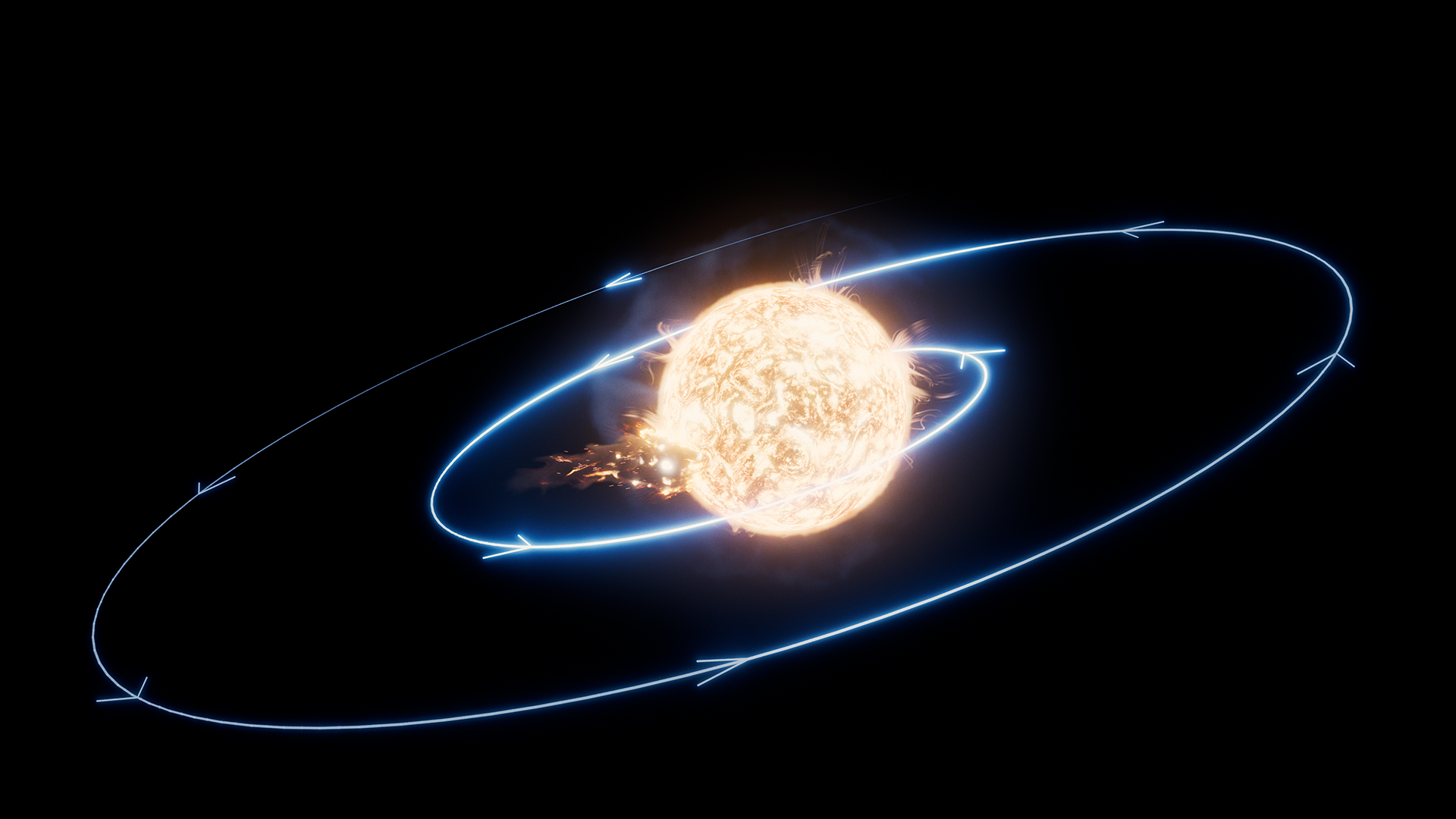
The models converged on a young Sun that ate a super-Earth of roughly 5 to 10 Earth masses. That single event matches the interior measurements and the low lithium at once.
“We thought planetary engulfment might affect the solar structure but did not expect the calculations to converge on such a specific super-Earth mass range.”
Why our system has no super-Earth
Other systems are full of big super-Earths and ours has none. Earlier work by Martin and Livio showed one could have formed inside Mercury's orbit and spiralled inward through the disc.
Now go find the fingerprints
Proof may be out of reach, but if helioseismology or other observations turn up the predicted structural and chemical signature, it would be strong evidence for a meal eaten billions of years ago.
“The next step is to see if these fingerprints can be independently detected.”
At a glance
Several long-standing puzzles about the Sun's interior and its missing lithium fit together if the young Sun ate a super-Earth of 5 to 10 Earth masses.





