From TradingView · · 1m 40s
Bid-Ask Spread Explained for NASDAQ:PLTR
How the bid-ask spread affects trading costs for PLTR shares.
In brief
How the bid-ask spread affects trading costs for PLTR shares. The bid-ask spread is the gap between what buyers pay and sellers accept, impacting trading costs for PLTR. Originally reported by TradingView.
Quick answers
- What Is the Bid-Ask Spread?
- The bid-ask spread is the difference between what buyers are willing to pay and what sellers are willing to accept.
- What is the key takeaway from Bid-Ask Spread Explained for NASDAQ:PLTR?
- The bid-ask spread is the gap between what buyers pay and sellers accept, impacting trading costs for PLTR.
What Is the Bid-Ask Spread?
The bid-ask spread is the difference between what buyers are willing to pay and what sellers are willing to accept.
Bid vs. Ask vs. Last Price
Bid: highest price buyers offer. Ask: lowest price sellers accept. Last price: most recent trade price.
How Spread Affects Trading Costs

Buying at the ask price and selling at the bid price creates a cost difference equal to the spread.
Tight vs. Wide Spread
Tight spreads mean buyers and sellers quote close. Wide spreads mean larger gaps between quotes.
Why Spreads Widen
Spreads widen due to lower liquidity, higher volatility, pre-market activity, small-cap stocks, or major news events.
Market Quotes and Liquidity
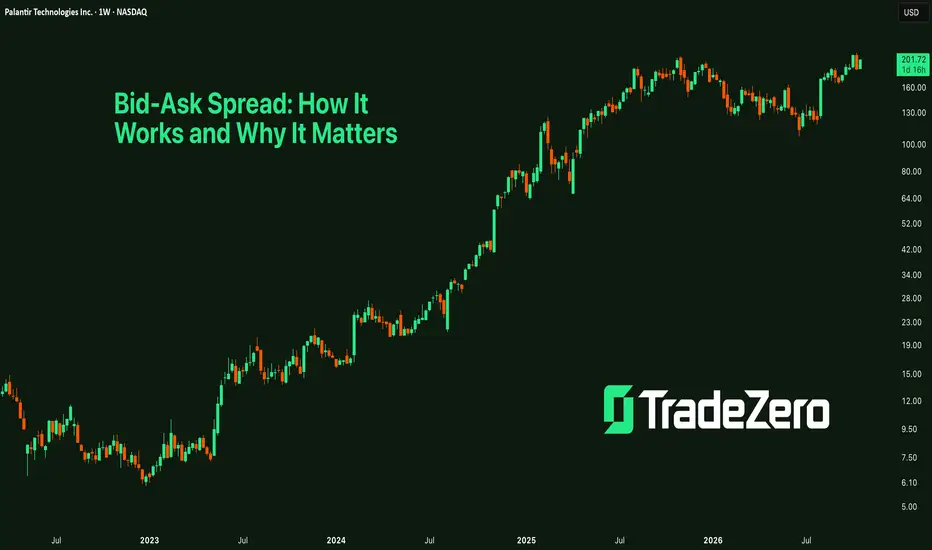
Market quote: current prices to buy or sell. Quoted size: shares available at best bid or ask. Volume: total shares traded.
How Orders Interact With Spread
Market orders fill at the ask price for buys and bid price for sells. Limit orders set maximum price for buys or minimum for sells.
Spread vs. Slippage
Spread: gap between bid and ask. Slippage: difference between expected and actual trade price.
Final Thoughts
Check bid, ask, spread, and liquidity before trading to minimize costs, especially for volatile stocks.
Why This Matters for PLTR
PLTR shares have a bid-ask spread that affects trading costs for active traders.
The big picture
The bid-ask spread is the gap between what buyers pay and sellers accept, impacting trading costs for PLTR.


