From TradingView · · 1m 20s
How to spot a fake breakout before it traps you
Price punches through a key level, then snaps right back. Here is how to read that trap and even trade it.
In brief
Price punches through a key level, then snaps right back. Here is how to read that trap and even trade it. A level being crossed is not a breakout. Wait for the close, the retest, and the confirmation before you risk anything. Originally reported by TradingView.
The trap in one move
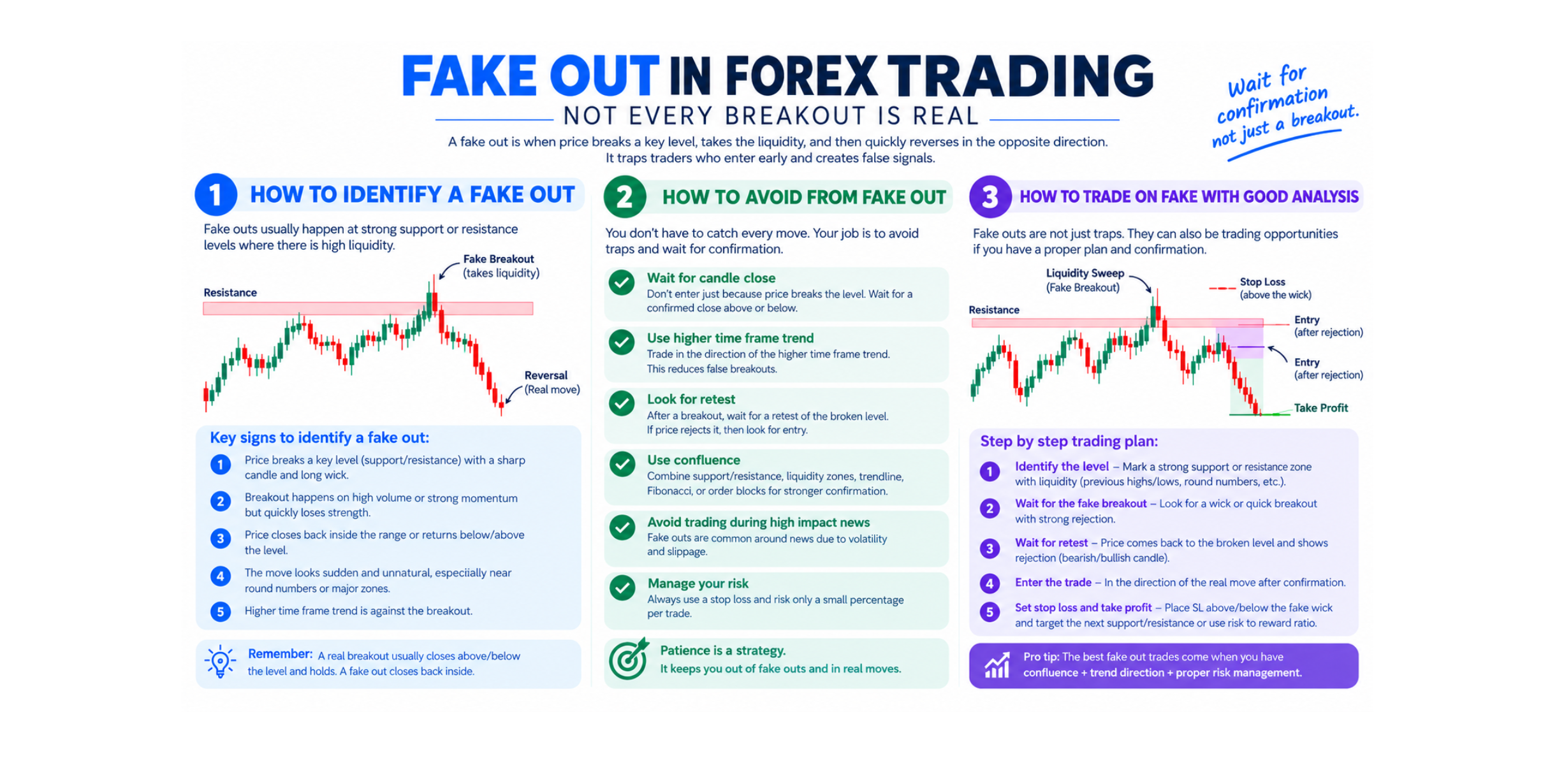
A fake out is when price breaks a key support or resistance level, fails to follow through, and reverses fast. Traders who jumped in on the break are left holding the wrong side.
“A fake out happens when price breaks a key support or resistance level but fails to continue and quickly reverses in the opposite direction.”
Signs you are being faked
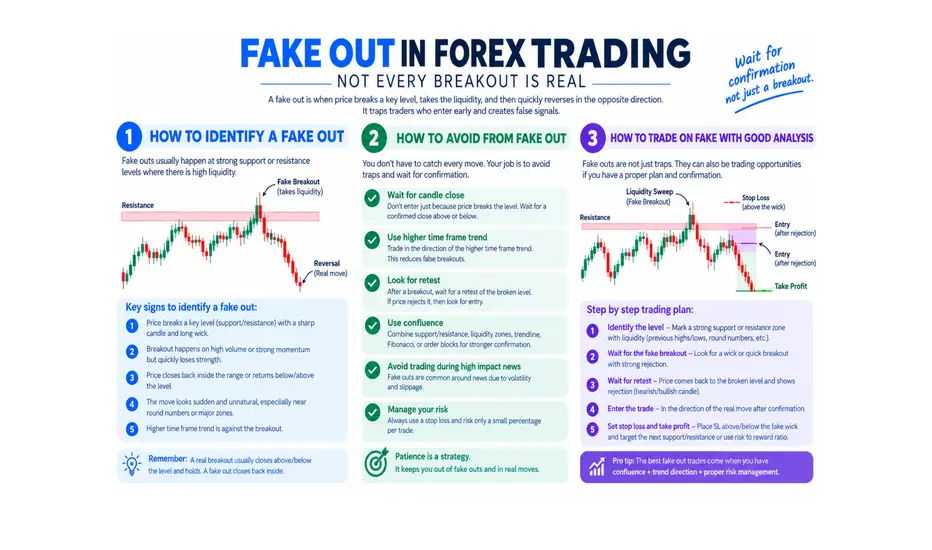
Look for a long wick, clear rejection at the level, and price scurrying back inside the old range within a candle or two.
Check the bigger trend
A break that fires against the higher-timeframe direction is suspect. Trend-counter breakouts fail far more often than ones running with the flow.
Never enter on the break
Skip the instant entry. Wait for the candle to close beyond the level, then wait for a retest that holds before committing size.
“don't enter immediately after a breakout. Wait for the candle to close, look for a retest”
Stack your confluences
Confirm with market structure, liquidity, and trend direction together. One signal on its own is a guess, three lining up is a setup.
Trade the fake out itself
Mark the key level, let price sweep the liquidity and reject, then enter on confirmation. Stop goes beyond the invalidation point, size stays disciplined.
“Always place your stop loss beyond the invalidation point and maintain proper risk management.”
The main idea
A level being crossed is not a breakout. Wait for the close, the retest, and the confirmation before you risk anything.




