From TradingView · · 1m 30s
When yields rose and stocks rallied anyway
Yields pushed toward 5% and equities went up instead of down, and the reason says a lot about how markets actually work.
In brief
Yields pushed toward 5% and equities went up instead of down, and the reason says a lot about how markets actually work. Ask why a variable is moving, not just which way. The reason behind the move usually carries more information than the direction. Originally reported by TradingView.
The rule everyone learns

Rising yields are supposed to hurt equities. Higher borrowing costs lift the discount rate on future earnings, tighten conditions, and squeeze expensive growth names.
Then it stopped working
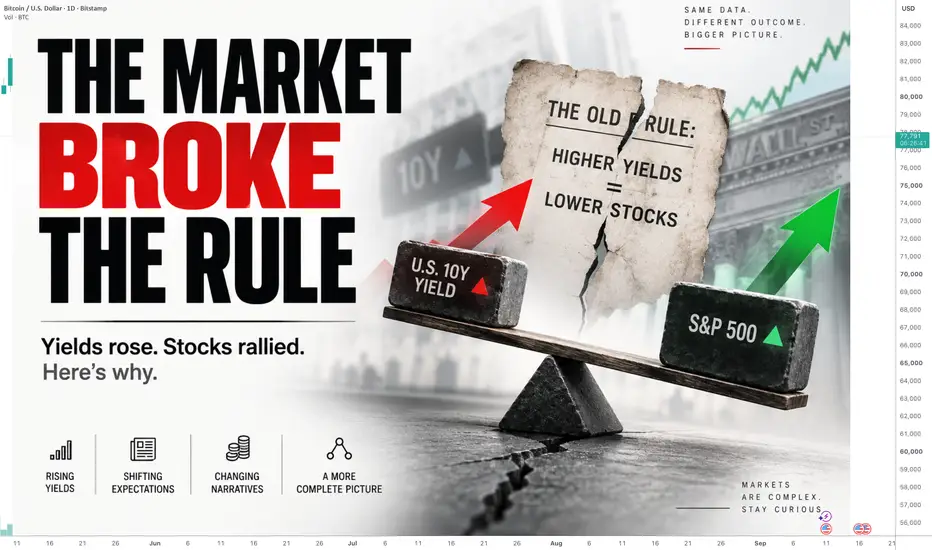
Treasury yields ran toward 5% on inflation worries, rising oil and shifting policy expectations. Equities rallied anyway.
Nothing trades in isolation

Yields are one input among many. Growth, earnings, oil, liquidity, positioning and central bank expectations all get weighed at the same moment.
“The market was responding to the entire change in expectations rather than simply reacting to the direction of one chart.”
The data cooled things off
Inflation came in without the upside surprise investors feared. Yields backed off their highs and stocks took the easing policy fear as a green light.
Correlations are not laws
A relationship can be statistically real and still fail on any given day. When the dominant driver changes, it can weaken, reverse or vanish for a while.
Why matters more than which way
Yields rising on better growth means something different from yields rising on inflation or fiscal stress. Same move on the chart, opposite message.
“The direction of a variable matters. But the reason behind that direction often matters more.”
Ask a better question
When a familiar correlation breaks, don't call the market irrational. Ask what changed in the information being priced.
“Sometimes the market isn't breaking the rule. We're just looking at the wrong rule.”
The key point
Ask why a variable is moving, not just which way. The reason behind the move usually carries more information than the direction.