From TradingView · · 1m 20s
Why this trader is short USDJPY
A swing trader walks through the weekly and daily reads behind a bearish call on the dollar against the yen.
In brief
A swing trader walks through the weekly and daily reads behind a bearish call on the dollar against the yen. A bias is not a trade. Mark the zone, wait for price to come to it, then demand confirmation before you act. Originally reported by TradingView.
The call is short
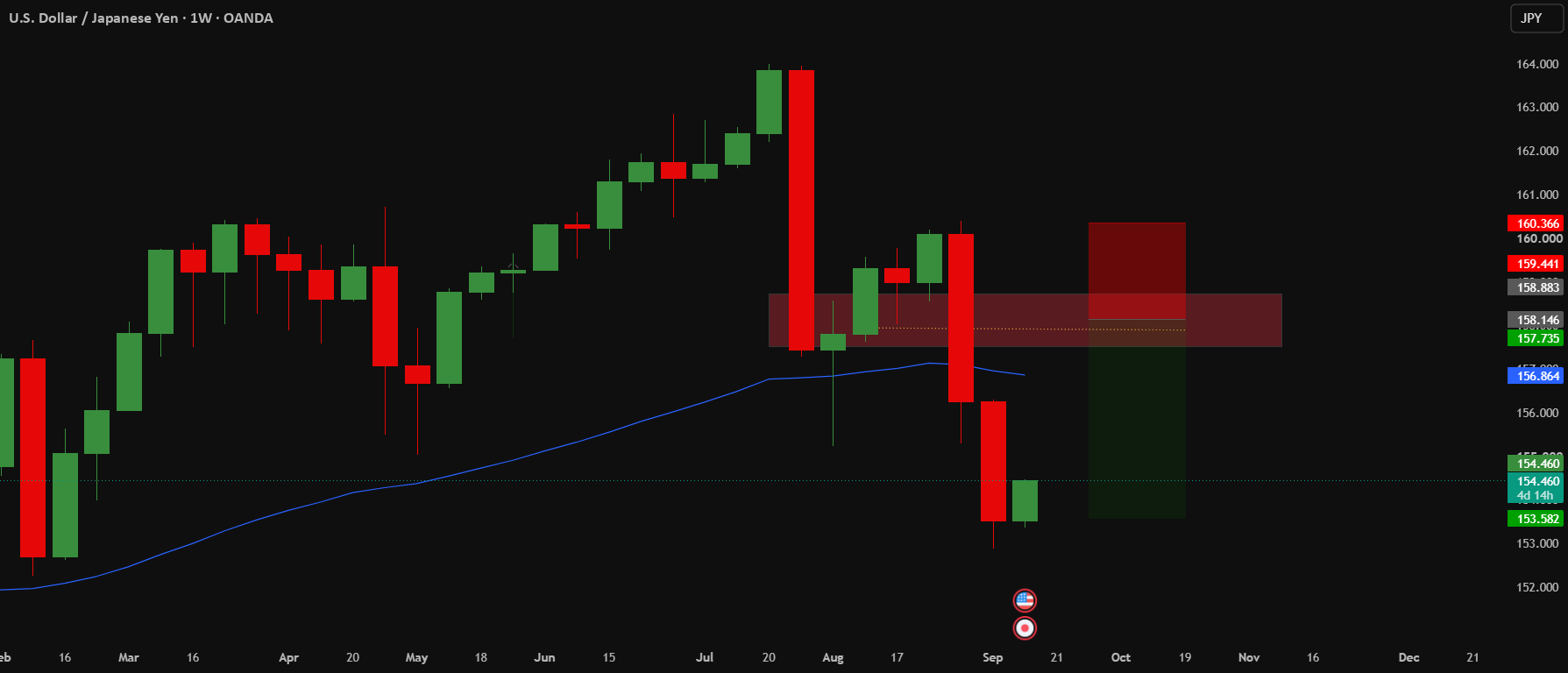
MJSwings posted a bearish bias on USDJPY, the US dollar against the Japanese yen, built from two timeframes rather than one chart.
“USDJPY - BEARISH BIAS”
Weekly broke down
On the weekly chart price has dropped below its EMA, the moving average that tracks trend direction. That is the first sign momentum flipped lower.
“We can see the market is in a bearish trend, breaking below the EMA”
Structure gave way too
Price also broke below previous structure, meaning it took out the prior swing lows that were holding it up. Trend down, confirmed twice.
“Price has also broken below previous structure confirming we are in a downtrend”
Wait for the pullback
No chase on the daily. The plan is to sit still until price rallies back up into a marked area of interest before doing anything.
“We wait for price to pull back to the AOI”
Three reasons for that zone
The area of interest stacks a strong Fibonacci retracement level, a round psychological price, and several past rejections. Overlap is what makes it worth trading.
“a strong fib level, within a psychological level and has multiple rejections”
Confirmation before entry
Even at the zone, the trade is not automatic. The trader watches how price reacts across timeframes first, so the bias stays a bias until price agrees.
“I will wait for my confirmations across multiple timeframes to see how it reacts!”
What to remember
A bias is not a trade. Mark the zone, wait for price to come to it, then demand confirmation before you act.





