From Valleynewslive · · 1m 40s
Why autoimmune disease is harder to catch in older adults
Older adults face invisible autoimmune battles that evade detection until symptoms worsen.
In brief
Older adults face invisible autoimmune battles that evade detection until symptoms worsen. Autoimmune diseases in older adults often go undiagnosed because symptoms are inconsistent and lab results don't match symptoms, making early detection critical for management. Originally reported by Valleynewslive.
Autoimmune disease in older adults
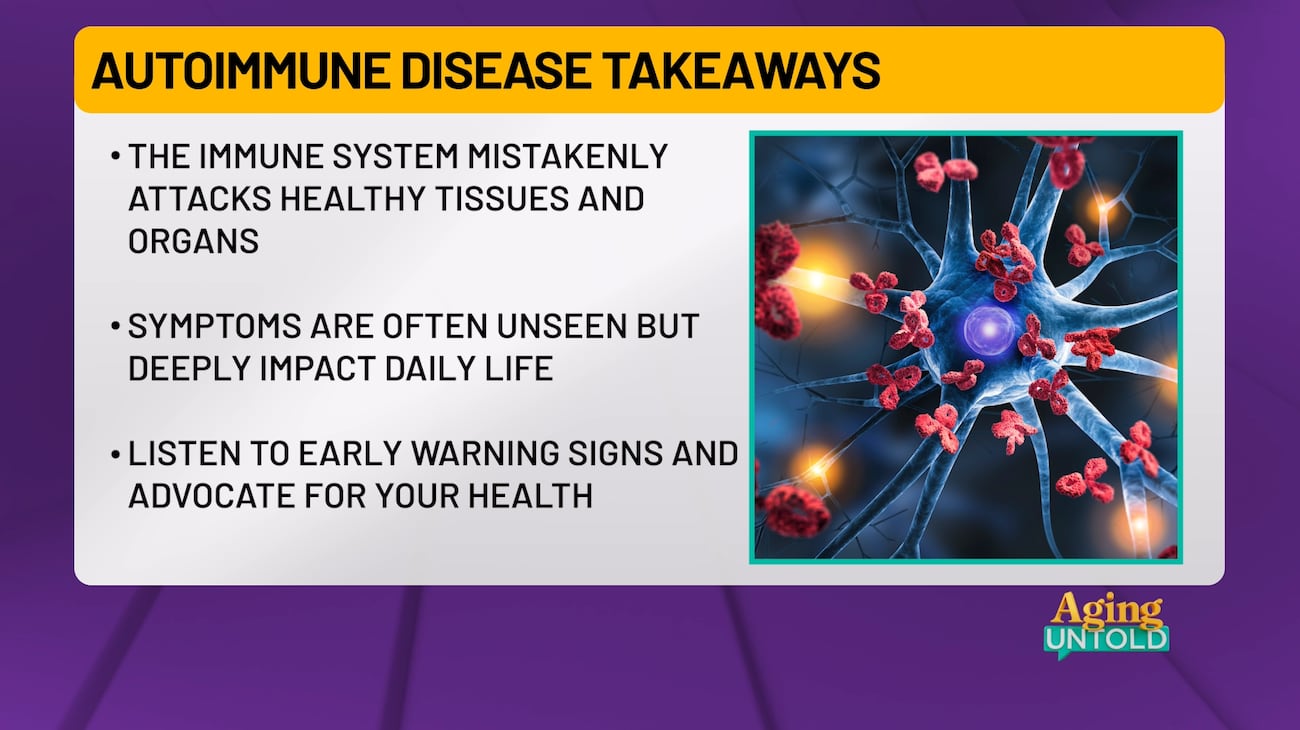
Autoimmune conditions like type 1 diabetes, multiple sclerosis, rheumatoid arthritis and lupus are especially tricky to spot in older adults because the immune system naturally changes with age.
Early diagnosis matters
Early diagnosis can make a real difference in managing symptoms long-term for older adults with autoimmune conditions.
What autoimmune disease means
Autoimmune disease is a condition where the immune system mistakenly attacks healthy body tissues, according to the National Institutes of Health.
Gerontologist's explanation

Sam Cradduck, a gerontologist, compared the immune system to an army that no longer knows who the enemy is, so it fights itself.
“Think about it like your body has an army that’s there to protect you, and that’s your immune system”
Symptoms and lab work mismatch
Cradduck described how symptoms and lab results often don’t match for older adults with autoimmune diseases, with symptoms appearing but lab work looking normal.
“I was going to the doctor for well over a year and seeing a very good rheumatologist, and my lab work and my symptoms weren’t meeting the criteria all at the same time”
Inflammation as the driver
Dr. Rhea Rogers compared autoimmune disease to a 'big ball of confusion' where inflammation is the key driver.
“It’s really the system is confused, so it doesn’t know what’s going on”
Gut health connection
Rogers identified the gut as a common source of inflammation in autoimmune diseases, emphasizing nutrition and sleep as foundational solutions.
“And usually a lot of times it’s coming from the gut”
Community support
Amy O’Rourke emphasized leaning on friends and celebrating good days when managing autoimmune conditions.
“She has a really great diet. I let her pick all the restaurants out because she knows what she can eat on any given day”
Multiple factors at play
Rogers stressed that autoimmune disease develops from a mix of genetics, lifestyle and other factors, not a single trigger.
“It’s multifactorial. You also have to look at a combination of lifestyle factors and genetics. Genetics plays a huge role”
The one thing
Autoimmune diseases in older adults often go undiagnosed because symptoms are inconsistent and lab results don't match symptoms, making early detection critical for management.





