From Vox · Eric Levitz · · 4m
License plate cameras work. Should we trust police with them?
Flock's automatic license plate readers solve crimes but enable surveillance abuse. Regulation might let us have both safety and privacy.
In brief
Flock's automatic license plate readers solve crimes but enable surveillance abuse. Regulation might let us have both safety and privacy. Flock cameras modestly reduce car theft and help find missing people, but police have misused them to stalk exes and monitor protesters. Strong regulations could preserve benefits…
What Flock cameras actually do

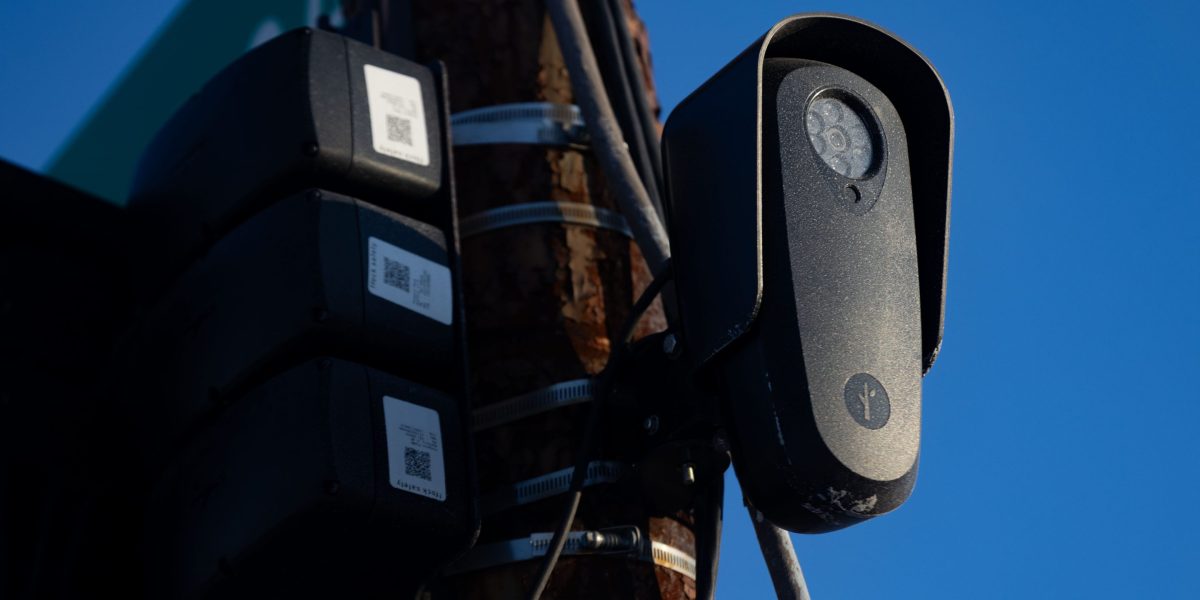
Flock provides police with networks of automatic license plate readers that photograph every vehicle passing them and store searchable data in a national database. This makes it technically easy for officers to track any driver's movements.
The baby rescue that sold the technology
In Georgia in 2020, a man tried to kidnap a toddler from his stroller. Police used Flock cameras to find the car's registered license plate from days earlier, identified the suspect within five hours, and recovered the baby.
Flock's big claims about crime-fighting
The company claims its cameras supported over one million criminal investigations and helped locate more than ten thousand missing persons last year. But these numbers don't prove the cameras actually made the difference.
What the research actually shows

A University of South Carolina study found that areas deploying Flock cameras saw an 11 percent decline in motor vehicle theft and a 16 percent rise in car theft investigation success rates. But the effect is modest, not transformative.
“We're not talking huge numbers here, but it's not nothing either.”
Police departments aren't using them well
Atlantic City's ALPR system issued over twelve thousand stolen vehicle alerts in two years but officers responded to only seventy-two stops. Understaffing and poor monitoring meant most alerts went ignored.
Cops have misused the data
At least fifty law enforcement officers have been charged or accused of using license plate readers to stalk their exes or romantic interests. The power to track anyone's movements has proven too tempting for some.
Police tracked protesters with Flock
A 2025 Electronic Frontier Foundation investigation found that over fifty federal, state, and local agencies ran hundreds of searches related to protests or activist groups through Flock's system, often with no clear law enforcement purpose.
The Lenexa police stalked a critic
After a writer named Canyen Ashworth published an op-ed criticizing local police in Lenexa, Kansas, that town's police began tracking his movements with ALPRs, apparently suspecting him of posting unauthorized posters.
Most states have no real rules
There is no federal framework governing police use of license plate readers. About half of states have no ALPR regulations at all, and virtually none have adequate safeguards, according to NYU's Policing Project.
“In something like half of the states, there is no regulation. Virtually none, in our view, have adequate regulation.”
Delete data after three weeks
One safeguard: governments could require police to delete logged location records after three weeks unless connected to a specific investigation, leaving less data for stalkers and tyrants to exploit.
Limit searches to real crimes
Governments could permit ALPR searches only for enumerated law enforcement purposes like tracking stolen vehicles or suspected violent offenders, not for monitoring protesters or critics.
Create searchable audit trails
Every ALPR query could be logged with who searched, what they searched for, when, and why. Software could automatically flag suspicious patterns like repeated searches without a case number.
Punish unauthorized searches
Governments could make intentional, unauthorized searches of the ALPR database a criminal offense punishable by jail time, creating real consequences for abuse.
Virginia shows what regulation looks like
Virginia's recently enacted ALPR law includes many of these safeguards. Several other states have adopted subsets of these policies, proving regulation is possible.
The ACLU wants cameras banned entirely
The American Civil Liberties Union argues that no guardrails can fully address the chilling effect of mass surveillance. People who know they're being watched may avoid lawful activities like attending support meetings.
“No guardrails can completely address the chilling effect of mass surveillance.”
But people already share everything
There's little hard evidence that license plate readers actually chill behavior. People willingly share sensitive information on social media and through internet activity, suggesting cameras alone won't stop lawful activity.
Cameras have been around for years
License plate readers have been in wide use for over a decade. Until recently, few people even noticed them, much less reorganized their lives around avoiding them.
The path forward: regulated not banned
Governments may be able to secure modest but meaningful public safety benefits from Flock cameras while greatly reducing misuse through stringent regulation. The choice isn't between surveillance and safety.
The bottom line
Flock cameras modestly reduce car theft and help find missing people, but police have misused them to stalk exes and monitor protesters. Strong regulations could preserve benefits while preventing abuse.