From Vox · Sara Herschander · · 4m
Nicolas Cage's sinkhole and America's coastal crisis
A celebrity's driveway collapse reveals how coastal communities are built on borrowed time and sand.
In brief
A celebrity's driveway collapse reveals how coastal communities are built on borrowed time and sand. Coastal erosion threatens nearly a third of Americans, and temporary fixes like sea walls and sand dumping won't work forever. Moving infrastructure inland, though difficult, may be the only real solution. Originally…
A Hollywood sinkhole moment

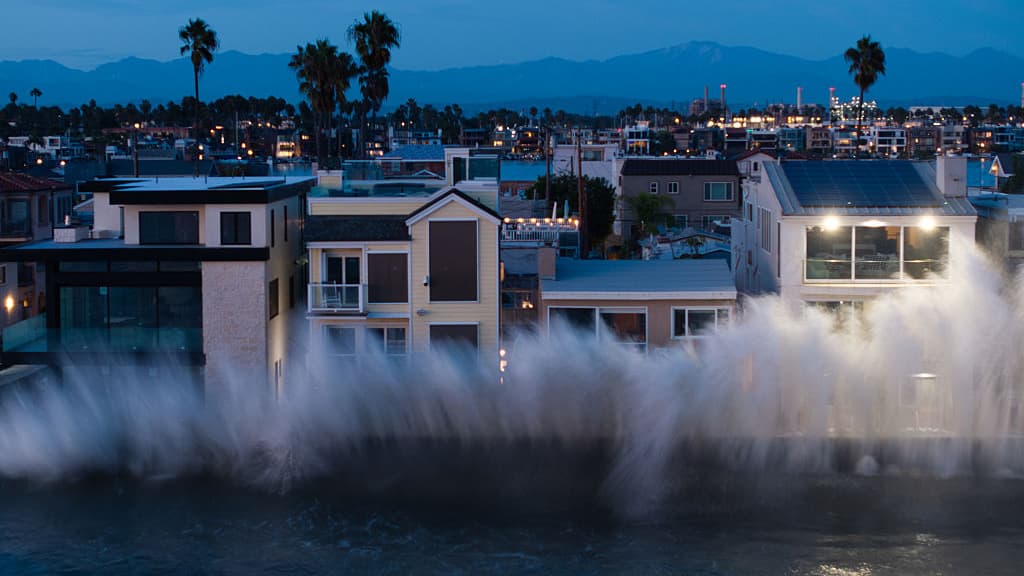
Nicolas Cage's Malibu mansion lost its driveway and front porch to a 30-by-30-foot sinkhole caused by high surf washing away soil beneath his sea wall. The collapse ruptured a gas main and forced dozens of locals to evacuate.
The ocean always wins
The California Coastal Commission rejected building on Cage's lot twice, in 1976 and 1986, citing wave hazards and extreme erosion risk. Engineers convinced them a sea wall and concrete stilts could protect it. They were wrong.
One third of America lives on coasts
Nearly 30 percent of Americans live along a coastline, from luxury enclaves like Malibu to working-class neighborhoods in the Rockaways. Most lack Cage's resources to flee when disaster strikes.
Coastal communities built on sand

Almost all U.S. coastal neighborhoods rely on coastal engineering like sand dumping or sea walls to stay inhabitable. We've built huge swaths of beloved beach towns on land that was never meant to sit still.
Moving towns upshore is possible
If coastal communities want to survive, they may need to relocate infrastructure further inland. Several American communities have become better at this process in recent years, though it remains logistically challenging.
Not technically a true sinkhole
Cage's crater formed when high surf slipped under his sea wall and washed away soggy soil, not from rainwater seeping into bedrock like typical sinkholes. It was a coastal erosion event, not a geological one.
“It's not what I typically would consider a sinkhole.”
Sinkholes are getting worse

Sinkholes have become more frequent globally, driven by extreme weather linked to climate change, aging infrastructure, and people moving to sinkhole-prone areas like Florida. Missouri has upward of 16,000 sinkholes.
Beaches are manufactured
The pristine sandy beaches we love are often heavily engineered. The federal government spends hundreds of millions yearly on beach renourishment, dumping sand on eroded coastlines to maintain the illusion of a stable shore.
An unsustainable cycle
As sea levels rise, communities must pump sand more frequently to maintain beaches. An expert notes the most endangered species on the coast is an unengineered beach, and the current approach cannot continue indefinitely.
“The most endangered species on the coast is not a turtle or a piping plover; it's an unengineered beach.”
Malibu's warning signs ignored
Malibu released a Coastal Vulnerability Assessment earlier this year that twice flagged acute erosion dangers for Sea Level Drive, where Cage's driveway now sits as a crater. The city knew the risk was coming.
Highway to nowhere
The Pacific Coast Highway faces landslides, wildfires, and a coastline creeping inland yearly. Recent warnings about severe beach erosion exposed steel and concrete debris across the shoreline.
Nature moves the coast
Infrastructure like sea walls and sand dumping can only delay the inevitable. When the coast moves and highways lie in its path, temporary measures fail. We're still building in dangerous places.
“Nature itself does not destroy the coast. It moves the coast.”
Managed retreat works

North Carolina moved the Cape Hatteras Lighthouse, one of the world's tallest brick lighthouses, in 1999. It's now safe, while dozens of homes nearby have collapsed into the ocean since 2020.
“It's totally doable. We can move just about everything.”
Politicians resist relocation
Coastal officials claim retreat is impossible, but they're already retreating in the worst way possible, with septic tanks rolling into the sea. Malibu's density and geography make nearby relocation nearly impossible.
“You've got septic tanks rolling around in the sea. That is not a great Chamber of Commerce moment.”
No choice but to move
Sooner or later, coastal communities may not have a choice about managed retreat. As sea levels rise and temporary fixes fail, relocating infrastructure inland becomes the only viable long-term strategy.
The essence
Coastal erosion threatens nearly a third of Americans, and temporary fixes like sea walls and sand dumping won't work forever. Moving infrastructure inland, though difficult, may be the only real solution.