From WIRED · Ritsuko Kawai · · 1m 40s
Octopuses have a secret squeeze technique
Scientists discover octopuses use different multi-step processes to squeeze through openings depending on the size of the gap.
In brief
Scientists discover octopuses use different multi-step processes to squeeze through openings depending on the size of the gap. Researchers found octopuses use a three-step process for larger gaps and a four-step process for smaller ones, with findings that could improve soft robot design. Originally reported by WIRED.
Octopuses squeeze through tiny gaps

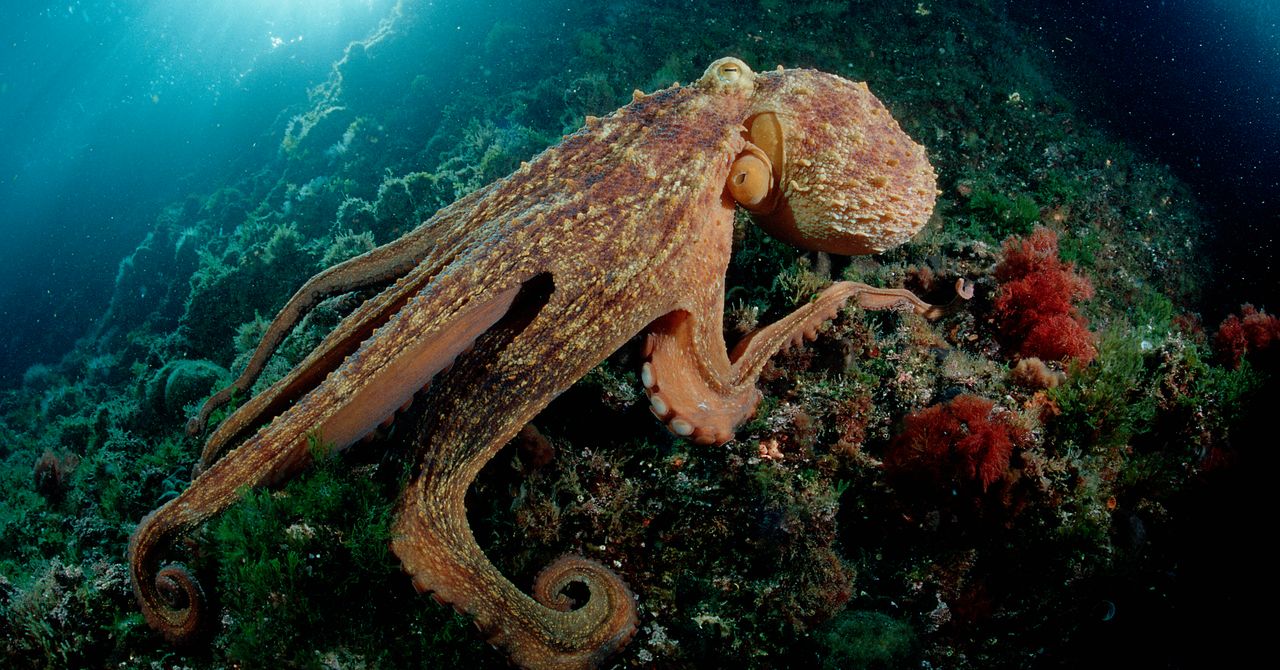
Octopuses can squeeze through any opening wider than their beaks. Scientists are studying this ability because it could help design biologically inspired robots.
Researchers mapped the squeeze process
A study published in the Journal of Experimental Biology revealed how octopuses squeeze through small spaces. Before this, there was no information about how octopuses squeeze through an opening far smaller than the body diameter.
“there [was] no information about how octopuses squeeze through an opening far smaller than the body diameter”
Three steps for larger gaps
When the gap was larger, octopuses used three distinct steps. First they explored the hole with their arms, then inserted two arms through before threading their other arms and mantle through the hole.
Four steps for smaller gaps

For smaller openings, octopuses used a four-step process.After threading arms through, they rotated their body upward and pushed the arm bases deeper to widen the passage, then twisted and stretched to feed all arms through.
Mantle deformation reduces diameter
During the last step of moving through a small opening, the octopus deforms its mantle to reduce its diameter. In thirty successful attempts observed, octopuses never used the four-step sequence for large holes.
Findings could improve rescue robots
The research team hopes to apply these insights to soft robots designed to search disaster debris or explore difficult terrain. Robots for search and rescue must fit through the narrowest passages in unpredictable environments.
The main idea
Researchers found octopuses use a three-step process for larger gaps and a four-step process for smaller ones, with findings that could improve soft robot design.
Read the TL;DR — this story on one card.