From WIRED · Ritsuko Kawai · · 2m
Swift's 22-year mission ends as it falls to Earth
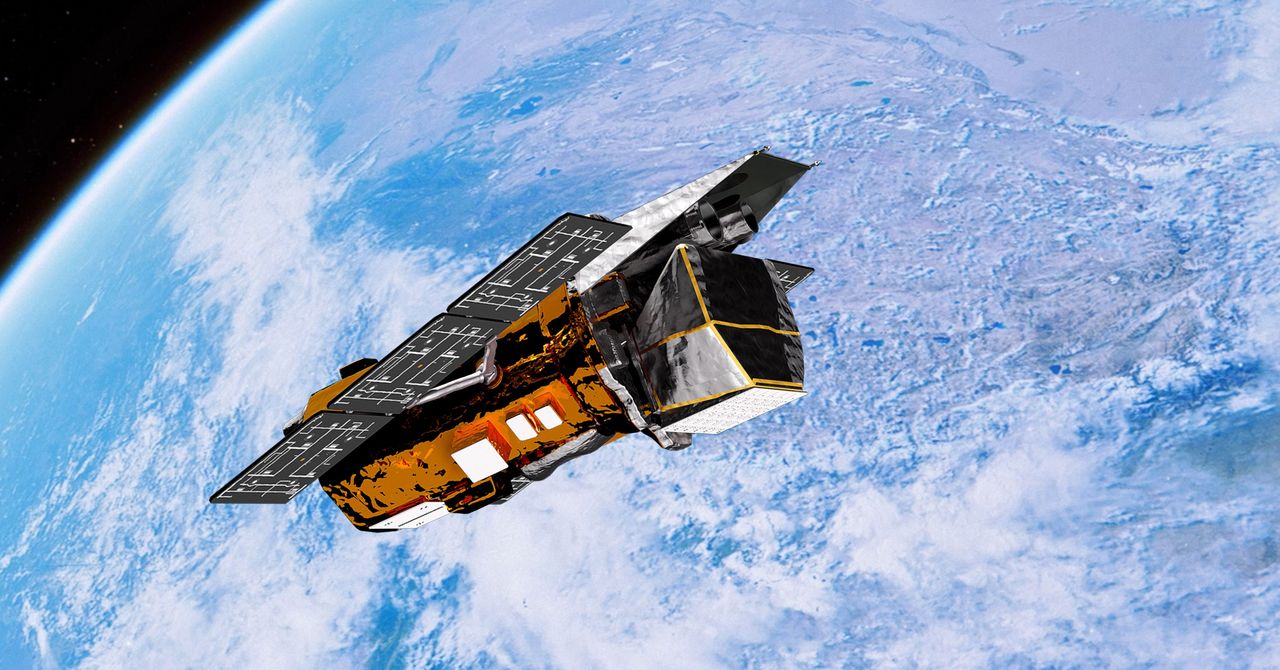
NASA's gamma-ray burst observatory reentered the atmosphere after two decades of discoveries, ending a rescue attempt that failed in orbit.
In brief
NASA's gamma-ray burst observatory reentered the atmosphere after two decades of discoveries, ending a rescue attempt that failed in orbit. NASA's Neil Gehrels Swift Observatory concluded its twenty-two-year mission on November 4 after reentering Earth's atmosphere over North Sumatra, Indonesia. Originally reported by…
Swift's mission ends after 22 years

NASA's Neil Gehrels Swift Observatory concluded its scientific mission after just under 22 years.Its orbital altitude fell below 275 kilometers, making stable observations impossible.It reentered the atmosphere on November 4 over North Sumatra, Indonesia.
Launched to track the universe's most powerful explosions
Swift launched on November 20, 2004, as the Swift Gamma-Ray Burst Explorer. It carried gamma-ray, ultraviolet, visible-light and x-ray telescopes. It was designed to rapidly pinpoint gamma-ray bursts, the most powerful explosions in the universe.
Swift's discoveries across two decades
Swift observed more than 2,000 gamma-ray bursts and more than 1,400 supernova explosions. It witnessed stars torn apart by black holes and monitored active galaxies. Data from these observations contributed to approximately 7,000 scientific papers.
Altitude dropped faster than predicted
Swift lacked thrusters to maintain its orbit.Its altitude dropped from approximately 585 kilometres at launch to about 363 kilometres by June 18, 2026.
NASA contracted a rescue mission
NASA predicted Swift's altitude would drop to approximately 300 kilometres by fall 2026, when a recovery spacecraft could no longer approach safely.
Rescue attempt failed in orbit
The LINK satellite launched on July 3, 2026, to capture Swift and raise its orbit.During in-orbit testing, a malfunction occurred in LINK's attitude-control system.
Final observations before the end
After abandoning the rescue, Swift's operations team restarted telescopes on August 26 to continue observations as long as possible.
Legacy of a mission that exceeded expectations
Swift was designed for a two-year primary mission but remained productive for more than 10 times as long.The entire dataset, including 22 years of brightness measurements and more than 1.
“Swift delivered an incredible, lasting return on investment for the nation, designed for a two-year primary mission but productive for more than 10 times as long.”
What to remember
NASA's Neil Gehrels Swift Observatory concluded its twenty-two-year mission on November 4 after reentering Earth's atmosphere over North Sumatra, Indonesia.
Read the TL;DR — this story on one card.