From WIRED · Brian Barrett · · 5m
Why everything broke at once
Microsoft, the FAA, Chase, United, the NSA and Apple all went down within one week. Officials say none were cyberattacks, but the internet suspects otherwise.
In brief
Microsoft, the FAA, Chase, United, the NSA and Apple all went down within one week. Officials say none were cyberattacks, but the internet suspects otherwise. A cascade of outages across major US services sparked conspiracy theories, but each had distinct technical causes unrelated to hacking or coordinated attack…
A week of cascading failures
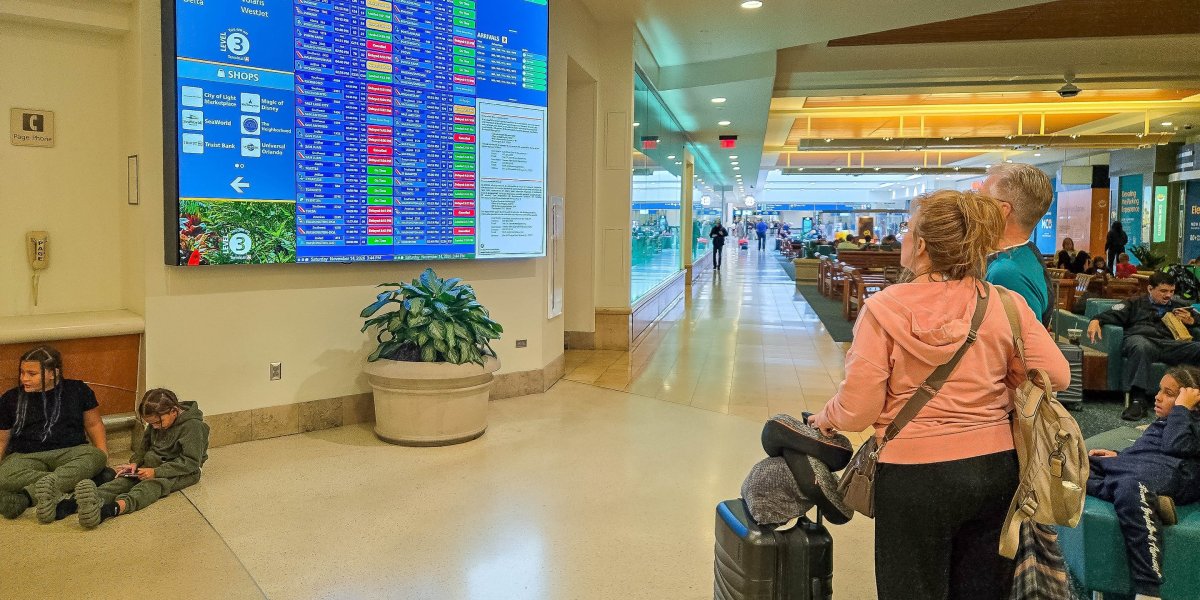
Microsoft Outlook and Teams went down for about twenty-four hours on Thursday. The FAA grounded all US flights on Friday for more than four hours, the longest ground stop since nine eleven.
The outages spread
JP Morgan Chase had a banking problem on Monday affecting all banks as counterparties.United delayed more than a hundred flights the same day.The NSA's classified network went down Tuesday.
Officials deny coordinated attack

Secretary of State Marco Rubio said there was zero evidence the incidents were related. He stated we have no indication and no reason to believe any of these incidents are related to each other.
“We have zero evidence whatsoever. We have no indication, no evidence, and no reason to believe at all that any of these incidents are related to each other.”
The public remains skeptical
Despite official denials, people on social media and in group chats suspected hackers or AI. The timing and scale fueled conspiracy theories about coordinated attacks or systemic vulnerability.
Microsoft's July update triggered the outage
Microsoft deployed a fix in July that was not triggered until last week. Another update then propagated through the network, causing the cascade that took hours to correct.
FAA outage was a communications failure
The FAA's air traffic control problem was not the new AI system deployed the day before.The issue was old fiber equipment maintained by L three Harris.
Each outage had a distinct cause
Chase blamed a software bug in their hardware. United cited a technology related issue. The NSA blamed routine maintenance. Apple blamed an internal update. All happened simultaneously but were unrelated.
Anthropic's record IPO valued at one point five trillion
Anthropic went public this week under ticker ANT at a reported one point five trillion dollars valuation. It is among the biggest IPOs ever but below the two trillion figure discussed months ago.
Amazon and Google own large stakes
Amazon will own fifteen percent of Anthropic. Google will own nearly fourteen percent. Both firms will make substantial money from the IPO and the company's data center commitments.
Voters rejected data center expansion
In the midterms, voters overwhelmingly rejected provisions supporting data centers that AI companies need. Politicians won campaigns by promising data centers were out across the board, bipartisan.
Nvidia reports strong earnings without Jensen Huang
Nvidia reported one hundred fifteen point eight billion dollars in revenue, six billion dollars ahead of expectations. This was the first earnings report since Jensen Huang resigned last week.
Huang faced affairs and board pressure
Jensen Huang resigned after it became public he had affairs with a woman suspected of being a Chinese intelligence asset and with at least one direct report at Nvidia.
Silicon Valley pushes to bring Huang back
Elon Musk and other CEOs including Y Combinator CEO Garry Tan campaigned to bring Jensen Huang back.Huang said he would be honored to return if the board would have him.The board said absolutely not.
Trump administration closes AI chip loophole

Just before Trump's Asia trip, the administration moved to close a loophole letting Chinese companies rent advanced AI chips from data centers outside China. Chinese firms are banned from buying chips directly from Nvidia.
Nvidia executive linked to the loophole
The issue became central this week because Jensen Huang was an executive at Megaspeed, one of the data center companies renting chips to China. This sparked the administration's response.
Cabinet dispute over China strategy
US Treasury Secretary Scott Bessent and Commerce Secretary Howard Lutnick disagreed on how to handle China and AI chips.Trump sided with Lutnick.
What to remember
A cascade of outages across major US services sparked conspiracy theories, but each had distinct technical causes unrelated to hacking or coordinated attack.
Read the TL;DR — this story on one card.