From WebMD · · 3m
What you need to know about hemorrhoids
Hemorrhoids are swollen veins in the rectum and anus. They're common, usually not serious, and often treatable at home.
In brief
Hemorrhoids are swollen veins in the rectum and anus. They're common, usually not serious, and often treatable at home. Hemorrhoids are common swollen veins in the rectum and anus that usually go away on their own or respond to home remedies and over-the-counter treatments. Originally reported by WebMD.
Swollen veins in your rectum
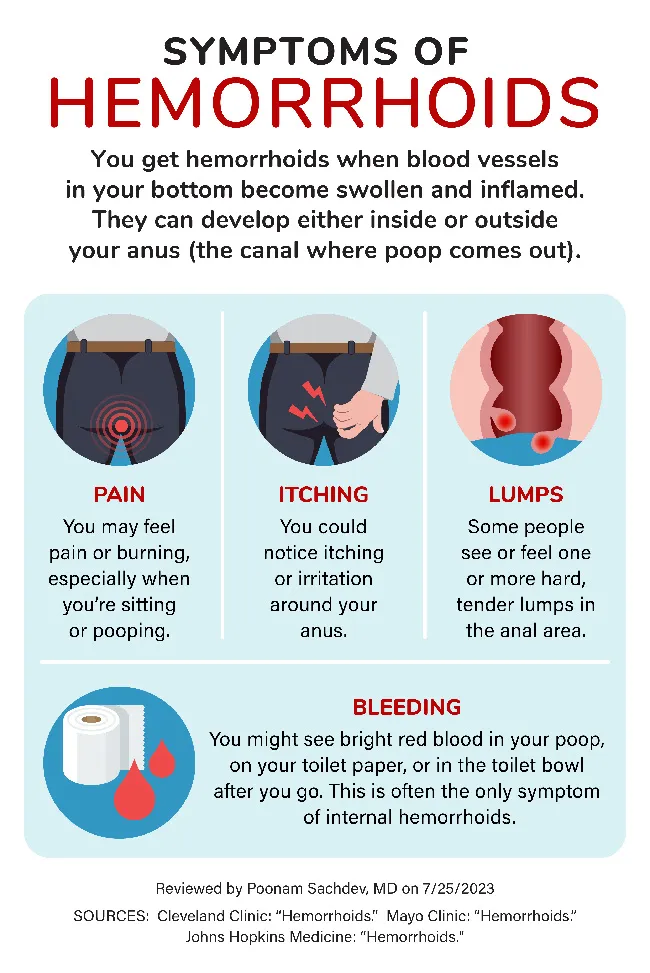
Hemorrhoids are swollen veins in the lowest part of your rectum and anus, similar to varicose veins. The walls of blood vessels stretch thin, causing veins to bulge and get irritated, especially when you poop.
Common but not serious
Hemorrhoids aren't serious, but they can cause unpleasant symptoms. They're one of the most common causes of rectal bleeding and often go away on their own. Treatments can also help.
How common are they
About one in every twenty people in the U.S. has hemorrhoids. They affect over half of people over fifty, making them especially common in older people.
Internal hemorrhoids
Internal hemorrhoids are so far inside your rectum that you can't usually see or feel them. They don't generally hurt because you have few pain-sensing nerves there.
External hemorrhoids
External hemorrhoids form under the skin around your anus, where there are many more pain-sensing nerves. This makes them more likely to cause discomfort.
Prolapsed and thrombosed
Prolapsed hemorrhoids happen when an internal hemorrhoid stretches down and bulges outside your anal opening. Thrombosed hemorrhoids occur when a blood clot turns an external hemorrhoid purple or blue.
What causes them
Pressure building up in your lower rectum can affect blood flow and make veins swell. This happens from pushing when you poop, straining during physical activity, extra weight, pregnancy, or a diet low in fiber.
Risk factors
You're more likely to get hemorrhoids if you're older, have obesity, are pregnant, have family members who had them, or have a sedentary lifestyle. Genetics and age make tissues in the anal area weaker.
How doctors diagnose them
Your doctor will ask about your medical history and symptoms, then do a physical exam or digital rectal exam. For internal hemorrhoids, you might need anoscopy, sigmoidoscopy, or colonoscopy to look inside.
Home remedies work fast
Simple lifestyle changes can relieve mild symptoms within two to seven days. Add fiber to your diet, drink more water, take warm sitz baths for twenty minutes several times a day, and use ice packs…
Over-the-counter treatments
Creams, pads, and suppositories temporarily ease pain, swelling, and itching. Most contain lidocaine, hydrocortisone, or witch hazel. Don't use over-the-counter hydrocortisone for longer than a week unless your doctor says so.
Surgical options for severe cases
If you have large hemorrhoids or other treatments haven't helped, your doctor can inject chemicals to shrink them, use a laser to seal vessels, place a rubber band to block blood supply, or use a…
Prevention starts with fiber
Eat twenty to thirty five grams of fiber a day from vegetables, fruits, whole grains, nuts, seeds, beans, and legumes.
When to see your doctor
Hemorrhoids are rarely dangerous, but see your doctor if symptoms don't go away in a week or if you have bleeding. This ensures you don't have a more serious condition causing your symptoms.
The big picture
Hemorrhoids are common swollen veins in the rectum and anus that usually go away on their own or respond to home remedies and over-the-counter treatments.