From Wellbeing Magazine · Editorial Team · · 3m
Telehealth PT: what it does and doesn't do
Video rehab can carry real parts of a treatment plan, as long as you know where the camera stops being enough.
In brief
Video rehab can carry real parts of a treatment plan, as long as you know where the camera stops being enough. Telehealth is a delivery method for selected parts of rehab, not a substitute for hands-on assessment or clinical judgment. Originally reported by Wellbeing Magazine.
Rehab without the drive
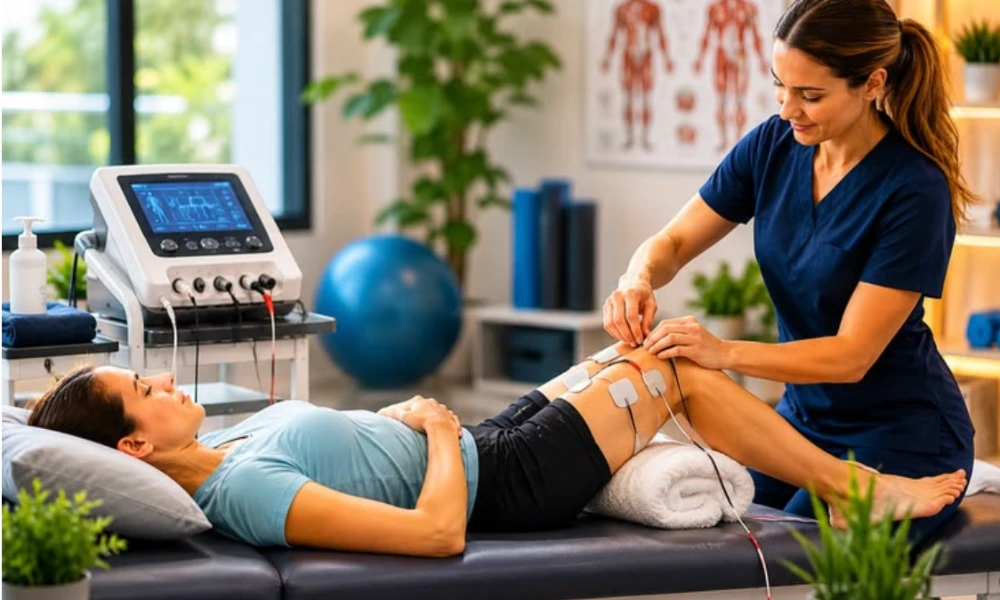
Telehealth physical therapy lets a clinician assess movement, teach exercises, and track progress while patient and therapist sit in different places.
A method, not a treatment
Virtual PT is not a separate intervention or a replacement for clinical judgment. It is one way to deliver selected parts of a wider rehabilitation plan.
“It is one way to deliver selected parts of a wider rehabilitation plan.”
More than a video call
A live appointment covers movement observation, demonstration, technique correction, and symptom review. Secure messaging and digital programs fill the gaps between visits.
Monitoring has a narrow meaning
Remote physical therapy means care delivered at a distance. Monitoring means something tighter: collecting and reviewing the information a patient submits while following the plan.
RPM and RTM are different
In US billing, RPM covers physiologic data and RTM covers eligible nonphysiologic therapeutic data, each with its own rules. Delivering care remotely does not make it billable.
“The use of telehealth rehabilitation services does not, by itself, make an activity billable.”
The session starts before the call
Staff confirm consent, identity, location, privacy, and emergency contacts, then check camera, mic, connection, lighting, and room to move.
Is this even suitable
The therapist reviews symptoms, history, and records, then makes a first decision: can this evaluation be done reliably by video at all?
Watching movement through a lens
The camera gets repositioned to show walking, posture, or range of motion. Live guidance beats a recorded demo because the clinician corrects technique as it happens.
Where the screen fails
Anything needing specialized equipment, close supervision, or hands-on contact still requires a clinic visit. Video cannot replace palpation or manual testing.
Homework with feedback
After the visit the patient gets videos, instructions, and tailored exercise parameters, then logs completed sessions and reports pain or difficulty.
The clinician still decides
That home data can trigger new guidance, a changed program, another remote visit, or a trip to the clinic. The technology informs the call, it does not make it.
“The technology supports the decision but does not make it.”
Who gains the most
Patients blocked by travel distance, limited mobility, work schedules, or frequent appointments. Remote delivery moves suitable parts of care into their home.
Know when to stop
If symptoms worsen, the view hides something important, or the home setup is unsafe, the clinician should end the remote assessment and arrange in-person care.
Hybrid is the common shape
Start with an in-person exam, run follow-ups and program updates digitally, and return to the clinic when hands-on treatment is needed.
Format is not outcome
Results depend on the condition, the intervention, patient suitability, technology access, and participation. Delivering an appointment online does not determine its effectiveness.
“Delivering an appointment online does not determine its effectiveness.”
Measure past attendance
Track program participation, reported difficulties, outcome measures, transitions to in-person care, and feedback. Appointment completion alone proves nothing about quality.
Here's the gist
Telehealth is a delivery method for selected parts of rehab, not a substitute for hands-on assessment or clinical judgment.