From domino · Zoë Sessums, Natasha Sol · · 2m
A 646-square-foot Lisbon apartment feels grand
Designer Svetlana Vakhtina transformed a cramped historic apartment into a spacious-feeling rental by embracing its original bones and using smart spatial tricks.
In brief
Designer Svetlana Vakhtina transformed a cramped historic apartment into a spacious-feeling rental by embracing its original bones and using smart spatial tricks. Work with what you find during renovation, not against it. Original materials and strategic mirrors can make tiny spaces feel much larger. Originally…
A cramped Lisbon apartment with big constraints
This 646-square-foot historic apartment had a long corridor, small pass-through rooms, and preservation restrictions that prevented major structural changes. Designer Svetlana Vakhtina had to work within those limits.
Demolition revealed hidden treasures
Under old carpet was original parquet flooring. Beneath kitchen linoleum was checkerboard tile. Wooden shutters and plaster molding were salvageable. These discoveries became the design's foundation.
Restore, don't replace, the floors
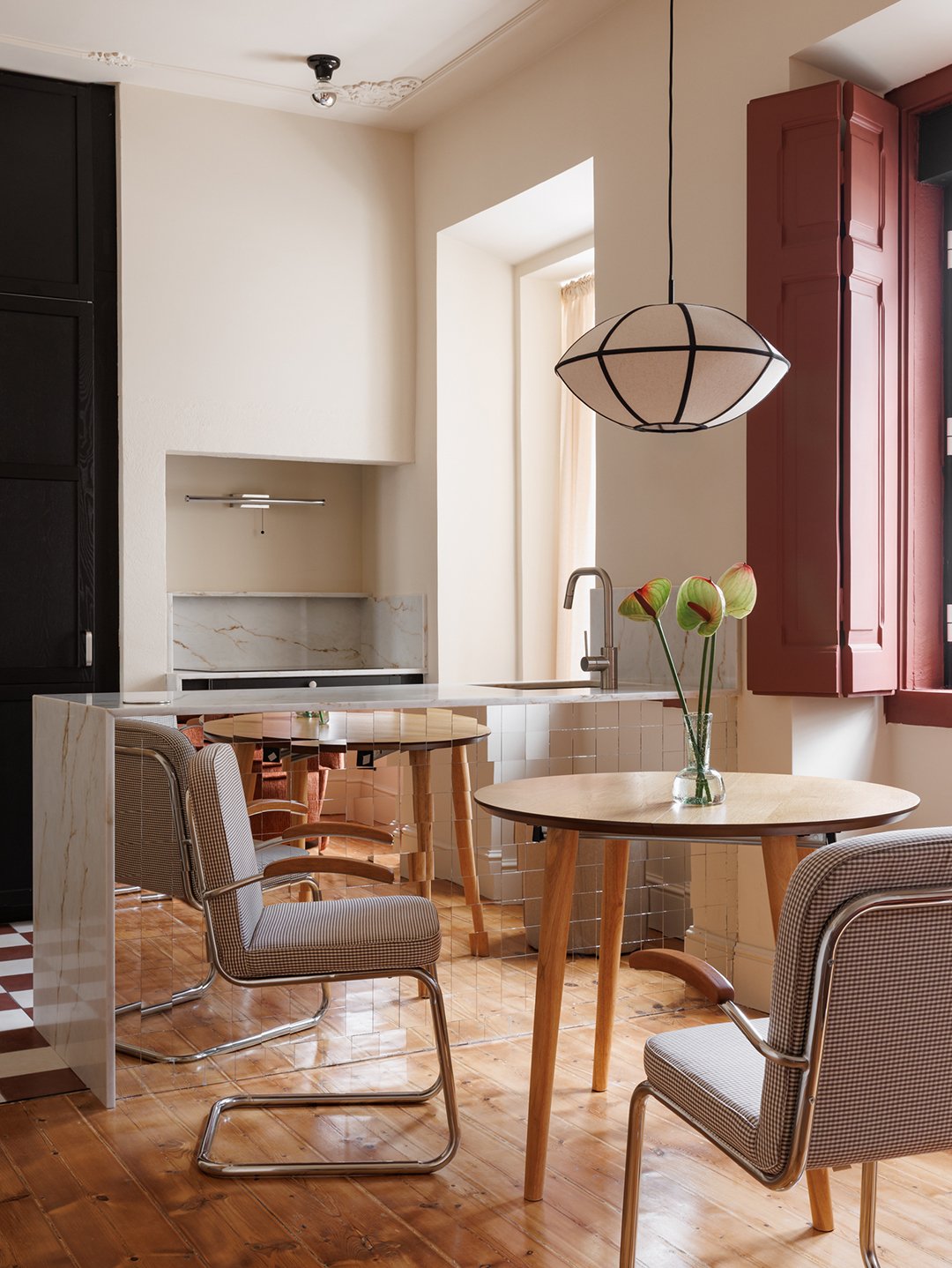
The original wood floors were stripped and restored rather than replaced. Missing decorative molding was photographed and reconstructed by craftspeople. Shutters were painted deep terracotta, inspired by neighboring rooftops.
Recreate the checkerboard kitchen tile
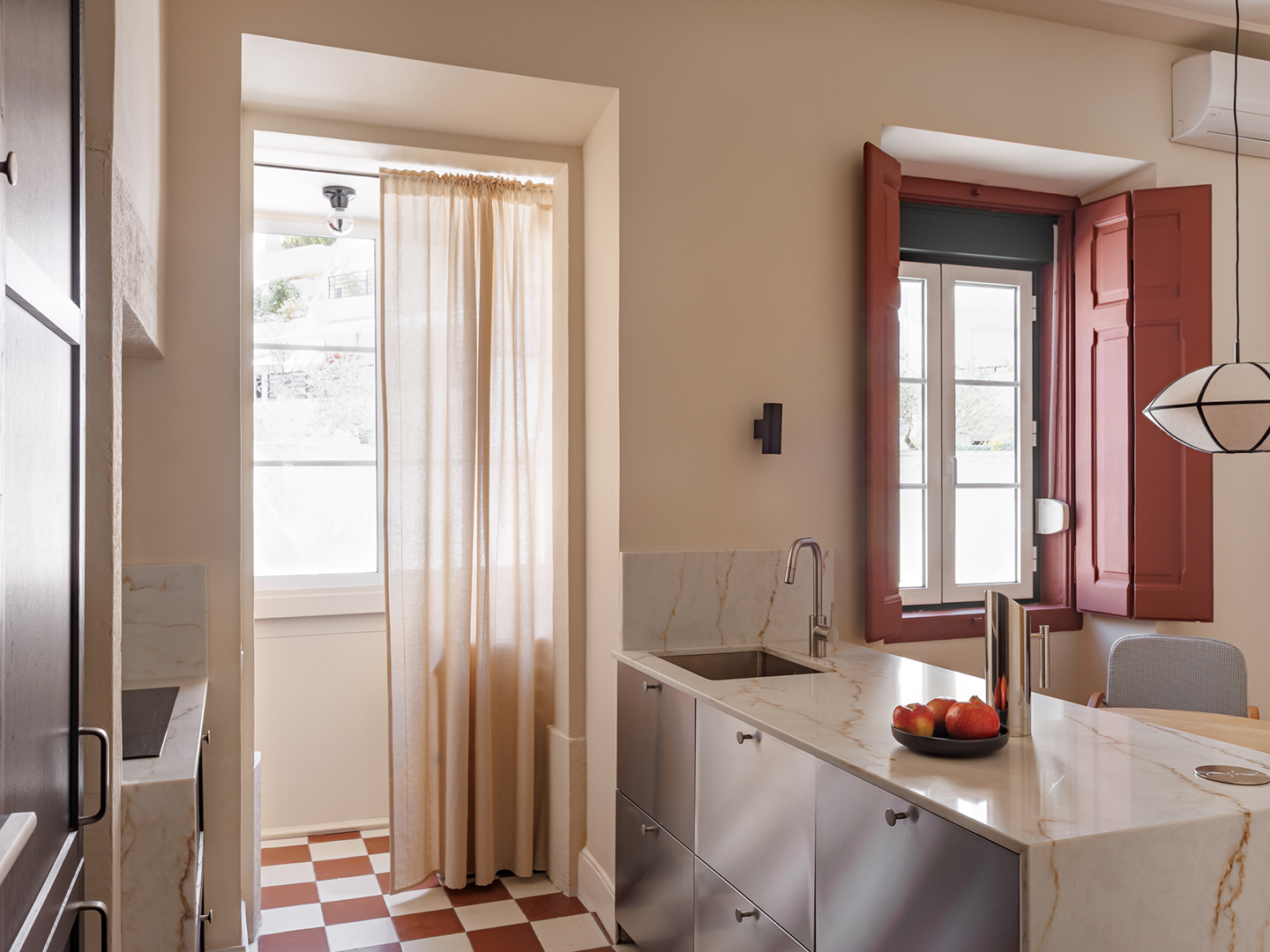
Vakhtina envisioned a checkerboard floor during design. When workers removed old linoleum, they found an almost identical historic tile underneath. Too damaged to save, it became the blueprint for a perfect recreation.
Use mirrors to expand the space
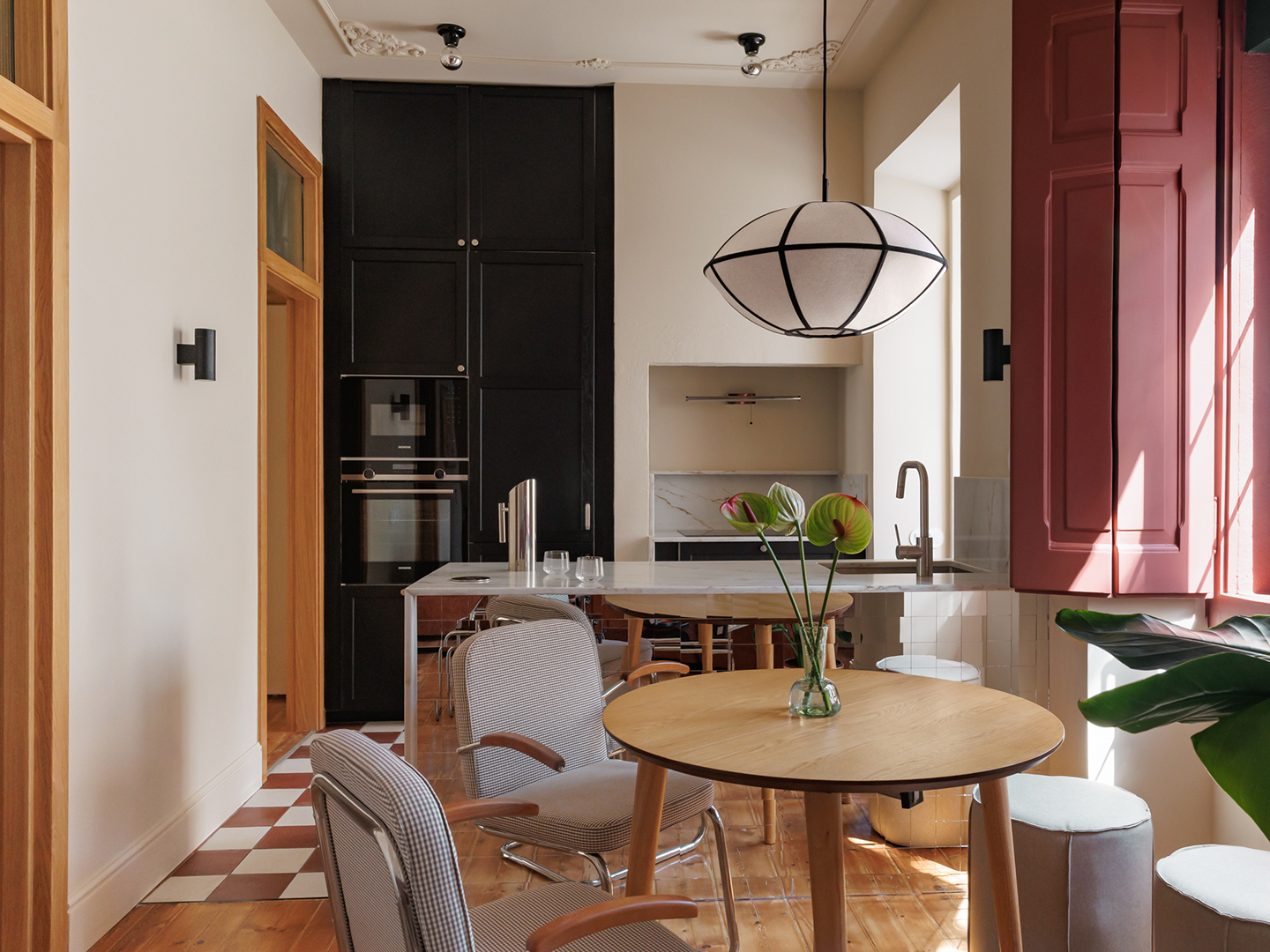
The kitchen, dining room, and living room shared one area. An island with a mirrored side reflects wood floors and light, making the tiny footprint feel larger. Two armchairs and tucking poufs replaced bulky chairs.
Splurge on materials that matter
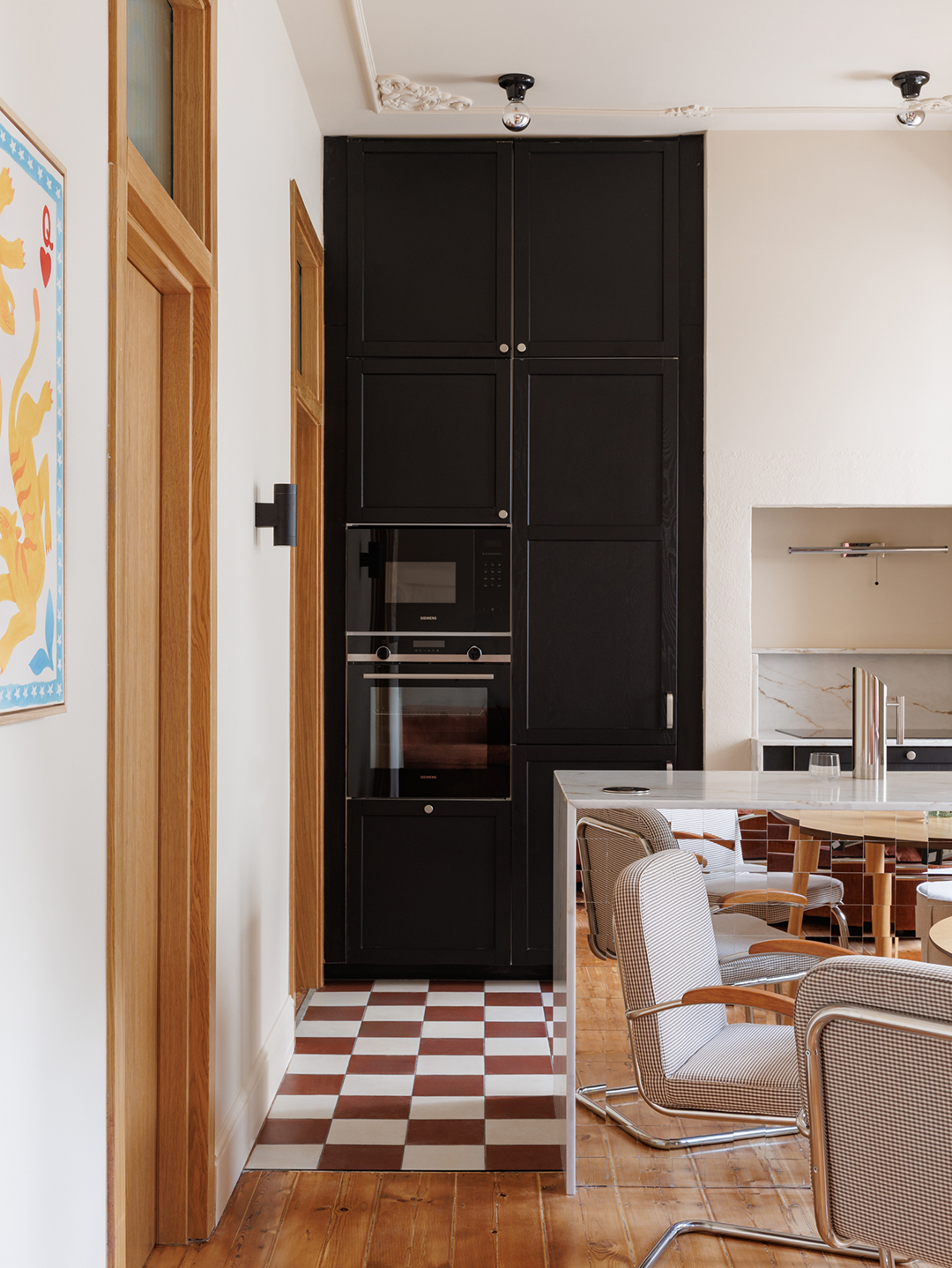
IKEA pieces sit alongside vintage finds and accessible European retailers. The budget splurge went to natural Portuguese stone for kitchen counters sourced from local quarries. Bedrooms mix IKEA wardrobes with sculptural marble nightstands.
Hide clutter behind fabric, not doors
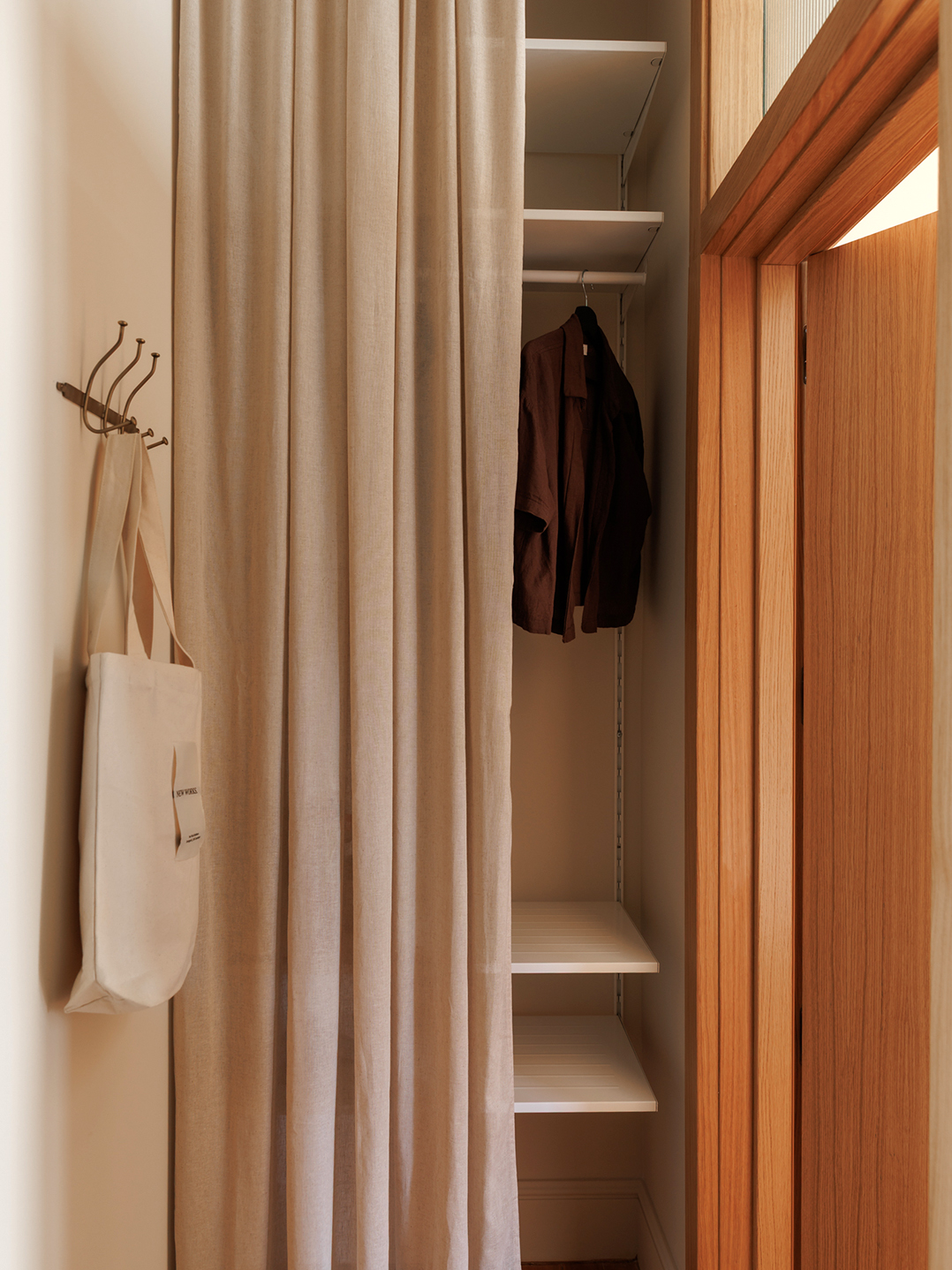
In the entry, a long linen curtain conceals shelving, hanging rails, shoes, and technical connections. The same trick hides a washer on the balcony. Fabric allows light through while keeping utilities out of sight.
Borrow proportions from original doors
The apartment's tall doors with transom windows were too damaged to reuse. Rather than reproducing them exactly, Vakhtina created new oak versions with textured glass that nod to the building's history without pretending to be original.
Move materials between rooms
During demolition, a piece of the kitchen's old stone countertop was saved instead of discarded. It eventually became part of the bathroom vanity, paired with an IKEA sink. This connects the bathroom back to the rest of the home.
At a glance
Work with what you find during renovation, not against it. Original materials and strategic mirrors can make tiny spaces feel much larger.