From Tautology · · 2 min
How Visa and Mastercard Actually Work
Peek behind the curtain at how payment networks route money, manage risk, and split swipe fees globally.
In brief
Peek behind the curtain at how payment networks route money, manage risk, and split swipe fees globally. Card networks don't issue cards or hold deposits, they operate the telecom and banking infrastructure that routes transaction messages, manages global settlement risk, and sets system-wide fee incentives…
Not banks or card issuers
Visa and Mastercard do not issue credit cards, manage bank accounts, set up checkout software, or manufacture point-of-sale hardware.
“They aren’t the company that issues the card... Nor do they manufacture the point of sale hardware.”
Connecting issuers to merchants
Card networks serve as a bridge, connecting cardholders and issuing banks on one side with merchants and acquiring banks on the other.
“Visa and Mastercard are card networks, facilitating card transactions by connecting the cardholders and issuers to the merchants and acquirers.”
Four jobs of a network

To keep global commerce moving, networks route transaction messages, settle funds between banks, set fee incentives, and enforce network rules.
Telecom for payments
Networks maintain dedicated data centers and lease private fiber-optic cables to route authorization messages between issuers and acquirers.
“Mastercard calls this activity 'switching', seeing itself as a network switch.”
Data centers with actual moats
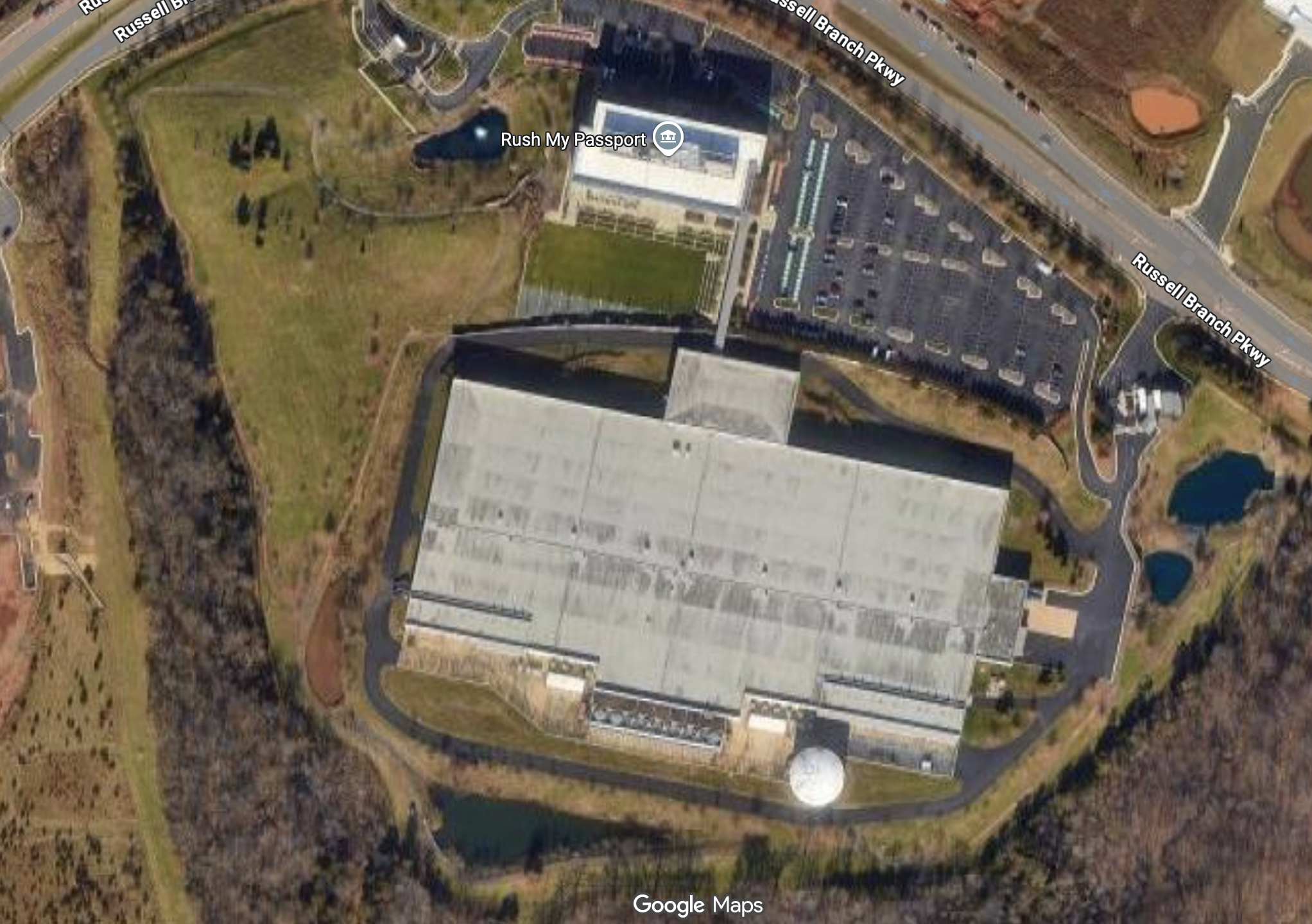
Visa operates heavily fortified, redundant data centers built to survive severe natural disasters and attacks, including a flagship facility in Virginia.
“The facility... is locked down like a digital Fort Knox.”
How transaction routing works
Card numbers act like IP addresses. The first six to eight digits identify your issuing bank so the network can route authorization requests instantly.
“The first 6 to 8 digits of the PAN identifies the card issuer and is called the Bank Identification Number.”
Coordinating daily net settlements
Beyond messaging, networks calculate the net total of debits and credits across all participating banks each day to transfer money efficiently.
“To be efficient, Visa does net settlement: every day, each network participant’s debits and credits are totalled...”
Cross-border banking adapter

Networks simplify international payments by handling currency conversions and cross-border bank relationships so individual institutions don't have to.
“Visa acts as an adapter between banking systems with its global banking relationships.”
Billion-dollar settlement liquidity
Moving global funds exposes networks to non-payment risk, forcing Visa to hold billions in liquidity to cover daily bank settlement defaults.
“As of September 30, 2024, we held $11.2 billion of our total available liquidity to fund daily settlement...”
Dissecting a swipe fee
On a $100 swipe with a 2.5% fee, the payment processor gets $0.35, the card network gets $0.15, and the cardholder's bank takes $2.00.
Issuers take the biggest cut
Card issuers keep the largest share of fees because they take on credit risk and zero-liability fraud protections, which in turn funds card rewards.
“Surprisingly, the issuing bank keeps most and the network takes the least, by an order of magnitude!”
Steering behavior with fees
Networks adjust interchange rates to incentivize specific behaviors, offering lower fees for secure transactions and charging higher rates on business cards.
“The network’s goal is to set fees that incentivize desired behaviors on their network...”
Regulatory caps shape rewards
While US cards generate large issuer fees for lavish rewards, the EU caps interchange at 0.3%, stifling credit rewards and boosting alternative payments.
“In the EU, interchange fees are restricted to 0.3%, which explains the lack of rewards cards...”
A massive rulebook governs all

Networks enforce strict technical and operational guidelines via massive rulebooks, levying fines up to $1 million per month for violations.
“These rules are detailed in 'Visa Core Rules and Visa Product and Service Rules', a 923 page volume...”
Built-in dispute resolution
Unlike cash or bank transfers, card networks offer structured chargeback mechanisms for fraud or broken promises without forcing users into court.
“When a payment method doesn’t have a dedicated dispute mechanism, the legal system is used to settle disputes.”
Efficient forced arbitration
If banks cannot resolve a dispute, Visa acts as an arbitrator charging a $600 review fee. The losing party pays, encouraging banks to settle quickly.
“The losing party pays the original transaction amount plus the review fee, so both parties have a lot of incentive to resolve it...”
The virtuous payments loop

Card networks thrive on network effects: more cardholders attract more accepting merchants, building a self-reinforcing engine of global payments.
“More cards means more merchants, more merchants mean more cards, and more of everything is good for the network.”
The big picture
Card networks don't issue cards or hold deposits, they operate the telecom and banking infrastructure that routes transaction messages, manages global settlement risk, and sets system-wide fee incentives.