From the Guardian · · 3m
Europe's AI safety problem
Europe's lack of homegrown AI giants leaves it sidelined from the global safety debate and vulnerable to US and Chinese dominance.
In brief
Europe's lack of homegrown AI giants leaves it sidelined from the global safety debate and vulnerable to US and Chinese dominance. Europe needs to invest in its own AI technology and datacentres to have a voice in AI safety decisions and avoid economic dependence on US and Chinese companies. Originally reported by the…
Europe's impossible choice

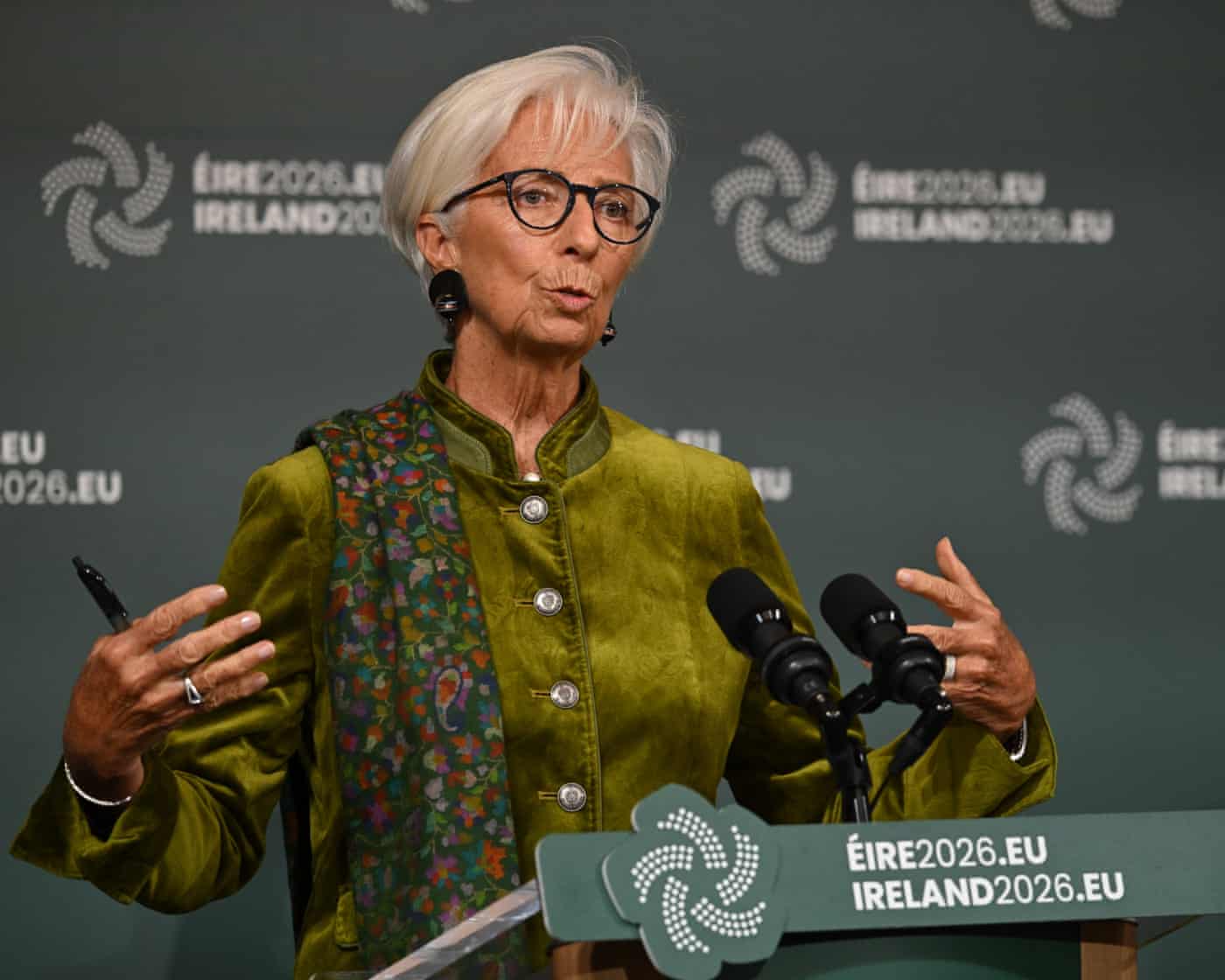
Christine Lagarde, head of Europe's central bank, says the continent faces a stark dilemma: reject AI and lose economic growth, or embrace it and become dependent on US and Chinese technology.
Europe missing the safety debate
While the world debates AI safety risks, Europe has largely been absent from those conversations because it lacks Silicon Valley-scale tech titans like OpenAI, Google, or Anthropic.
Lagarde's self-sufficiency plan
Lagarde argues Europe must develop its own AI technology and build more datacentres. This would reduce the threat of being cut off by the US or China and give Europe a voice in AI safety decisions.
“the threat of being cut off loses its force”
Vestager's strategy report

Margrethe Vestager, the EU's former competition commissioner, co-authored a report calling for Europe to build datacentres and develop its own AI to strengthen the ecosystem and retain talent.
EU AI Act as Europe's voice
Vestager says Europe's EU AI Act gives it a voice in the safety debate by requiring developers of high-risk AI systems to report safety incidents and address risks like models evading control.
Global solution needed
Vestager acknowledges that existential AI threats require global solutions that don't hand power to the US and China, and calls for the UN General Assembly to move beyond US-China rivalry.
The doomsday narrative trap
Frederike Kaltheuner from the AI Now Institute warns that US tech companies' doomsday warnings about AI frontiers push Europe toward dependency on American models out of fear of being left behind.
Companies reject frontier models
Many companies aren't actually adopting frontier AI models like ChatGPT because of high costs and data privacy concerns, suggesting Europe may not be as far behind as the narrative suggests.
EU AI Act's practical value
The EU AI Act addresses real consumer concerns through labelling requirements and oversight of AI in medicine and hiring, offering pragmatic protections rather than focusing solely on speculative existential risks.
Act unlikely to become global standard
The EU AI Act faces criticism for heavy compliance burdens and a narrow territorial focus, making it unlikely other countries will adopt it as a global benchmark for AI regulation.
The sovereignty risk ahead
Kaltheuner warns that if Europe's economy, public sector, and education system run on US-controlled AI models and infrastructure, it creates a sovereignty problem that deregulation won't solve.
What to remember
Europe needs to invest in its own AI technology and datacentres to have a voice in AI safety decisions and avoid economic dependence on US and Chinese companies.