From the Guardian · · 1m 50s
Nasa's robot rescue mission for aging telescope fails
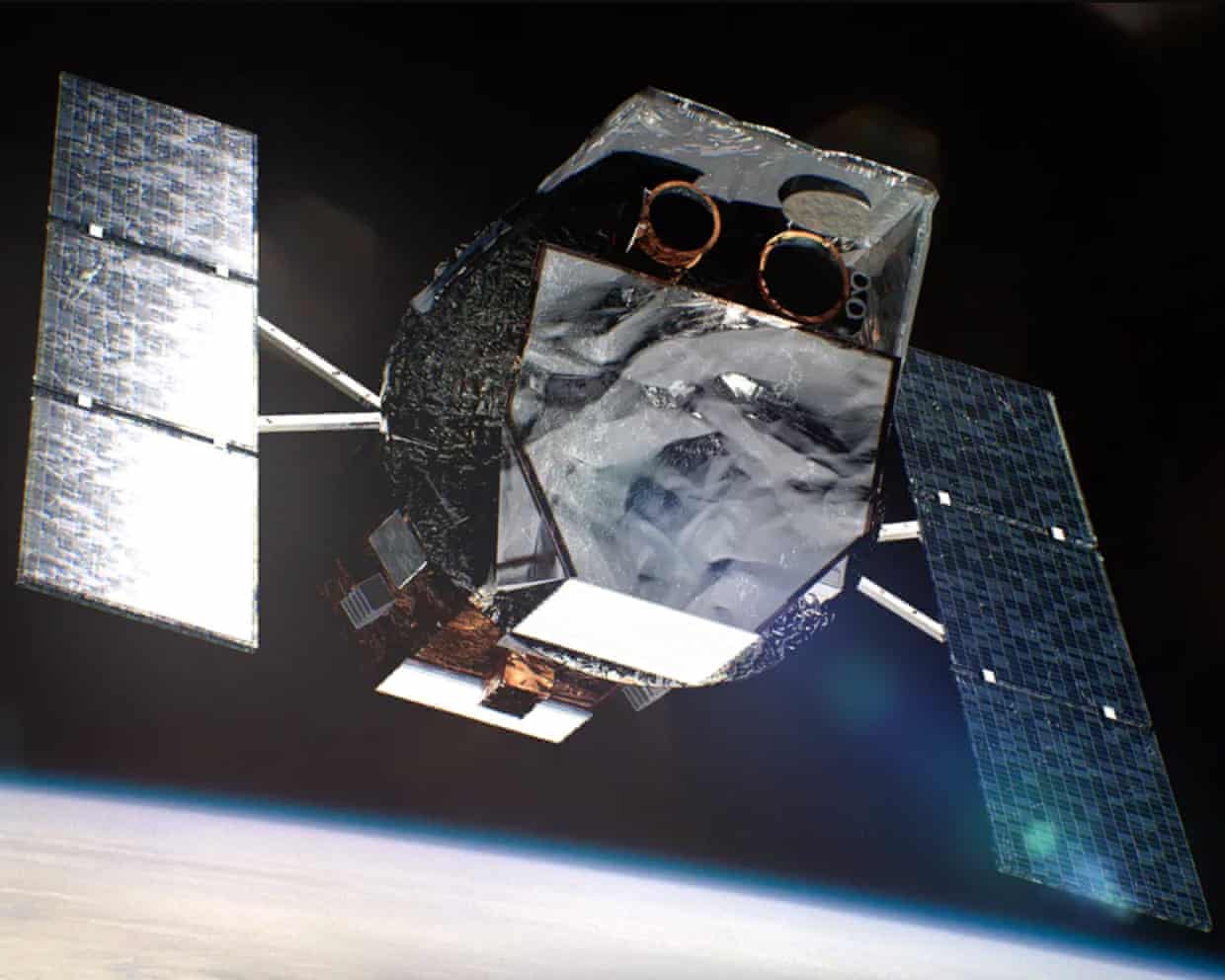
A commercial spacecraft couldn't save the Swift Observatory from its decaying orbit, ending a high-stakes attempt to extend the telescope's 22-year mission.
In brief
A commercial spacecraft couldn't save the Swift Observatory from its decaying orbit, ending a high-stakes attempt to extend the telescope's 22-year mission. Despite advancing spacecraft servicing technology, Link couldn't complete its rescue due to in-flight problems, and Swift will re-enter Earth's atmosphere in…
Commercial robot launched to save aging telescope

Link, a three-armed spacecraft, lifted off in July to boost the orbit of Nasa's Neil Gehrels Swift Observatory, which has studied cosmic events for 22 years. The mission aimed to extend Swift's life before it decayed back to Earth.
Link got close but couldn't complete the capture
The spacecraft approached within 7 to 9 miles of Swift and photographed its condition, but in-flight problems with motion control and communications prevented it from capturing and boosting the telescope as planned.
Electronics failures crippled the rescue spacecraft
Two of Link's three reaction wheels failed after launch, causing the spacecraft to enter a deep spin. Though control was restored, insufficient fuel remained to attempt the rescue.
Link returns after 85 days in orbit
The spacecraft re-entered Earth's atmosphere on Friday after nearly three months in space. Katalyst Space Technologies, the Arizona company behind the mission, had won a $30 million Nasa contract in September 2024.
Swift will follow Link back to Earth
Without the altitude boost, the Neil Gehrels Swift Observatory is expected to re-enter Earth's atmosphere in November. The telescope's lifespan was ironically shortened by the intense solar flares it was designed to observe.
Nasa calls it a worthwhile high-risk attempt
Nasa officials said the mission advanced spacecraft servicing capabilities and tested new ways to operate satellites in low Earth orbit, even though it failed to save Swift. The agency praised the team's speed in assembling the rescue plan in just 22 months.
“Nasa should be willing to move quickly and take smart risks when the potential return is worth it.”
At a glance
Despite advancing spacecraft servicing technology, Link couldn't complete its rescue due to in-flight problems, and Swift will re-enter Earth's atmosphere in November.




