From the Guardian · · 1m 20s
Parthenon illusion myth takes a hit
An Oxford mathematician says the Parthenon’s famous optical fixes may solve problems that were never really there.
In brief
An Oxford mathematician says the Parthenon’s famous optical fixes may solve problems that were never really there. The Parthenon’s curves may be real, but the long-told story that they corrected major visual illusions is weakly supported. Originally reported by the Guardian.
A famous story wobbles
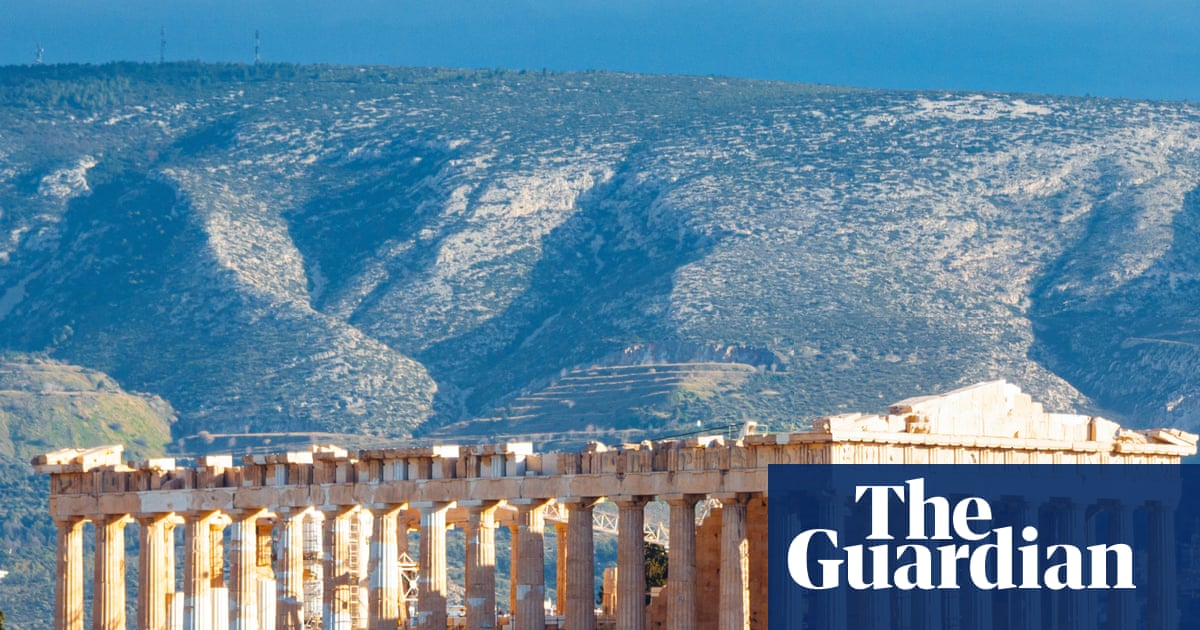
The Parthenon has long been praised as a temple whose subtle curves corrected visual flaws. Alain Goriely argues that story does not hold up.
“The optical illusions the curves are meant to fix are either nonsense or practically imperceptible.”
Vitruvius seeded it
Goriely traces the idea to Vitruvius, writing about the temple roughly 400 years after it was built. The claim then hardened into architectural lore.
“I do think it might be the oldest myth that we have”
The base probably did not sag
The Parthenon’s base rises about 6cm at the centre. The old claim says this prevented viewers from seeing a sag, but Goriely found no real evidence for that illusion.
Columns were too vertical
One explanation borrows from the Hering illusion, where lines can look bowed on a flat page. Goriely says the Parthenon’s columns are too upright, and the effect is unproven in 3D.
Tiny bulges, weak case
The columns do bulge slightly, a curve called entasis. But at the Parthenon the bulge is only about 18mm, barely visible from normal viewing distances.
Other reasons fit better
The base curve may have helped rain drain away. Curved columns may simply have looked more natural and pleasing to ancient Greek builders.
“Trust your own eyes, question what you see”
The big picture
The Parthenon’s curves may be real, but the long-told story that they corrected major visual illusions is weakly supported.