From the Guardian · · 4m
Storm clouds gather over global stock markets
Rising bond yields, an AI bubble, and Middle East tensions are fuelling fears of a market crash.
In brief
Rising bond yields, an AI bubble, and Middle East tensions are fuelling fears of a market crash. Global stock markets face mounting risks from soaring government bond yields, an overvalued AI sector, and geopolitical turmoil, with some analysts warning of a potential crash. Originally reported by the Guardian.
Summer optimism fades fast
The US stock market rallied to an all-time high over summer, powered by the AI revolution. Now financial markets face renewed turmoil as Middle East fighting intensifies without resolution.
Borrowing costs hit 2007 levels
The US government's borrowing costs climbed to the highest level since two thousand seven, with knock-on consequences for households, businesses, and governments worldwide. Investors fear Donald Trump's war is igniting higher inflation.
Oil shock stokes selling pressure
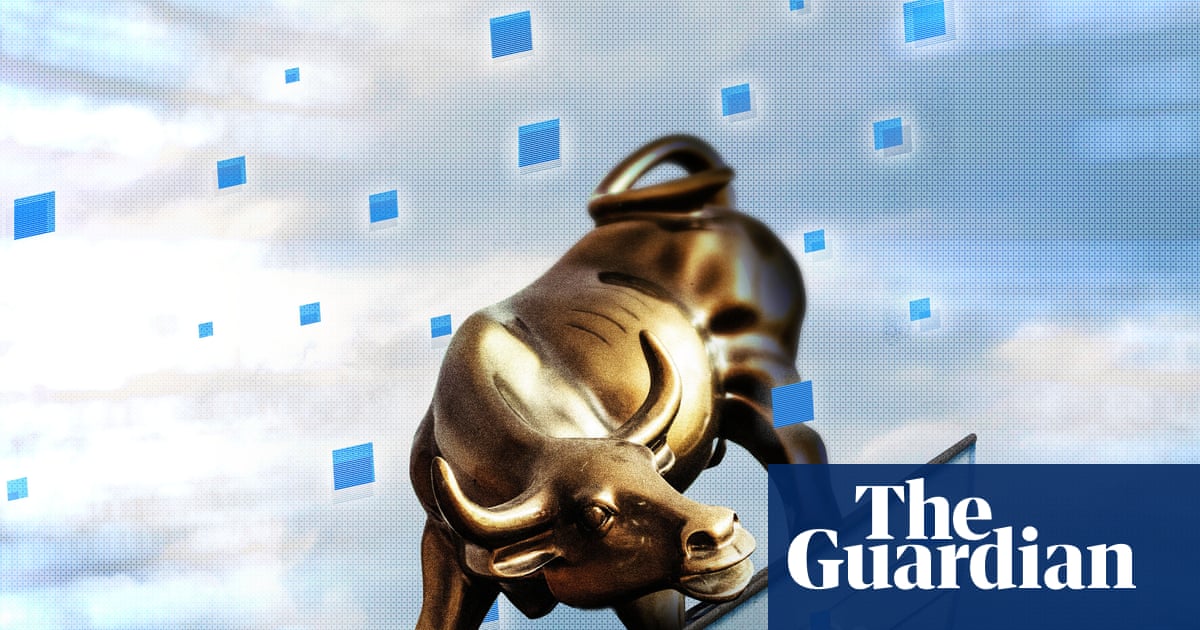
Global oil prices have soared above one hundred dollars a barrel, stoking heavy selling pressure in the bond market. The S&P five hundred index sits three percent below an all-time high.
Tech giants worth twenty trillion
The magnificent seven tech stocks, Nvidia, Apple, Google, Microsoft, Meta, Amazon and Tesla, have a combined value of more than twenty trillion dollars. Investors worry markets are overextended as storm clouds gather.
Analyst warns of crisis ingredients
Albert Edwards, senior analyst at Société Générale, wrote that these are febrile times. He thinks the ingredients for a financial crisis could be coming together as oil prices shock the global economy.
“These are febrile times.”
Fed raises rates despite Trump

The US Federal Reserve defied Trump this week with its first interest rate rise since two thousand twenty-three, worried the Iran war will stoke inflation. Central banks elsewhere are also taking action.
Global rate hikes pile on pressure
The Bank of England is expected to raise rates four times before the end of next year. The European Central Bank raised rates last week, and the Bank of Japan raised its policy rate to a thirty-one-year high on Friday.
Recession historically follows rate rises
A US recession has historically followed about three to three point five years after the first rate rise, on average, according to Deutsche Bank's Jim Reid. Markets often fall or crash before a recession begins.
AI valuations look dangerously high

The CAPE ratio for the S&P five hundred has risen to almost forty-one points, more than double its long-term average of about seventeen points. This approaches the record high of forty-four point nineteen points in December nineteen ninety-nine, just before the dotcom crash.
AI boom needs six hundred billion
For the multitrillion-dollar AI boom to turn a profit, AI-related sales of tech companies would need to rise by between six hundred and eight hundred billion dollars within two years, research by Fathom Consulting shows.
Fathom gives bubble a thirty percent chance
Fathom Consulting gives a thirty percent chance that the AI bubble pops next year. Brian Davidson, an economist at the consultancy, said the economics behind the current capex boom do not work.
“For all the impressive advances in AI technologies in recent years, the economics behind the current capex boom do not work.”
South Korea margin calls hit one point two million

South Korea's traders bought AI-linked chip maker shares on margin, doubling the Kospi index. When the market fell, one point two million South Korean retail investors were hit by margin calls, equivalent to one in thirty adults.
Oracle shares halved on debt fears
Oracle's shares surged a year ago after announcing a cloud computing deal with OpenAI. They have halved since, as investors fretted that Oracle could be borrowing too much to fund datacentres.
Treasury yield hits five percent threshold
The yield on ten-year US Treasury bonds climbed above the psychologically key threshold of five percent this week. John Higgins at Capital Economics said this level is seen by some as a threshold above which financial markets might go into meltdown.
“seen by some as a threshold above which financial markets might go into meltdown”
Productivity gains offer last hope

The US economy has recorded a rise in productivity growth, while AI is among reasons the UK economy has grown at the fastest rate in the G seven in the first half of this year. This could help justify sky-high share prices.
Haldane warns situation is fragile
Andy Haldane, former Bank of England chief economist, told LBC he sees a significant dose of reality in the productivity miracle in AI. But he warned the situation is fragile and a slow release of air is possible.
“I don't think outright collapse in a dotcom bubble type fashion. But could I see a slow release of air that doesn't collapse the world economy, but slows it down? Yes, I could.”
The takeaway
Global stock markets face mounting risks from soaring government bond yields, an overvalued AI sector, and geopolitical turmoil, with some analysts warning of a potential crash.





