From the Guardian · · 2m
Trident submarine sets record with seven-month patrol
HMS Vengeance's record underwater deployment raises concerns about crew strain and ageing submarine maintenance.
In brief
HMS Vengeance's record underwater deployment raises concerns about crew strain and ageing submarine maintenance. HMS Vengeance completed a record seven-month underwater patrol, but the extended deployment highlights maintenance delays and strain on sailors in ageing submarines. Originally reported by the Guardian.
Record patrol ends at Scottish base
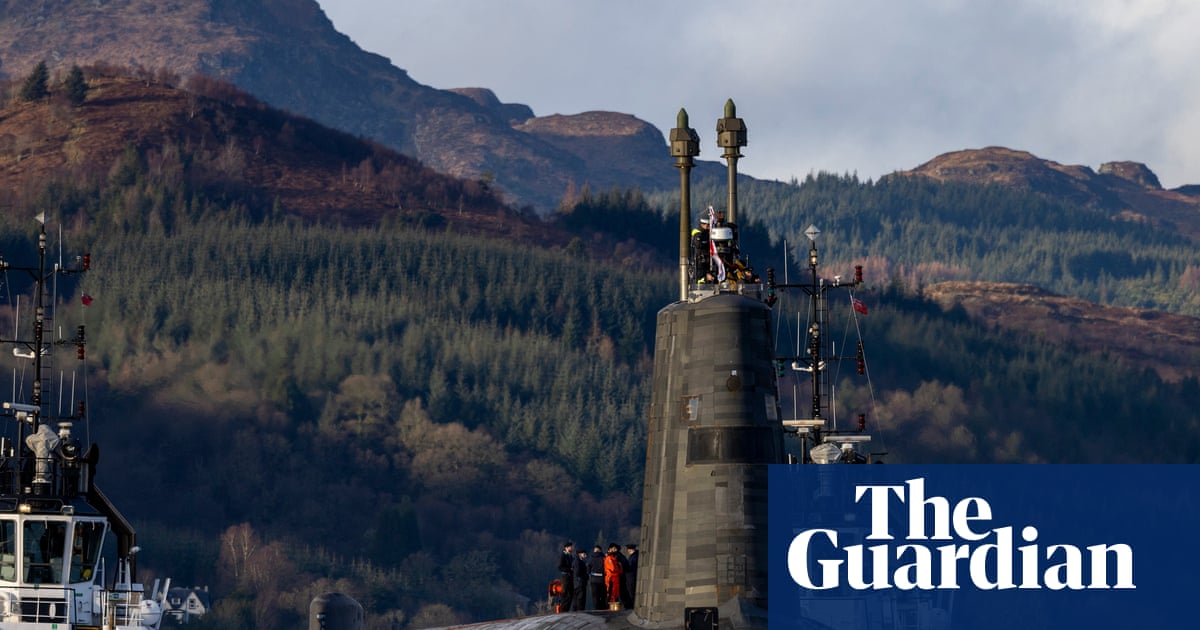
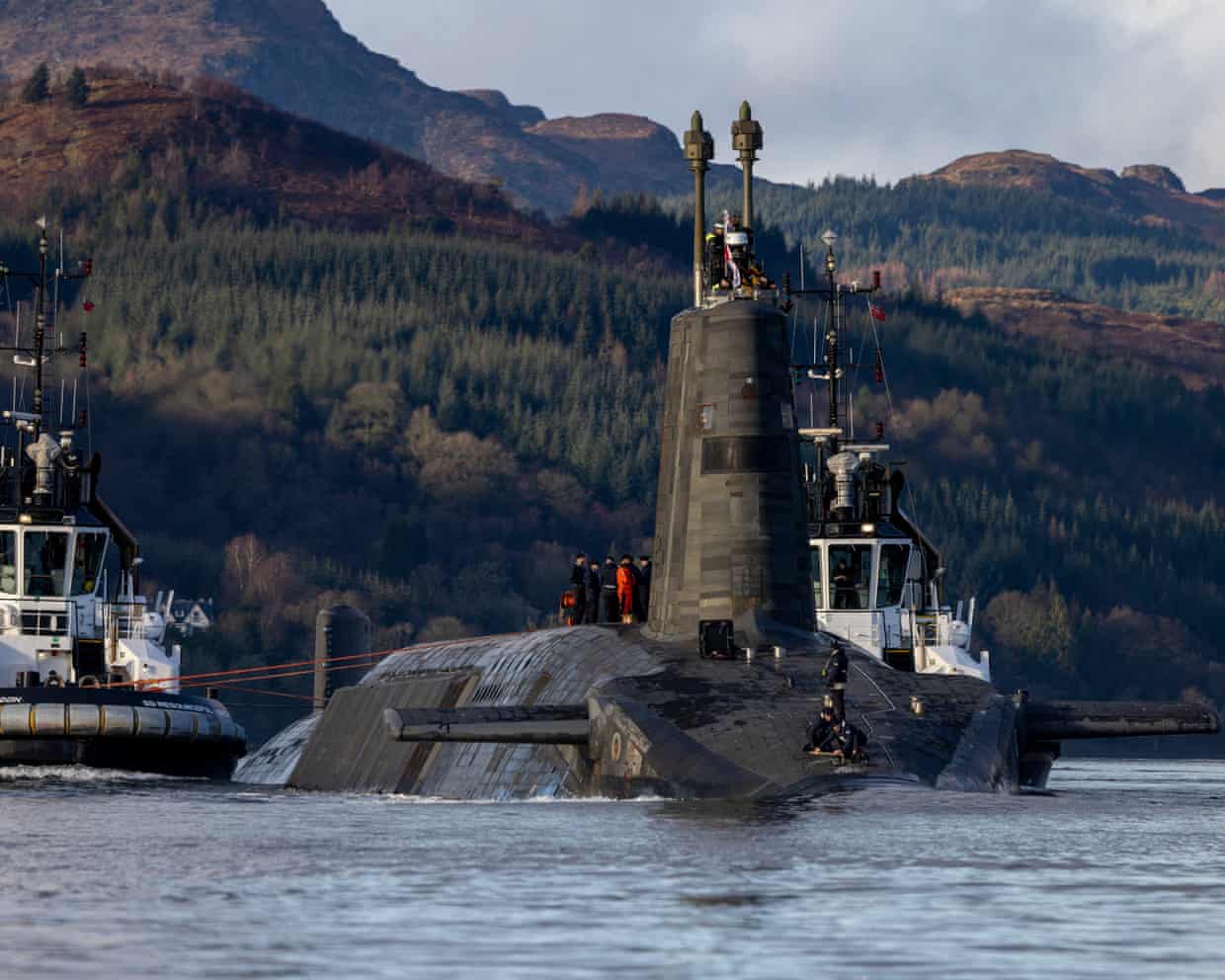
HMS Vengeance returned to Faslane naval base in Scotland on Sunday after a record seven-month underwater deployment. Defence secretary Wes Streeting greeted the crew.
Patrol lasted 217 days submerged
HMS Vengeance began its patrol on twelve April and spent two hundred seventeen days submerged. It surpasses the previous two hundred five day record set by HMS Vanguard.
Fleet designed for shorter missions
The Vanguard class submarines were designed in the nineteen nineties for three to four month patrols with food for a crew of about one hundred forty. Deployments over one hundred days were considered highly exceptional.
Extended patrols reflect maintenance delays
Patrols are getting longer because of slow submarine maintenance. David Cullen, nuclear expert with the Basic thinktank, said the fleet was designed around three month tours.
“The fleet was designed around three-month tours, and that was considered to be a long time to be stuck underwater in a metal box with no contact with the outside world.”
Defence secretary troubled by length
Wes Streeting said the length of time the crew spent submerged did not sit lightly with him. He praised their dedication, professionalism and expertise as the ultimate national endeavour.
“It makes me feel even more indebted to the crew for the service they've given to the country, for the commitment they show, the dedication, the professionalism, the expertise.”
Concerns about crew psychological impact
Sailors spend seven months underwater in a boat one hundred fifty metres long with no contact with the outside world. The Royal Navy is struggling to recruit new personnel amid these strains.
Navy chief calls for faster maintenance
Gen Sir Gwyn Jenkins, head of the Royal Navy, said the UK needed to improve submarine maintenance to allow faster turnaround. He expressed tremendous respect for Trident sailors.
Replacement submarines years away
In July, Labour announced a twenty six billion pound ten year plan to invest in naval bases. HMS Dreadnought, the first replacement for Vanguard class submarines, is not expected until about twenty thirty two.
Ageing boats pushed beyond design limits
David Cullen warned that inherent risks of operating submarines are being pushed by extended deployments. At the end of their design life, the old boats should be run gently, not as hard as they are.
“The inherent risks of operating submarines are being pushed by them being run as they are. At the end of the submarines' design life they should be run gently, not as hard as they are.”
What it means
HMS Vengeance completed a record seven-month underwater patrol, but the extended deployment highlights maintenance delays and strain on sailors in ageing submarines.
Read the TL;DR — this story on one card.