From the Guardian · · 2m
Why French police embrace violent crowd control
France treats protest as a threat to the state itself, not a democratic right to manage.
In brief
France treats protest as a threat to the state itself, not a democratic right to manage. French police use aggressive tactics against protesters because they see themselves as instruments of state authority protecting the republic, not public servants managing dissent. Originally reported by the Guardian.
France's policing draws global scrutiny
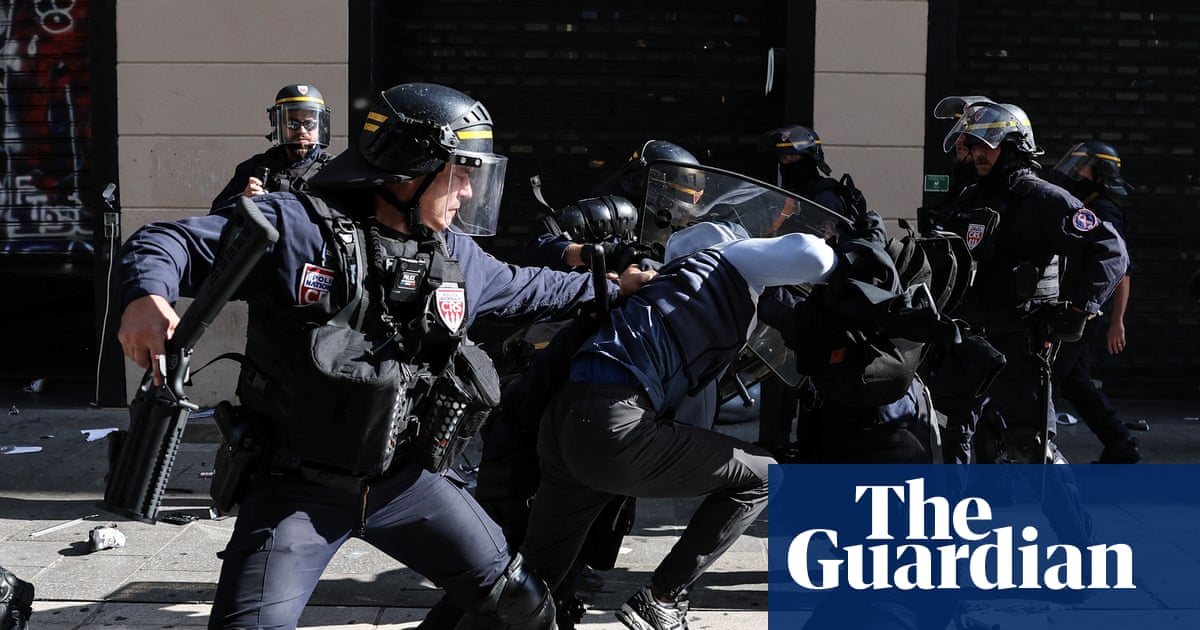
Teargas clouds, baton charges and stun grenades against protesters have focused world attention on France's policing methods. Amnesty International and the Council of Europe have condemned the approach.
Police as instruments of state
French policing is rooted in Napoleon's centralised state. Police are instruments of the state whose core task is to protect it, enforce laws and maintain public order, not serve the public.
Protests seen as threats to authority
In France, protests and mass disorder are direct challenges to the republic's authority. Police priority is to reclaim streets, not negotiate. This contrasts with the UK, where police are public servants.
Weapons banned elsewhere in Europe
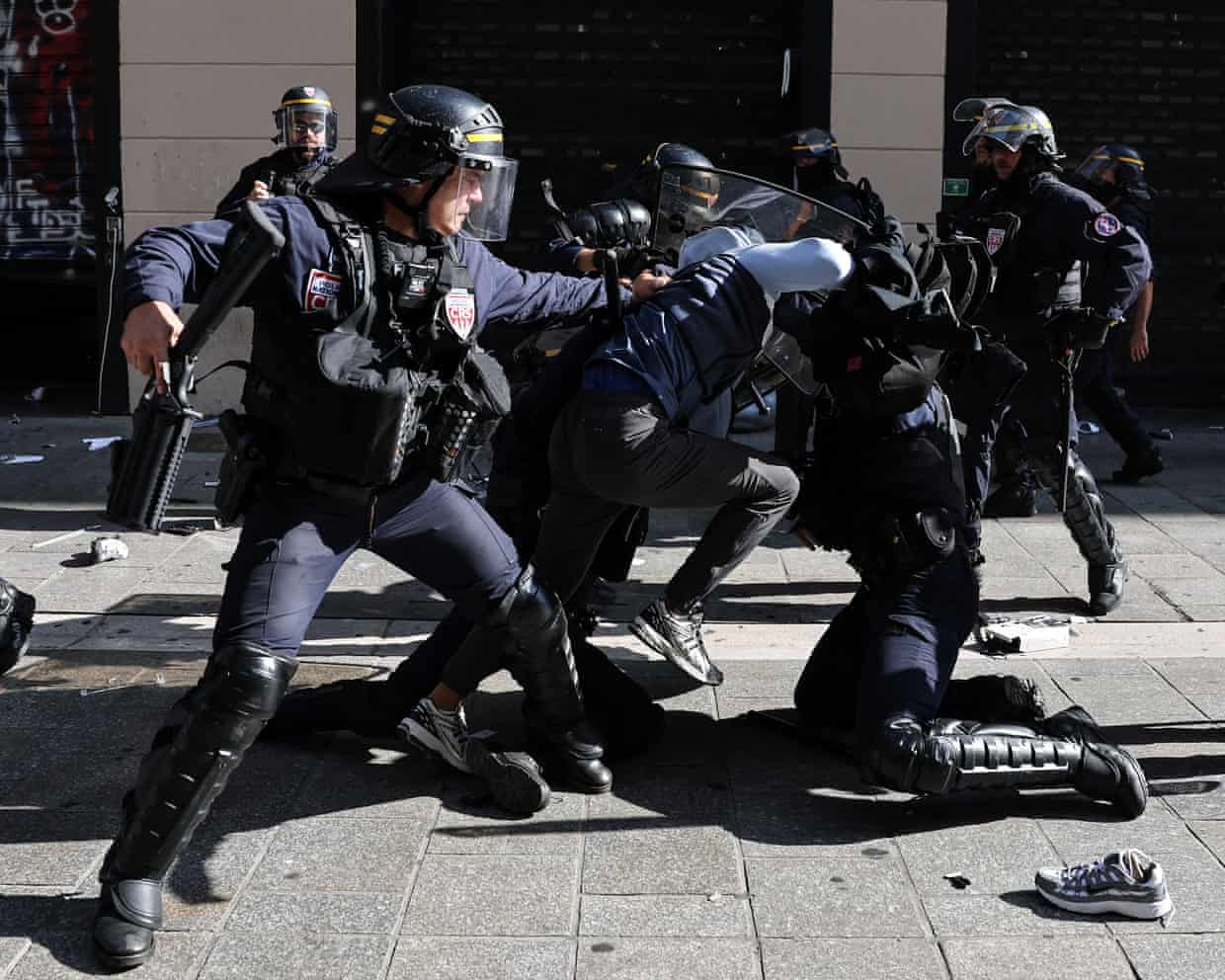
Defence ball launchers fire rubber projectiles at one hundred eighty five miles per hour. Pyrotechnic stun grenades, designed to disperse crowds through impact and one hundred sixty decibel acoustic shock, have caused lost eyes, teeth…
Street protest as democratic tradition
A legacy of insurrection from the seventeen eighty nine revolution means French protesters know the street can force governments to back down. Protest is regarded as a civic duty and legitimate democratic tool.
A vicious cycle of escalation
Authorities see large crowds as existential threats and send police. Military-style tactics antagonise peaceful demonstrators and validate radical groups. Police respond with baton charges and munitions, turning protests into pitched battles.
France leads in high-intensity unrest
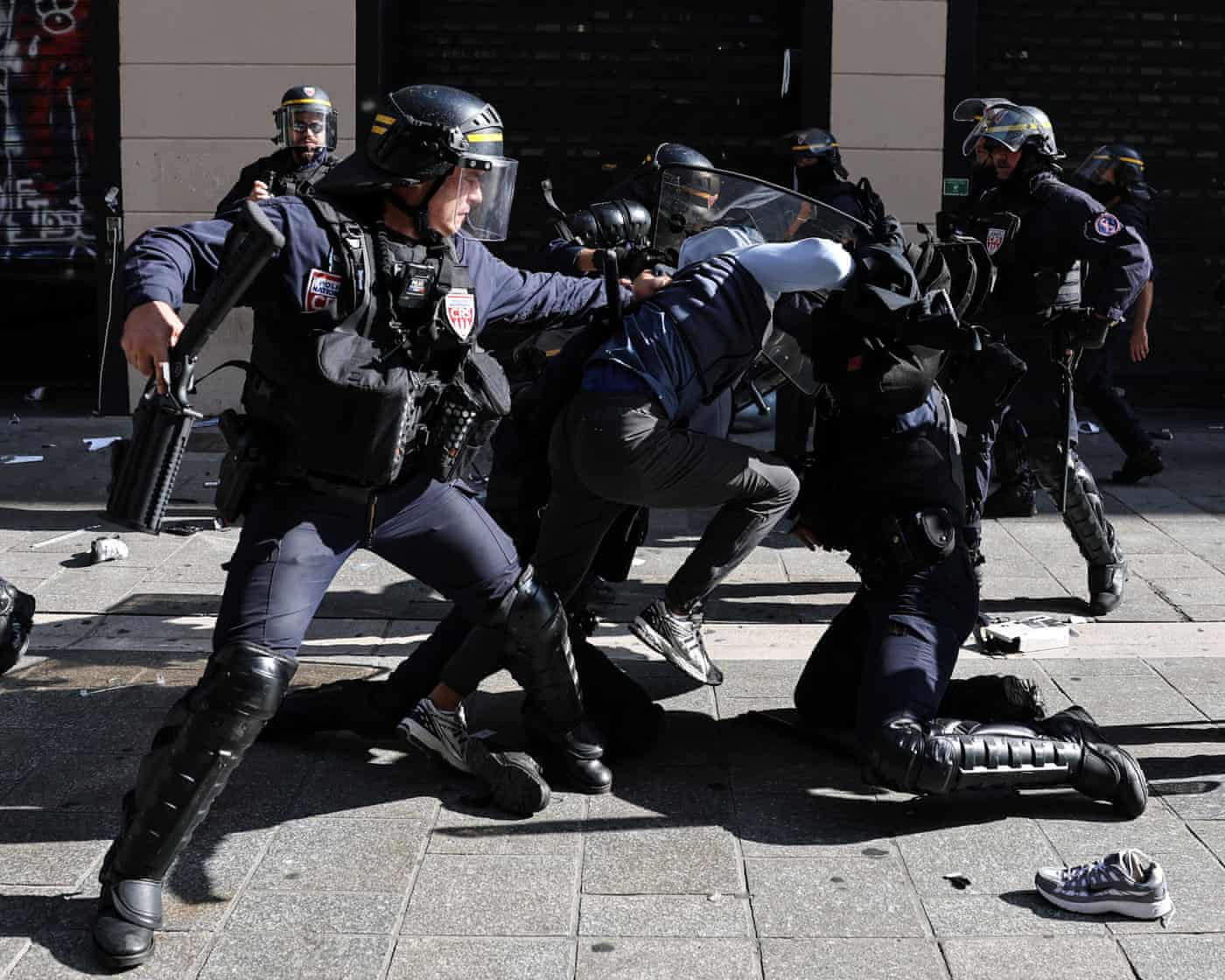
Data from Acled shows France does not always record western Europe's highest number of demonstrations, but consistently records the highest rates of escalated, high-intensity unrest including street barricades, vandalism, arson and direct police confrontations.
New law would expand police impunity
A proposed law would establish legal presumption of self-defence for police using firearms, shifting burden of proof to victims. Critics argue it would institutionalise police impunity and reinforce treating dissent as insurrection to be repressed.
“it would institutionalise police impunity”
What it means
French police use aggressive tactics against protesters because they see themselves as instruments of state authority protecting the republic, not public servants managing dissent.


