From Ars Technica · · 4m
17,000 satellites in orbit, and we're heading for trouble
Europe's space agency warns that orbital collisions could spiral out of control within decades as mega-constellations fill the skies.
In brief
Europe's space agency warns that orbital collisions could spiral out of control within decades as mega-constellations fill the skies. The number of satellites has exploded from 1,000 to 17,000 in just over a decade, and even with best practices, orbital collisions could become self-sustaining by mid-century…
Gravity made Kessler syndrome famous
The 2013 film popularized the idea of cascading orbital collisions, but the concept was proposed by NASA scientists Donald Kessler and Burton Cour-Palais nearly 50 years ago.
Satellites in orbit jumped 17-fold
When Gravity came out in 2013, there were about 1,000 active satellites in orbit. Today there are nearly 17,000, driven largely by SpaceX's Starlink constellation of roughly 11,000 satellites.
Amazon and China are joining the race
SpaceX is not alone. Amazon has launched hundreds of satellites with thousands more planned, while multiple Chinese internet constellations are underway. Orbital data centers could add hundreds of thousands more.
Experts sharply disagree on risk
Orbital debris expert Moriba Jah predicts loss of human life within a decade. Elon Musk counters that space is enormous and satellites are tiny, so crowding is not a concern.
“Space is really big. It's not like space is gonna get crowded.”
Europe's space agency raised alarms
The European Space Agency released its annual Space Environment Report, which dramatically increased projections of future satellites after reassessing current trajectories of large constellations.
Even best practices lead to trouble
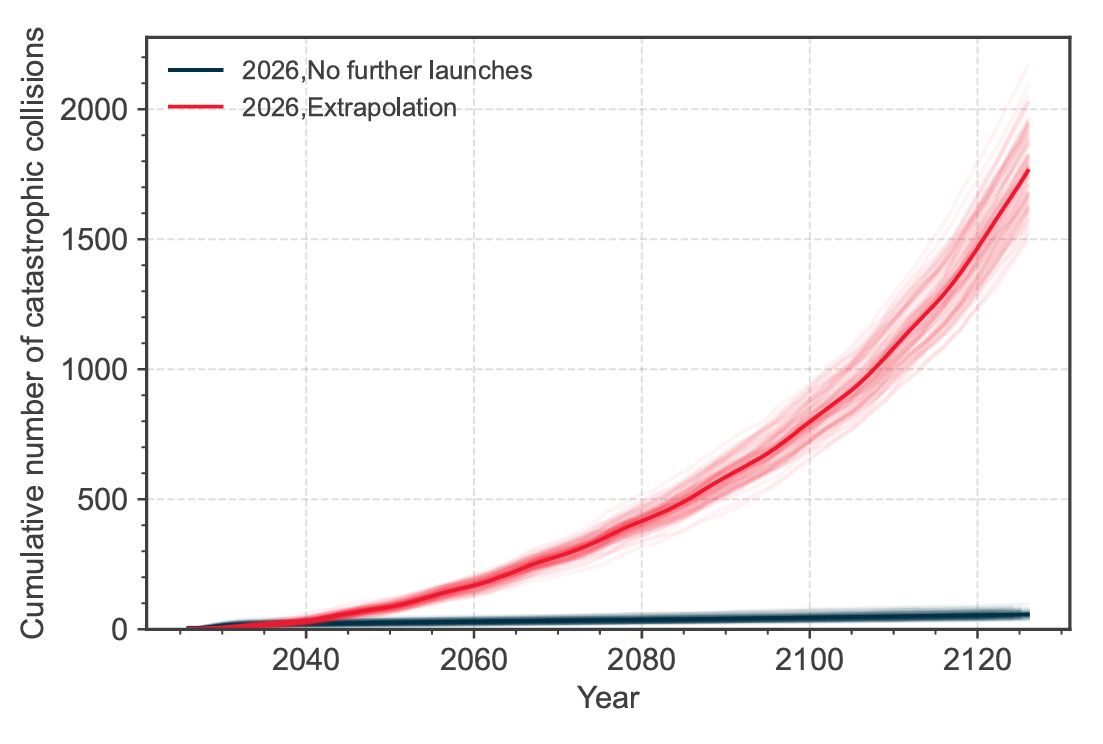
ESA modeling shows that even if operators follow best practices for satellite disposal and collision avoidance, the orbital environment will become significantly more cluttered as launches continue.
Collisions could spiral out of control
ESA's report states that continuing current behavior leads to an unstable environment with collision rates increasing exponentially, potentially triggering a Kessler-like cascade by mid-century.
“leads to an unstable environment with collision rates increasing exponentially”
Data centers could be the tipping point
ESA's projections exclude orbital data centers still being prepared for launch. If these mega-constellations prove economically viable, they could be the ultimate trigger for orbital instability.
SpaceX is being surprisingly careful
SpaceX has been effective at deorbiting defunct Starlink satellites and managing its massive constellation. The company now performs nearly 35,000 collision avoidance maneuvers per month, one every 75 seconds.
SpaceX lowered its collision threshold
SpaceX started with a 1-in-100,000 collision probability threshold for maneuvers but has become much more conservative, now using a 3-in-10 million threshold, well below NASA's 1-in-10,000 standard.
Some orbits already at critical threshold
A 2025 paper by Hugh Lewis and Donald Kessler found that some orbital bands between 520 and 1,000 km have already reached a collisional-runaway threshold where new debris is created faster than it naturally decays.
Abandoned rocket stages pose danger
Spent upper stages from rockets that were not properly deorbited after launch remain in orbit uncontrolled. These school bus-sized objects are particularly problematic at altitudes of 840 and 975 km, where they can linger for decades or centuries.
Weapons could trigger cascade
Bad actors could easily shoot missiles at satellites in low-Earth orbit, creating debris fields that could wipe out communications and cause massive financial damage. Iran recently became the ninth country to put a domestically built satellite into orbit.
Near term: expensive, not unusable
In the near term, space will likely remain usable but increasingly expensive due to avoidance technology, management personnel, and propellant for maneuvers. Finding launch windows that avoid debris will become harder.
Long term: Kessler syndrome looms
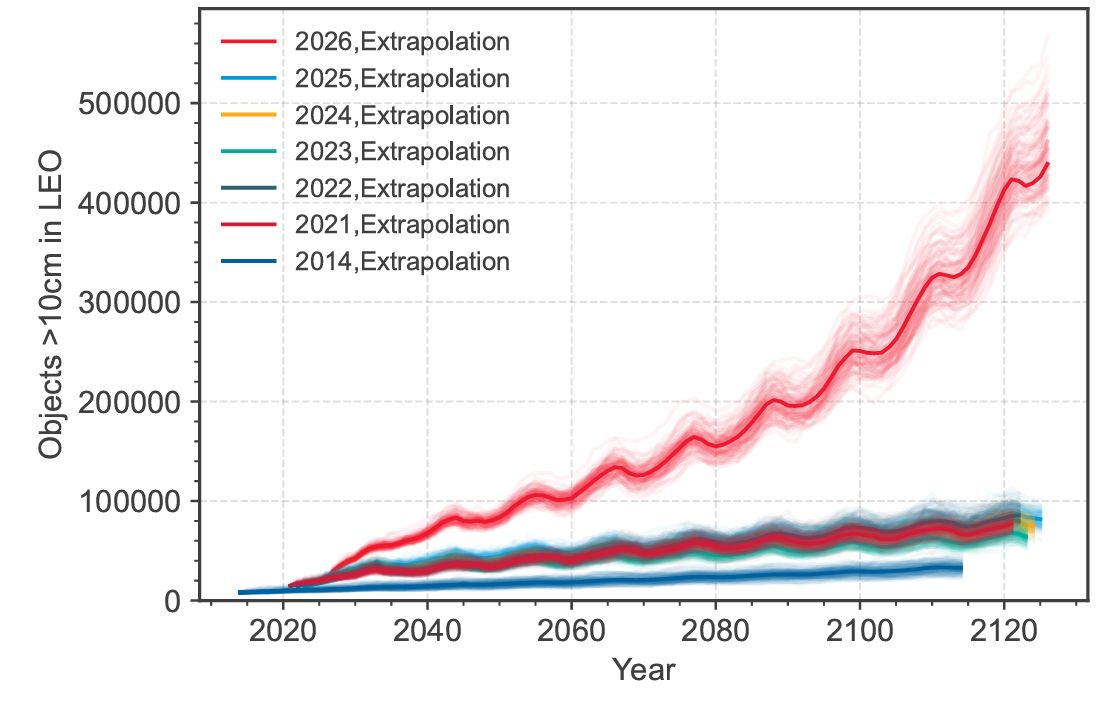
Longer term, perhaps as early as 15 years from now but more likely longer, a Kessler-syndrome type outcome may start to become increasingly plausible as orbital crowding reaches critical levels.
What it means
The number of satellites has exploded from 1,000 to 17,000 in just over a decade, and even with best practices, orbital collisions could become self-sustaining by mid-century.