From Ars Technica · · 2m
SCOTUS Forces TV Stations to Cut Rates for Political Party Ads
The Supreme Court orders broadcasters to extend candidate-level ad discounts to political committees, altering campaign spending dynamics.
In brief
The Supreme Court orders broadcasters to extend candidate-level ad discounts to political committees, altering campaign spending dynamics. Political parties can now buy broadcast TV ads at candidate-discounted rates, dramatically extending the power of coordinated campaign spending. Originally reported by Ars Technica.
Supreme Court slashes ad rates
The Supreme Court issued an order requiring broadcast TV stations to sell election ad time to political parties and joint fundraising committees at steep discounts.
Perfect pre-election timing
The order lands right at the start of the mandatory 60-day pre-election window, forcing TV stations to offer their lowest unit charge beyond individual candidates.
Decoding the ad discount rule

Federal law mandates the lowest ad rate for 'use' by a qualified candidate. The core legal dispute is whether ads bought by party committees on a candidate's behalf qualify.
Lower court blocked the expansion
Four Democratic candidates previously won in the Fourth Circuit, where judges ruled the FCC's push to expand discounts contradicted the clear language of federal law.
Republicans secure emergency stay
Republican campaign committees secured an emergency stay from the Supreme Court, allowing discounted party ad buys to proceed ahead of the midterms.
The procedural pretext
Rather than ruling on the legal merits, the Supreme Court majority claimed lower courts must wait for the FCC to issue a final administrative decision before intervening.
Compounding previous spending rules
The decision builds on a prior Supreme Court ruling striking down limits on coordinated spending, letting parties spend infinitely while demanding candidate-level ad rates.
Dark money and broadcast losses
FCC Commissioner Anna Gomez warned the ruling lets wealthy donors pool unlimited funds into cheap ad slots, shifting financial strain onto local broadcasters.
“opens the door to a flood of dark money that will let a handful of wealthy donors pool unlimited contributions”
Jackson's fiery dissent
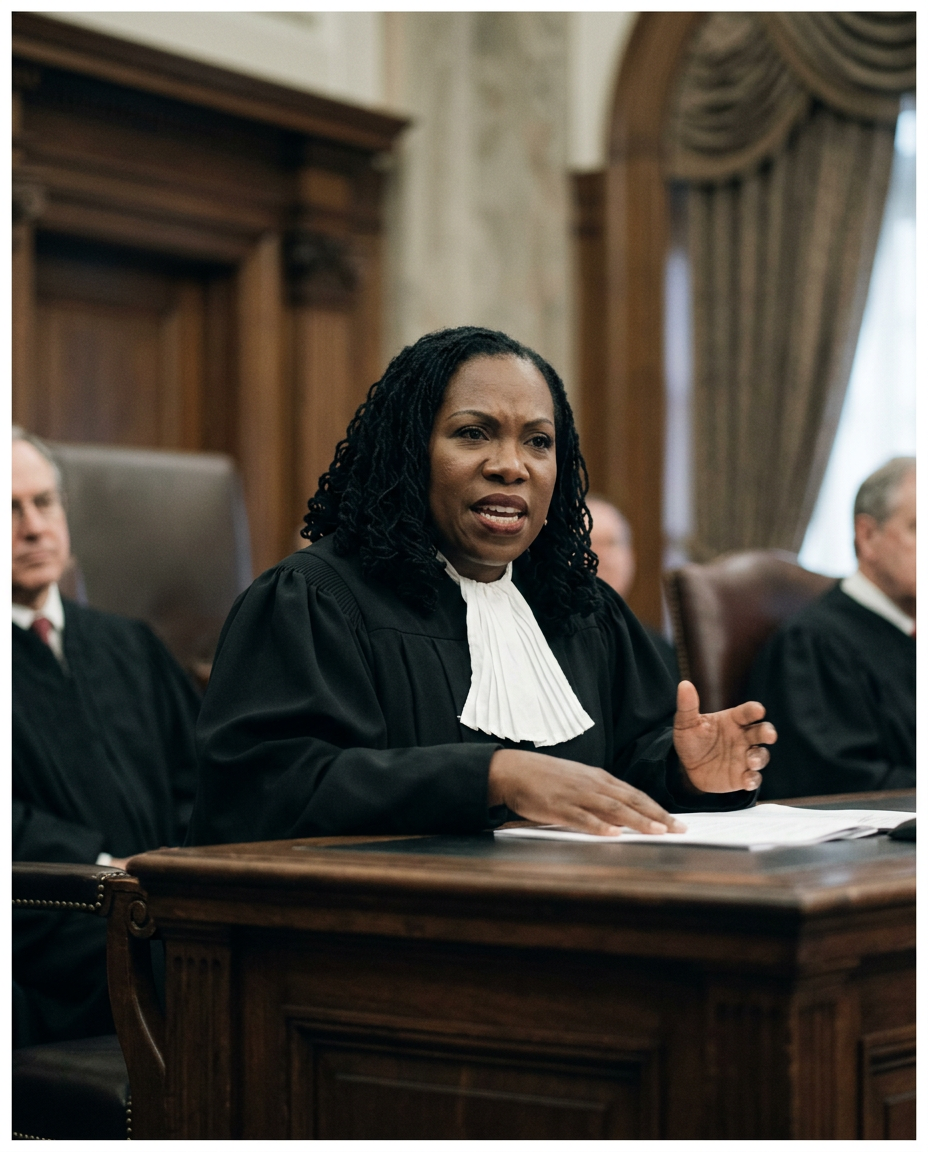
Justice Ketanji Brown Jackson dissented, arguing that regulatory agencies should not be allowed to block judicial review simply by delaying or ignoring formal challenges.
“an agency may not reserve to itself the power to defeat judicial review through delay or inaction.”
The candidate 'use' defense
The DOJ and FCC argued that if a candidate appears and approves an ad, it constitutes candidate 'use' under the law, regardless of who pays the bill.
“Section 315(b) asks whether the candidate is making ‘use’ of a broadcast station, not whether he is ‘funding’ the broadcast.”
Warnings of a slippery slope
Reform groups warn that expanding cheap ad rates to affiliated groups distorts congressional intent and leaves broadcasters with no limit on discounted buys.
“stretching the LUC provision—and broadcasters’ financial obligations thereunder—to cover an ever-expanding number of groups”
The essence
Political parties can now buy broadcast TV ads at candidate-discounted rates, dramatically extending the power of coordinated campaign spending.