From Ars Technica · · 3m
T. rex ran as warm as an elephant
New tooth analysis reveals T. rex maintained a steady body temperature of 36 degrees Celsius, suggesting it was a warm-blooded predator.
In brief
New tooth analysis reveals T. rex maintained a steady body temperature of 36 degrees Celsius, suggesting it was a warm-blooded predator. T. rex was likely a warm-blooded endotherm that could maintain its own body heat, not a cold-blooded reptile dependent on the sun. Originally reported by Ars Technica.
From sluggish to active
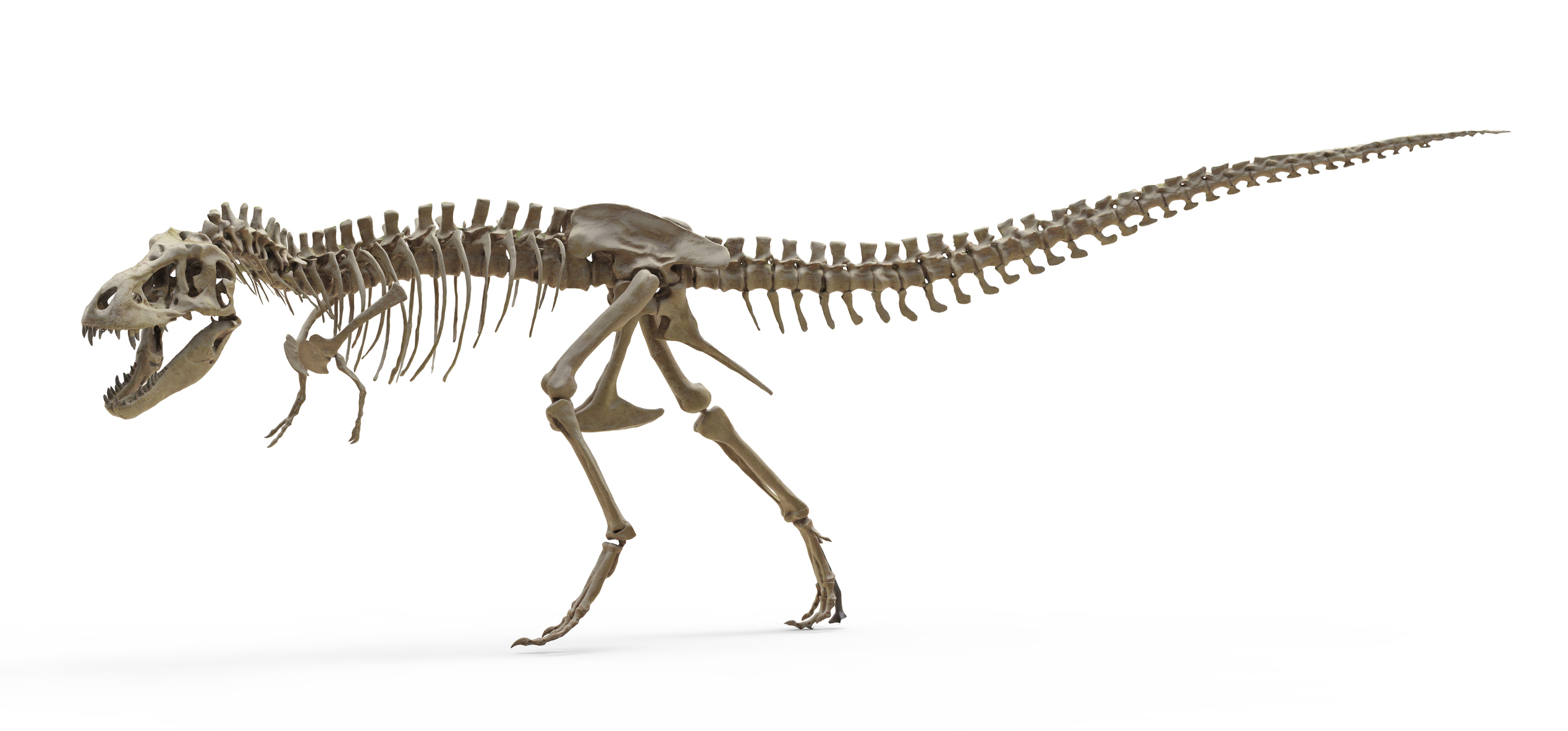
For decades, T. rex was seen as a slow, tail-dragging reptile that needed to bask in the sun. Modern research changed that view, showing it was an active, bird-like predator. But scientists still debated whether it used warm blood to fuel that activity.
Taking the dinosaur's temperature

Researchers at UCLA led by Randon Flores and Robert Eagle measured T. rex body temperature by analyzing its teeth. They found it ran at about 36 degrees Celsius, roughly the same as a modern elephant.
The old method had problems
Earlier attempts to measure T. rex temperature used oxygen isotopes in bones and teeth, but the ratios depended on water composition in the animal's body, which scientists couldn't determine for extinct creatures.
A better way to measure
The team used clumped isotope thermometry, a technique that measures how often rare heavy isotopes of carbon and oxygen bond together in tooth enamel. This bonding pattern depends only on temperature, not water content.
Three teeth from Montana
Researchers analyzed three T. rex teeth from the Hell Creek Formation in Montana, which preserves the final period before the asteroid impact. Two came from a young adult weighing over 3 tons.
Checking for chemical changes
The team verified that 66 million years underground hadn't altered the teeth's chemistry by comparing enamel and dentin isotopic signatures and using infrared spectroscopy. The fossil enamel matched modern reptilian enamel.
The temperature readings
The two juvenile T. rex teeth yielded temperatures of 37.3 and 35.9 degrees Celsius, while the third tooth read 34.7 degrees. Averaged together, T. rex ran at 36.3 degrees, plus or minus 2.5 degrees.
Warmer than its world
T. rex was consistently warmer than its environment. Summer water temperatures in Hell Creek averaged 26 degrees, and even in the hottest climate scenario, summer peaks reached only 33 degrees.
Evidence of warm blood
The juvenile T. rex's temperature was higher than what body size models predict for a cold-blooded animal its weight. This suggests T. rex was a homeothermic endotherm that generated its own metabolic heat.
A continent-wide predator
Using thermal tolerance data from 465 living mammals and birds, researchers modeled where T. rex could survive across late Cretaceous North America. The results showed it could live almost anywhere on the continent.
From Alaska to Texas
The model predicted high suitability at the continent's latitudinal extremes, consistent with tyrannosaurid fossils found in Alaska and a possible T. rex from Trans-Pecos Texas. Heat was probably not a limiting factor.
One remaining question
The team sampled only small portions of each tooth to avoid damage, so they may have captured just one season of growth. With only three teeth, they cannot fully rule out seasonal bias in their results.
The big picture
T. rex was likely a warm-blooded endotherm that could maintain its own body heat, not a cold-blooded reptile dependent on the sun.