From NPR · · 2m
What Dinosaur Poop Reveals About Bird Survival
A 66 million year old feather trapped in fossilized dinosaur droppings could explain why some birds survived the asteroid impact.
In brief
A 66 million year old feather trapped in fossilized dinosaur droppings could explain why some birds survived the asteroid impact. Dinosaur coprolites can preserve soft tissues like feathers, offering rare clues about ancient food chains and why certain species survived mass extinction. Originally reported by NPR.
A strange spot in the badlands
Field worker David DeMar was crawling up a hill in the Montana badlands when he noticed a small, dark, cherry-sized object on the ground.
An extraordinary fossilized feather
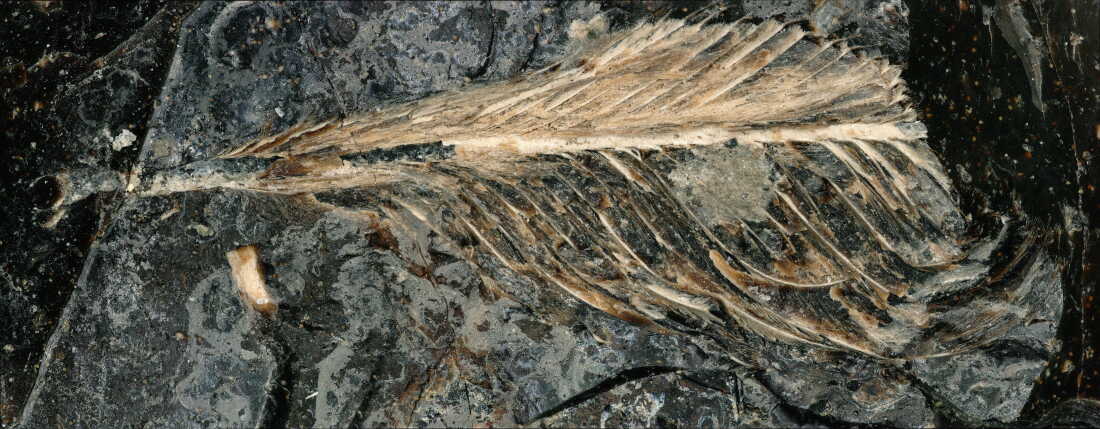
Embedded inside a crack on the nodule sat a fossilized branching feather, hailed as the finest feather ever discovered from the age of dinosaurs.
“It is, without a doubt, the best feather we've ever found from the age of dinosaurs”
Preserved in ancient feces
The round fossil turned out to be coprolite, or fossilized poop, likely produced by a large carnivore like Tyrannosaurus rex.
Clues inside the fossilized dung
CT scans revealed that the chunk contained more feathers, bone fragments, and two tiny fish scales preserved from 66 million years ago.
An ancient diving bird
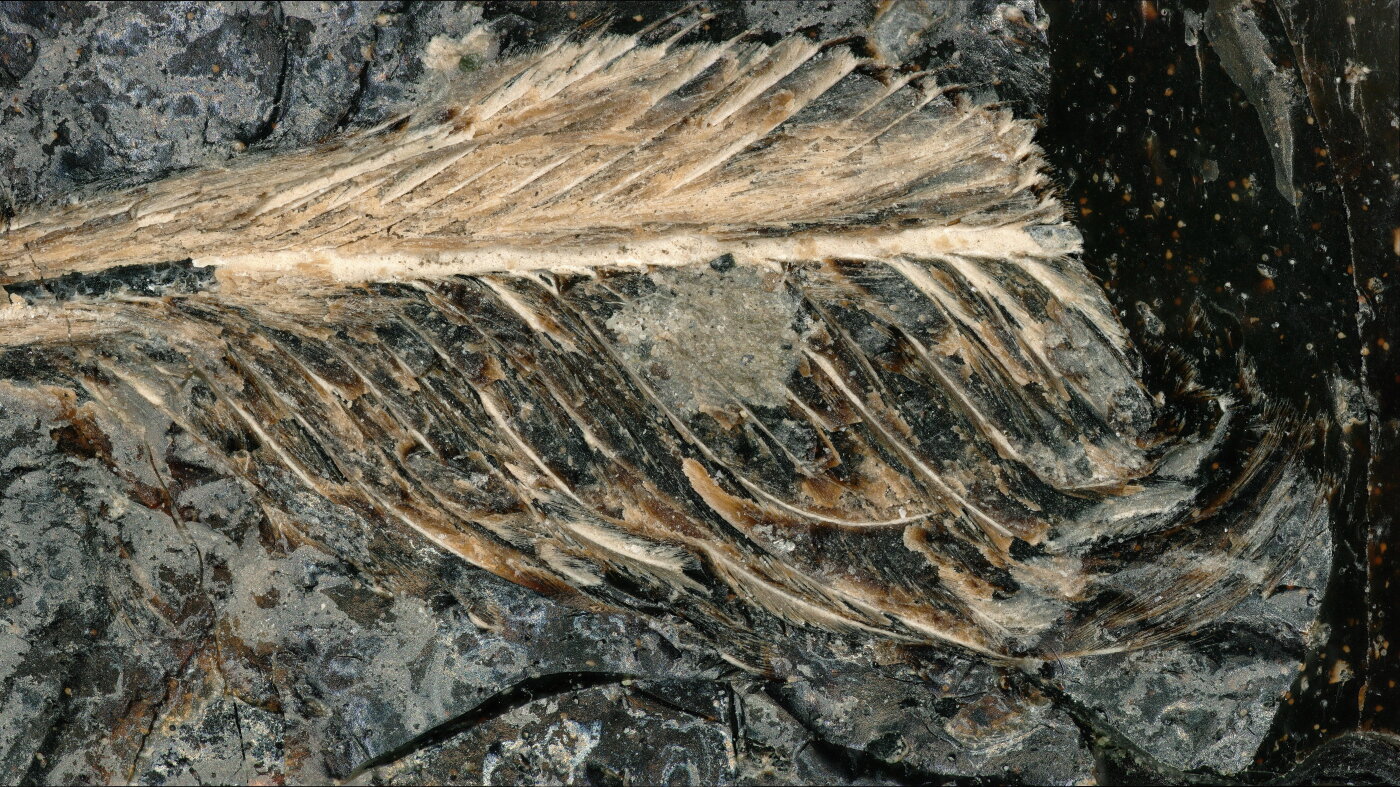
Researchers analyzed the bones and feathers inside the fossil and determined they belonged to a swimming bird similar to a modern loon or grebe.
A snapshot of the food chain
The fish scales inside the coprolite were likely remnants of the bird's last meal before a predatory dinosaur ate the bird itself.
“A dinosaur ate an aquatic bird that ate a particular type of fish.”
The mystery of bird survival
When a massive asteroid struck Earth, dinosaurs and most bird lineages vanished. Only one group survived to give rise to modern birds.
Feathers that lacked warmth

The fossilized body feathers of the extinct bird appeared to lack the insulating warmth of modern feathers, which may have hindered its survival in the cold.
“How do they stay warm when it gets cold, when this [asteroid] impact winter happens?”
Not everyone is convinced
Some evolutionary biologists argue that incomplete feather fragments from a single fossil are not enough to explain widespread species extinction.
“I think it's a stretch to explain the survivorship of some [species] and the extinction of others from that evidence”
A new window into soft tissues
The finding shows that fossilized droppings can preserve delicate soft tissues, opening up new ways to search for ancient feathers and fur.
The essence
Dinosaur coprolites can preserve soft tissues like feathers, offering rare clues about ancient food chains and why certain species survived mass extinction.




/file/attachments/orphans/mphego-court-caryn2_236334.jpg)