From Ars Technica · · 3m
Tiny underwater volcanoes can trigger giant tsunamis
A 2022 eruption in Tonga revealed how small seafloor calderas can unleash outsized waves when they collapse at the right speed.
In brief
A 2022 eruption in Tonga revealed how small seafloor calderas can unleash outsized waves when they collapse at the right speed. Even small underwater volcanoes pose major tsunami risks if their calderas collapse rapidly, and most remain unmapped and poorly understood. Originally reported by Ars Technica.
Volcanoes kill by tsunami, not ash
Krakatau's 1883 eruption in Indonesia killed over 30,000 people, but most died from the tsunami it triggered, not from volcanic debris.
Ocean pressure changes volcanic behavior
Deep underwater, high water pressure suppresses explosive volcanic activity. But closer to the surface, lower pressure and hot volcanic material cause violent explosions that can trigger tsunamis.
Scientists studied Hunga's 2022 eruption
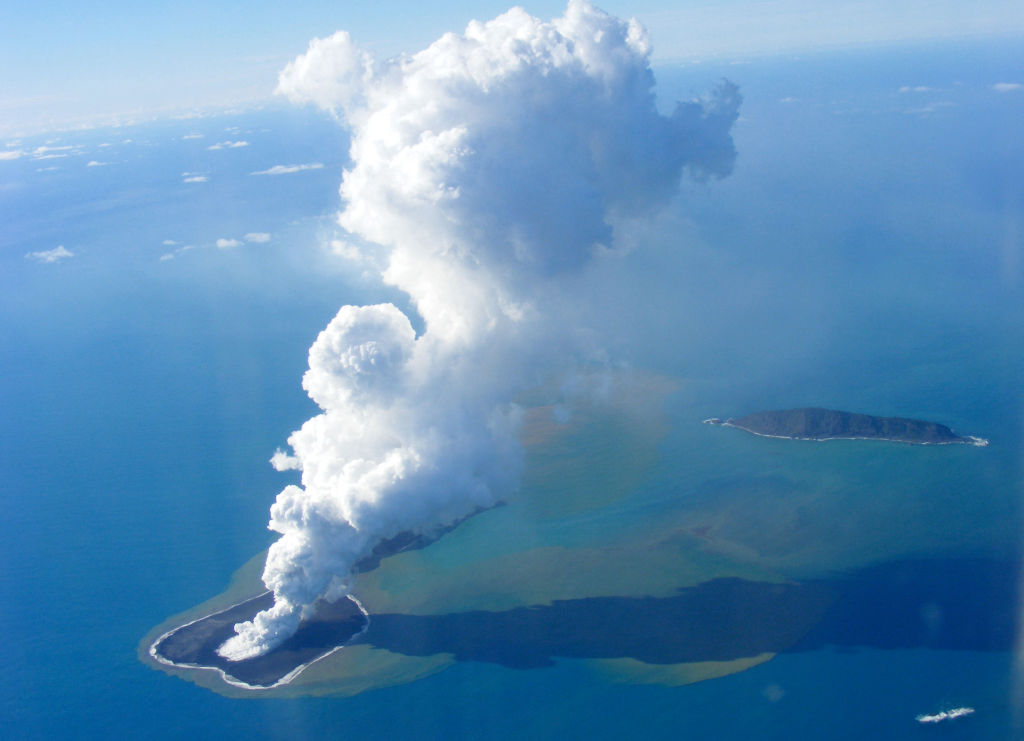
Researchers examined the January 2022 Hunga eruption in Tonga to understand how rapid caldera collapse amplified its powerful tsunami.
A caldera sank one kilometer down
Hunga's caldera, roughly 4 kilometers wide, sank about 1 kilometer during the eruption. Calderas form when ground above a magma reservoir collapses as magma drains away.
The eruption was this century's most powerful
On January 15, 2022, Hunga erupted with such force that its column soared over 55 kilometers high and the pressure wave was detected worldwide.
It created the highest volcanic tsunami ever
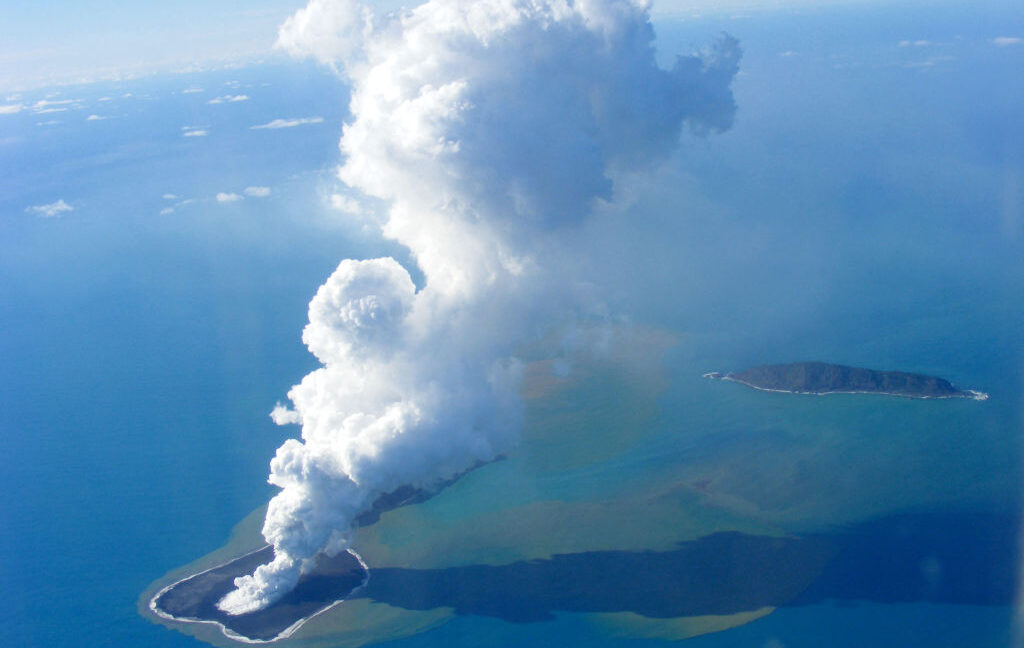
The tsunami reached heights of 40 meters within 100 kilometers of the source. This is the highest tsunami ever recorded from an underwater volcanic eruption.
“It is the highest tsunami ever recorded from an underwater volcanic eruption.”
Speed of collapse mattered most
When a submarine caldera collapses rapidly, the sinking seafloor pulls seawater down with it. If the seafloor drops abruptly, a large volume of water displaces in seconds, creating a tsunami.
A thin roof caused the collapse
Hunga's magma reservoir had a thin, broad roof that couldn't support itself once magma drained. Losing just a quarter of the pre-eruption magma was enough to bring it down.
The caldera collapsed during eruption
Sediment layers show the caldera collapsed while the volcano was still erupting. Landslide debris from the walls mixed with pyroclastic material, proving they fell simultaneously.
It fell like a piston in a cylinder
Rather than breaking apart, Hunga's caldera floor dropped as one piece in a piston-style collapse. Concentric terraces and cliffs along the rim show faulting as the floor subsided.
Dozens more volcanoes pose similar risks
The Tonga-Kermadec arc hosts at least 74 underwater volcanoes, including 20 caldera complexes. Many resemble Hunga but remain unmapped or poorly surveyed.
Better maps could save lives
Researchers call for high-resolution seafloor mapping to monitor underwater calderas and strengthen tsunami early-warning systems in poorly surveyed regions like the southwest Pacific.
“Our study underscores the urgent need for high-resolution repeat seafloor mapping.”
The big picture
Even small underwater volcanoes pose major tsunami risks if their calderas collapse rapidly, and most remain unmapped and poorly understood.