From Ars Technica · · 4m
Ukraine's fiber drones squeezed by AI data center demand
As Ukraine and Russia compete for fiber-optic cable to power unjammable drones, global AI infrastructure is driving up prices and straining supply.
In brief
As Ukraine and Russia compete for fiber-optic cable to power unjammable drones, global AI infrastructure is driving up prices and straining supply. Ukraine's fiber-optic drone manufacturers face soaring costs and supply shortages as AI data centers compete for the same limited Chinese fiber-optic material. Originally…
Fiber drones jam-proof but costly

Ukraine's fiber-optic drones resist electronic warfare jamming that neutralizes radio-controlled drones. But importing fiber from China now competes with global AI data center demand.
Russia deployed them first
Russia first used unjammable fiber-optic drones to repel Ukrainian forces' cross-border incursion into Kursk Oblast in two thousand twenty-four. Ukraine quickly developed its own.
Massive monthly production
Ukraine and Russia produce an estimated fifty thousand fiber-optic drones per month in recent years. Fiber-optic cable has become a one-time battlefield consumable.
Russia imports far more
Russia imported three hundred twenty-eight thousand miles of fiber-optic cable from China in August twenty twenty-five. Ukraine got just seventy-two miles, according to The Washington Post.
Russia's fiber consumption surges
Russia bought more than thirty-seven million miles of fiber-optic cable in twenty twenty-five. That was more than ten percent of all fiber produced worldwide, up from never more than one percent.
AI boom strains global supply
The global AI boom and data center buildout have strained fiber-optic supply. TrendForce expects a worldwide shortfall of one hundred eleven million miles in twenty twenty-six.
Prices spike six to ten times
Fiber-optic prices increased roughly six to ten times between twenty twenty-five and twenty twenty-six, according to Oleksiy, a BlueBird Tech research and development representative.
“If we compare fiber-optic prices in 2025 and 2026, we have seen increases of roughly six to 10 times.”
Fiber-optic drones have limits
Fiber-optic drones avoid radio-frequency detection and electronic warfare disruption. But they require specific pilot skills, different flight characteristics, and cost significantly more than radio-controlled drones.
China remains the main source
Ukrainian manufacturers depend on Chinese supply, logistics, availability and pricing. Oleksiy said China remains the main source of fiber-optic material despite intermediaries in other countries.
Russia has easier logistics
Russia has more direct logistics with China, giving it a practical supply-chain advantage. Ukrainian buyers have faced cases where Chinese manufacturers refused to fill orders because they were from Ukraine.
In-house spooling strategy
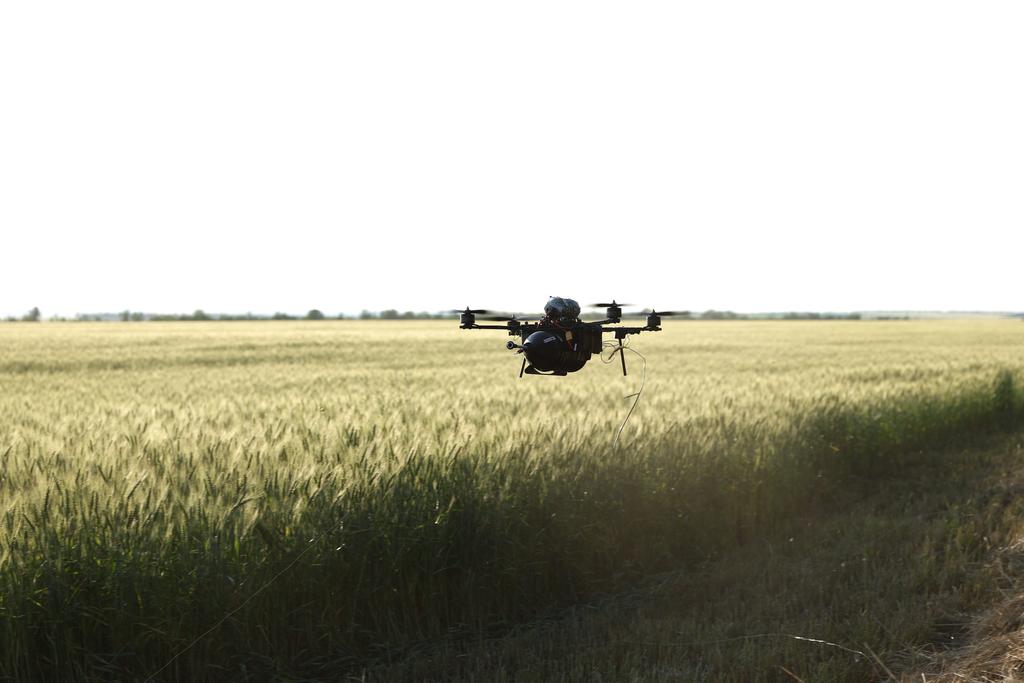
Many Ukrainian manufacturers now buy large fiber spools and produce smaller drone spools themselves. This gives manufacturers control over quality and consistency while reducing dependence on finished imports.
Quality control is critical
Defects in finished spools can lose the drone, mission and target. By spooling in-house, manufacturers introduce their own quality-control procedures and achieve more consistent results.
“If a fiber-optic spool has a defect, you can lose the drone, lose the mission, and lose the target.”
Not all manufacturers can adapt
Larger Ukrainian companies have resources for in-house spooling, including equipment, trained personnel and testing capabilities. Smaller manufacturers may buy finished spools from larger Ukrainian makers or abroad.
Logistics adds delays and costs
The route from China to Ukraine is much longer than to Russia. Air raid alerts interrupt customs and transport. Manufacturers must account for time and expense of long-distance transportation.
Training consumes material
No Ukrainian universities specifically train fiber-optic spool manufacturers. Training requires practical experience and consumes kilometers of fiber as people learn. Developing skilled personnel is essential for scaling production.
“We do not have universities that specifically train people to manufacture these FPV fiber-optic spools.”
Manufacturing is technically complex
Fiber-optic cable is fragile and easily damaged during manufacturing or unwinding. Equipment quality and operator expertise both affect finished spool quality. Automation does not remove the need for skilled personnel.
Testing requires real-world flights
Every finished spool must undergo optical link testing. Some spools from each production batch must also be installed on actual FPV drones and flown under real conditions to ensure consistent quality.
Planning becomes essential
Ukrainian manufacturers must plan production and logistics together. In-house manufacturing capabilities, material quality, personnel skills and advance planning all connect to manage supply-chain challenges.
What it means
Ukraine's fiber-optic drone manufacturers face soaring costs and supply shortages as AI data centers compete for the same limited Chinese fiber-optic material.