From Daily Maverick · Seth Thorne · · 3m
Sewage crisis poisons Tshwane's drinking water
More than 400 people, mostly young children, fell ill after drinking contaminated tap water in Bronkhorstspruit, exposing South Africa's failing wastewater systems.
In brief
More than 400 people, mostly young children, fell ill after drinking contaminated tap water in Bronkhorstspruit, exposing South Africa's failing wastewater systems. Over four hundred people, mostly children under four, contracted gastrointestinal illnesses from contaminated tap water in Bronkhorstspruit between…
Four hundred children sickened
At least four hundred eight people, mostly children under four, contracted gastrointestinal illnesses from contaminated tap water in Bronkhorstspruit between October seventh and eighteenth. Most recovered within a day. No deaths reported.
Contaminated source water
The Bronkhorstspruit Water Treatment Works supplies Bronkhorstspruit, Zithobeni, Dark City, Rethabiseng and Sokhulumi in northern Gauteng. The river water it abstracts is heavily polluted with sewage.
Dangerous pathogens detected
Tests by the Department of Water and Sanitation on October fourteenth found extremely high levels of E.coli and total coliforms in water from the treatment works and two reservoirs.
Chlorination stopped for weeks
Between September twenty-fourth and October fourteenth, municipal officials at the Bronkhorstspruit Water Treatment Works did not chlorinate the water to kill harmful pathogens. They failed to warn residents of the danger.
Chlorine supplier monopoly
Tshwane Mayor Nasiphi Moya said the chlorine supplier had a monopoly and prices had increased fourfold. Negotiations between municipal officials and the supplier reached deadlock. Officials had not informed City leadership about the shortage.
“monopoly”
Aging plant, inadequate maintenance
The Bronkhorstspruit Water Treatment Works is more than sixty years old and has not operated at capacity for years, with frequent breakdowns.Tshwane spent twenty point eight million rand in two thousand twenty-five to twenty twenty-six.
Sewage pollution from upstream
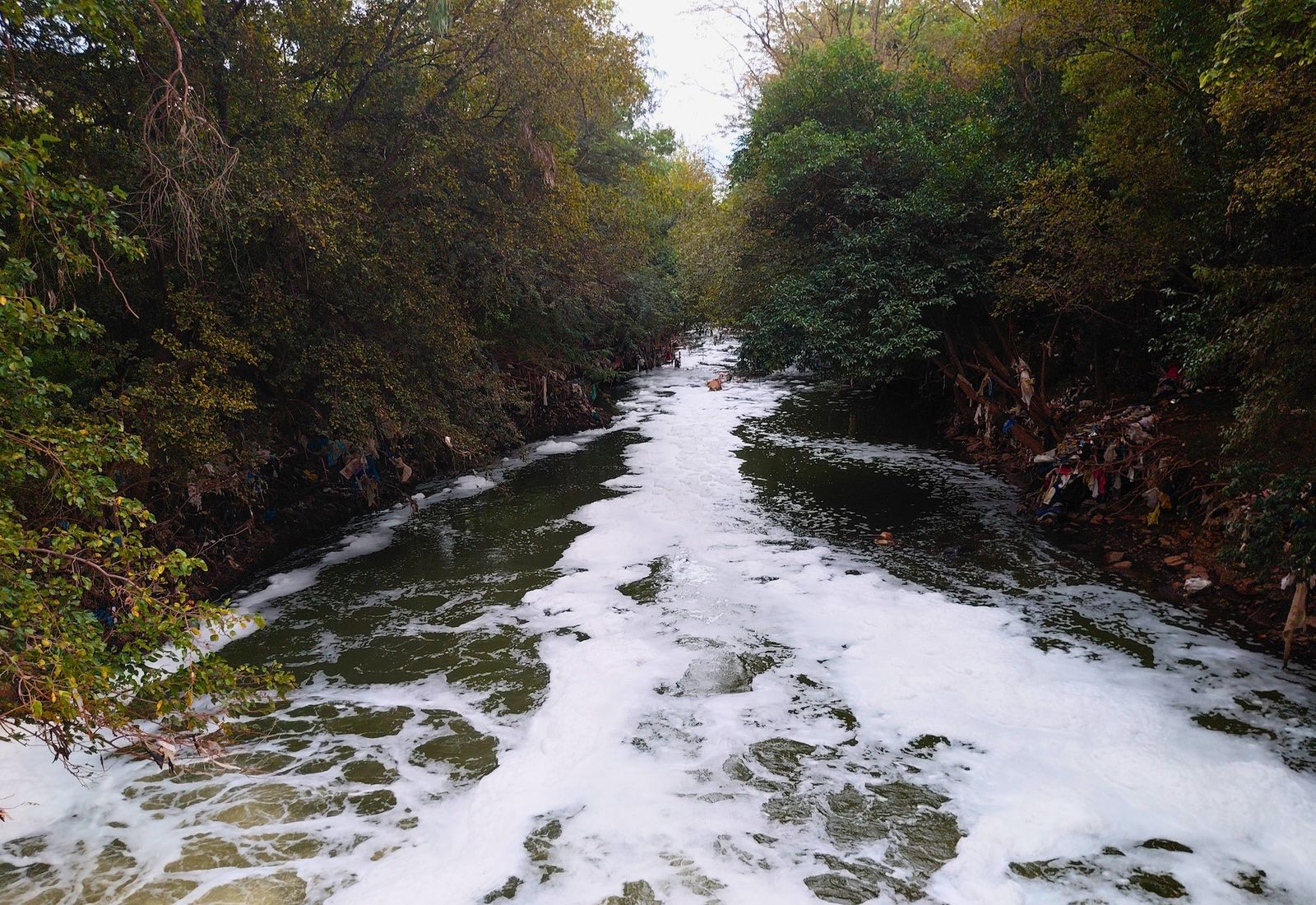
The Bronkhorstspruit River is badly contaminated with sewage from dysfunctional wastewater treatment works under Victor Khanye Municipality and dysfunctional City of Tshwane sewage pump stations.
Plants designed for clean water
Dr Anthony Turton said all potable plants are designed assuming influent quality meets certain parameters. None were designed to convert raw sewage into potable water, which is what they are now being asked to do.
“All potable plants are designed on the assumption that influent quality meets certain parameters. None were designed to convert raw sewage into potable water, which is what they are now being asked to do.”
Wastewater systems in crisis
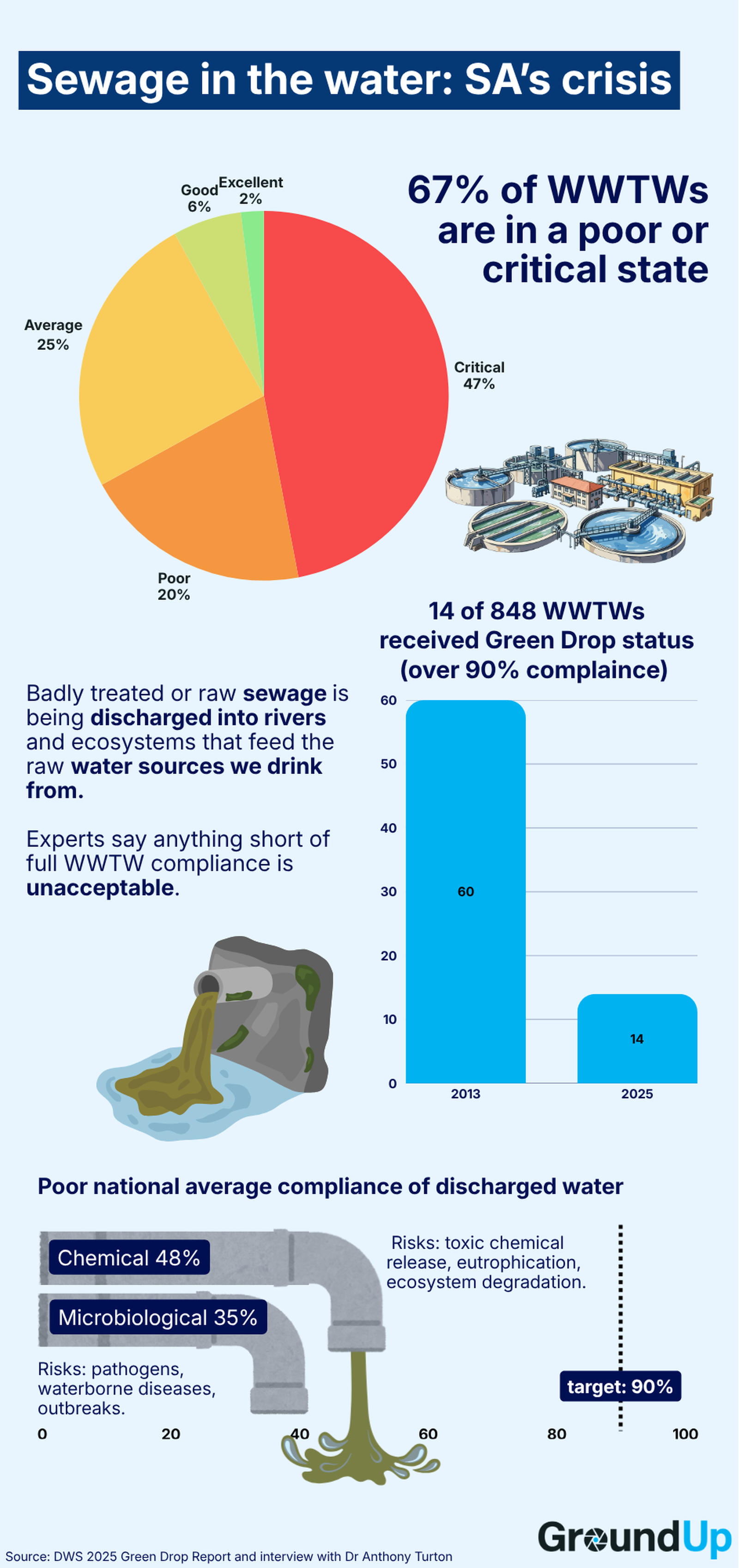
The Department of Water and Sanitation's two thousand twenty-five Green Drop Report found three hundred ninety-six of eight hundred forty-eight municipal wastewater systems in critical state, including one hundred fifty-nine formally disqualified.
Compliance rates dangerously low
Five hundred ninety-seven of eight hundred forty-eight systems scored below thirty-one percent on treated effluent quality. National microbiological compliance is thirty-five percent, meaning effluent routinely fails limits for faecal bacteria before discharge.
No wastewater works fully compliant
Dr Turton argues treated wastewater released into rivers must be almost perfectly compliant with standards.Not a single wastewater works is fully compliant.Wastewater treatment is not like a school exam where fifty-one percent is a pass.
“Wastewater treatment is not like a school exam where 51% is a pass.”
Accountability and reform needed
WaterCAN director Ferrial Adam said despite substantial state resources investigating failures, the public has yet to see meaningful consequences.Dr Turton believes underperforming officials should be held personally accountable and water mafias criminally charged.
“There is a clear collapse of oversight, and lives could have been lost.”
The bottom line
Over four hundred people, mostly children under four, contracted gastrointestinal illnesses from contaminated tap water in Bronkhorstspruit between October seventh and eighteenth, revealing systemic failures in water treatment and municipal oversight across South Africa.



